

Baby-led Weaning: Introduction & Tips
Baby-led weaning (BLW) is an approach to introducing solid foods where infants feed themselves soft finger foods instead of receiving purees. Babies explore food at their own pace.
Things worth knowing about "Baby-led weaning"
Baby-led weaning (BLW) is an approach to introducing solid foods where infants feed themselves soft finger foods instead of receiving purees. Babies explore food at their own pace.
What is baby-led weaning?
Baby-led weaning (BLW) is an approach to introducing complementary foods in which infants are offered soft, finger-shaped pieces of food from the very beginning, rather than spoon-fed purees. The baby takes an active role at the family table, choosing which foods to pick up, explore, and eat. This method supports self-regulation, sensory exploration, and the development of fine motor skills.
When is baby-led weaning appropriate?
Baby-led weaning is generally recommended from 6 months of age, once the infant shows key developmental readiness signs:
- The baby can sit upright with minimal support.
- The baby shows interest in food and reaches for it.
- The tongue-thrust reflex has diminished or disappeared.
- The baby can bring objects to the mouth independently.
The World Health Organization (WHO) recommends exclusive breastfeeding for the first 6 months before introducing any complementary foods.
Suitable foods for baby-led weaning
Foods offered during baby-led weaning should be soft enough to be mashed between the gums. Good examples include:
- Soft-cooked vegetables such as carrots, broccoli, zucchini, or sweet potato
- Soft fruits such as ripe banana, avocado, pear, or peach
- Soft-cooked fish or tender meat (e.g., chicken strips)
- Soft bread or steamed buns
- Hard-boiled eggs (cut into strips)
- Well-cooked pasta and rice
Benefits of baby-led weaning
Research suggests that baby-led weaning may offer several advantages:
- Self-regulation: Babies learn to recognise their own hunger and fullness cues.
- Motor development: Grasping, holding, and bringing food to the mouth trains fine and gross motor skills.
- Food variety acceptance: Early exposure to different textures and flavours may reduce fussy eating later.
- Family integration: The baby participates in shared family mealtimes from the start.
- Reduced obesity risk: Some studies suggest a lower risk of overweight and obesity in later childhood.
Safety and potential risks
A common concern with baby-led weaning is the risk of choking. It is important to distinguish between gagging and true choking:
- Gagging is a normal protective reflex in infants and is more frequent with solid foods than with purees. It is part of the learning process.
- True choking occurs when the airway is completely blocked. The child will be silent and may turn blue.
To minimise safety risks, caregivers should follow these guidelines:
- Always supervise the baby during meals.
- Never offer hard, round, or sticky foods (e.g., whole grapes, raw carrots, sweets, whole nuts).
- Always seat the baby in an upright position during feeding.
- Parents and caregivers should be trained in infant choking first aid.
Baby-led weaning vs. traditional puree feeding
Baby-led weaning and traditional puree feeding are not mutually exclusive. Many parents choose a combination approach, offering both finger foods and purees. Both methods can provide adequate nutrition when implemented correctly. Regardless of the method chosen, it is essential to ensure sufficient intake of iron, zinc, and energy, as breast milk alone no longer fully meets the baby's iron needs after 6 months.
Ensuring adequate nutrient intake
Whichever feeding approach is used, key nutrients must be covered:
- Iron: Red meat, lentils, iron-fortified cereals – essential for preventing iron deficiency
- Zinc: Meat, legumes, whole grains
- Vitamin D: Supplementation as per national guidelines
- Omega-3 fatty acids: Oily fish (e.g., salmon), flaxseed
References
- World Health Organization (WHO): Infant and young child feeding, 2023. Available at: https://www.who.int/news-room/fact-sheets/detail/infant-and-young-child-feeding
- Rapley G, Murkett T: Baby-led Weaning: Helping Your Baby to Love Good Food. Vermilion, London, 2008.
- Cameron SL, Heath AL, Taylor RW: How feasible is Baby-Led Weaning as an approach to infant feeding? A review of the evidence. Nutrients. 2012;4(11):1575-1609. PubMed PMID: 23201835.

Building Blocks for a Healthy Life
As an integrated manufacturer, we develop & produce evidence-based, patented, and non-patented formulations. We work exclusively with plant and natural extracts according to the strictest purity & quality standards.
The combination of science & modern technology with the laws of nature creates solutions consistently tailored to humans – for the highest good: health.
Verwandte Produkte

For Healthy Oral Flora & Dental Care
Formulated lozenges with Dentalac®, lactic acid bacteria, and Lactoferrin CLN®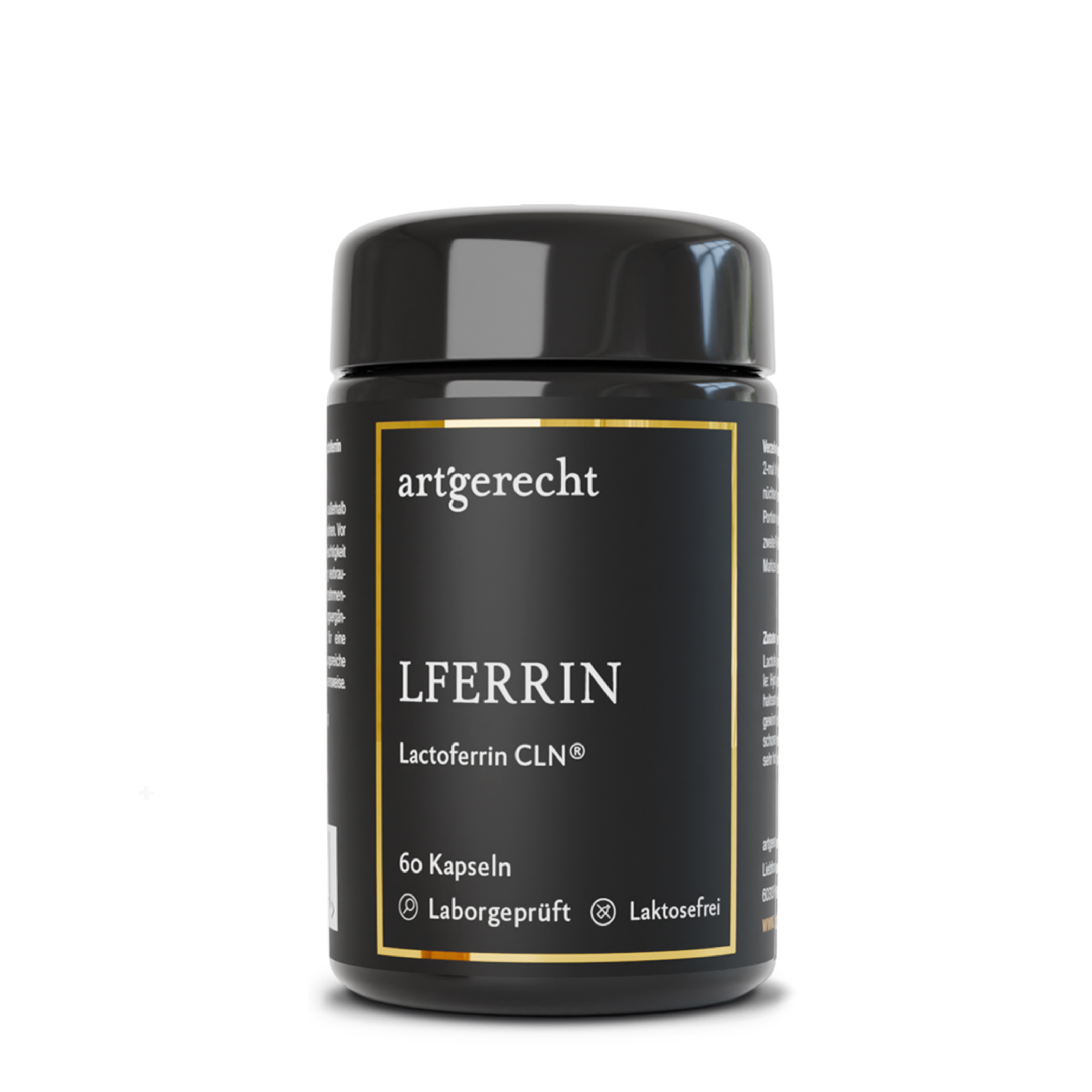
For your universal protection
As one of the most valuable proteins in the body, lactoferrin is a natural component of the immune system.
For your iron balance
Specially formulated for your iron balance with plant-based curry leaf iron, Lactoferrin CLN®, and natural Vitamin C from rose hips.