

D58.9 - Hereditary Haemolytic Anaemia
D58.9 is the ICD-10 code for hereditary haemolytic anaemia, unspecified. Red blood cells are broken down prematurely, leading to anaemia and reduced oxygen supply.
Things worth knowing about "D58.9"
D58.9 is the ICD-10 code for hereditary haemolytic anaemia, unspecified. Red blood cells are broken down prematurely, leading to anaemia and reduced oxygen supply.
What does the ICD-10 code D58.9 mean?
The ICD-10 code D58.9 stands for hereditary haemolytic anaemia, unspecified. It belongs to the group of hereditary haemolytic anaemias (ICD-10 category D58) and is used when a genetically caused haemolytic anaemia is present but cannot be assigned to a more specific subgroup. Haemolysis refers to the premature destruction of red blood cells (erythrocytes), which reduces the oxygen-carrying capacity of the blood.
Causes
Hereditary haemolytic anaemias are caused by genetic changes that impair the structure or function of red blood cells. Common causes include:
- Defects in the erythrocyte cell membrane (e.g., hereditary spherocytosis, elliptocytosis)
- Enzyme deficiencies within erythrocytes (e.g., G6PD deficiency, pyruvate kinase deficiency)
- Disorders of haemoglobin synthesis or structure (e.g., thalassaemias, sickle cell disease)
- Rare or insufficiently classified genetic defects, which are recorded under D58.9
Symptoms
Symptoms can vary depending on the severity of the haemolytic anaemia. Common complaints include:
- Fatigue and weakness due to reduced oxygen in the blood
- Pallor of the skin and mucous membranes
- Jaundice (icterus) caused by elevated bilirubin levels resulting from erythrocyte breakdown
- Enlargement of the spleen (splenomegaly) and liver
- Dark urine (haemoglobinuria)
- Shortness of breath and increased heart rate during physical exertion
- Occasional haemolytic crises with sudden, severe worsening of symptoms
Diagnosis
Diagnosis of a hereditary haemolytic anaemia involves a combination of clinical examination, laboratory tests, and in some cases genetic testing:
- Full blood count: Detection of anaemia (low haemoglobin level, reduced red blood cell count)
- Reticulocyte count: Elevated reticulocytes indicating increased red blood cell production
- Bilirubin and LDH: Elevated levels as indicators of haemolysis
- Haptoglobin: Reduced levels during active erythrocyte destruction
- Blood smear: Assessment of erythrocyte morphology
- Genetic testing: Identification of specific gene mutations for more precise classification
Treatment
Treatment depends on the underlying cause and the severity of the condition. Possible approaches include:
- Folic acid supplementation: To support the increased erythropoiesis
- Blood transfusions: For severe anaemia or haemolytic crises
- Splenectomy (removal of the spleen): Can reduce haemolysis in certain forms
- Pharmacological therapy: Depending on the cause, e.g., eculizumab for specific forms
- Stem cell transplantation: A potentially curative option in selected cases
- Regular specialist follow-up to monitor disease progression
References
- World Health Organization (WHO): ICD-10 International Statistical Classification of Diseases and Related Health Problems, 10th Revision, Volume 1. Geneva: WHO, 2019.
- Eber S., Andres O. et al.: Guidelines on Haemolytic Anaemia. German Society for Paediatric Haematology and Oncology (DGPHO), 2021.
- Schrier S.L.: Diagnosis of hemolytic anemia in adults. UpToDate, Wolters Kluwer, 2023.

Building Blocks for a Healthy Life
As an integrated manufacturer, we develop & produce evidence-based, patented, and non-patented formulations. We work exclusively with plant and natural extracts according to the strictest purity & quality standards.
The combination of science & modern technology with the laws of nature creates solutions consistently tailored to humans – for the highest good: health.
Verwandte Produkte

For Healthy Oral Flora & Dental Care
Formulated lozenges with Dentalac®, lactic acid bacteria, and Lactoferrin CLN®
For Healthy Oral Flora & Dental Care
Formulated lozenges with Dentalac®, lactic acid bacteria, and Lactoferrin CLN®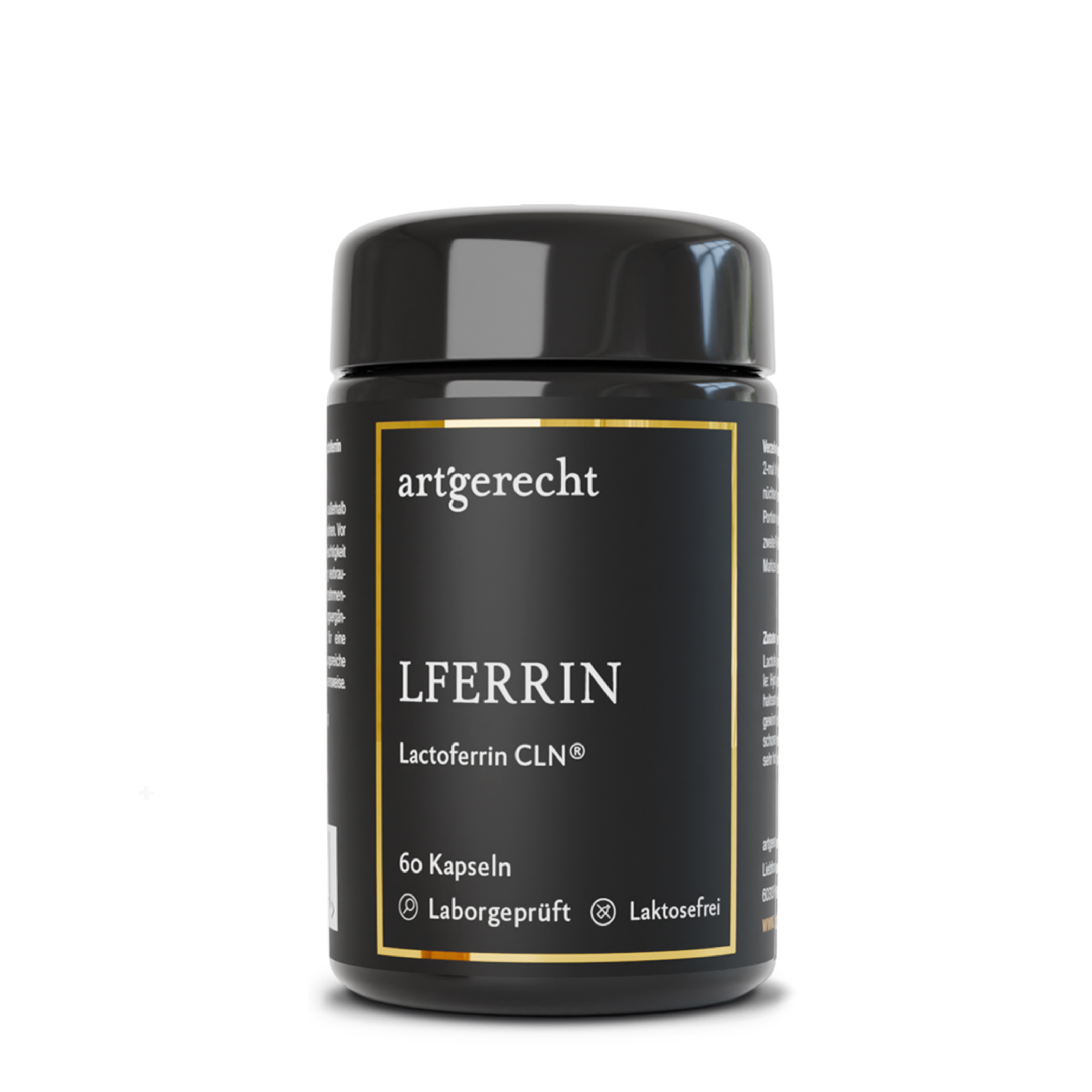
For your universal protection
As one of the most valuable proteins in the body, lactoferrin is a natural component of the immune system.
For your iron balance
Specially formulated for your iron balance with plant-based curry leaf iron, Lactoferrin CLN®, and natural Vitamin C from rose hips.