

Sciatic Nerve – Anatomy, Function and Conditions
The sciatic nerve is the largest nerve in the human body. It runs from the lower back through the buttock and down the leg, controlling movement and sensation.
Things worth knowing about "Sciatic nerve"
The sciatic nerve is the largest nerve in the human body. It runs from the lower back through the buttock and down the leg, controlling movement and sensation.
What Is the Sciatic Nerve?
The sciatic nerve (Latin: Nervus ischiadicus) is the longest and widest nerve in the human body. It originates in the lower spinal cord from several nerve roots of the lumbar spine and sacrum (L4 to S3) and travels through the buttock, along the back of the thigh, and down into the lower leg and foot. As part of the peripheral nervous system, it is responsible for motor control and sensory perception throughout most of the leg.
Anatomy and Course
The sciatic nerve exits the pelvis through the greater sciatic foramen, passing below the piriformis muscle, and then runs along the back of the thigh. At the knee, it divides into two main branches:
- Tibial nerve: supplies the calf muscles and the sole of the foot
- Common fibular nerve (peroneal nerve): supplies the muscles at the front of the lower leg and the top of the foot
Through these branches, the sciatic nerve controls nearly all movement and sensation in the lower leg and foot.
Functions of the Sciatic Nerve
The sciatic nerve serves two major functions:
- Motor function: It controls the muscles of the back of the thigh (hamstrings) and almost all muscles of the lower leg and foot, which are essential for walking, running, and standing.
- Sensory function: It transmits sensations such as touch, pain, temperature, and pressure from the back of the thigh, the lower leg, the sole, and the top of the foot to the brain.
Common Conditions Affecting the Sciatic Nerve
Sciatica
The most common condition affecting the sciatic nerve is sciatica. This occurs when the nerve is irritated or compressed, most often by a herniated disc, bone spur, or muscle tightness. Typical symptoms include:
- Sharp, radiating pain from the lower back through the buttock and down the leg
- Numbness or tingling in the leg or foot
- Muscle weakness in the affected leg
Piriformis Syndrome
In piriformis syndrome, the sciatic nerve is compressed by the piriformis muscle in the buttock. This can produce symptoms very similar to those of a herniated disc and is usually treated with targeted physiotherapy and stretching exercises.
Sciatica During Pregnancy
During pregnancy, the growing uterus may press on the sciatic nerve, causing pain in the buttock or leg. These symptoms are usually temporary and resolve after delivery.
Diagnosis
Conditions affecting the sciatic nerve are typically diagnosed using:
- Physical examination: Assessment of reflexes, muscle strength, and sensation
- Straight leg raise test (Lasegue test): Raising the straightened leg; pain suggests sciatic nerve irritation
- Imaging: MRI or CT scan of the lumbar spine to detect disc herniation or nerve compression
- Nerve conduction study (NCS): Electrophysiological measurement of nerve function
Treatment
Treatment depends on the underlying cause of the symptoms:
- Conservative therapy: Physiotherapy, heat therapy, pain relievers (e.g., NSAIDs), and muscle relaxants
- Injection therapy: Corticosteroid injections near the nerve to reduce inflammation
- Surgical treatment: In persistent or severe cases, e.g., discectomy or decompression of the nerve root
- Exercise therapy: Targeted exercises to strengthen the back and gluteal muscles and relieve pressure on the nerve
References
- Schiebler, T. H. & Korf, H. W. (2007). Anatomy: Histology, Developmental Biology, Macroscopic and Microscopic Anatomy. 10th edition. Springer Medizin Verlag.
- Koes, B. W., van Tulder, M., & Peul, W. C. (2007). Diagnosis and treatment of sciatica. BMJ, 334(7607), 1313–1317. https://doi.org/10.1136/bmj.39223.428495.BE
- World Health Organization (WHO). Musculoskeletal conditions. https://www.who.int/news-room/fact-sheets/detail/musculoskeletal-conditions

Building Blocks for a Healthy Life
As an integrated manufacturer, we develop & produce evidence-based, patented, and non-patented formulations. We work exclusively with plant and natural extracts according to the strictest purity & quality standards.
The combination of science & modern technology with the laws of nature creates solutions consistently tailored to humans – for the highest good: health.
Verwandte Produkte

For Healthy Oral Flora & Dental Care
Formulated lozenges with Dentalac®, lactic acid bacteria, and Lactoferrin CLN®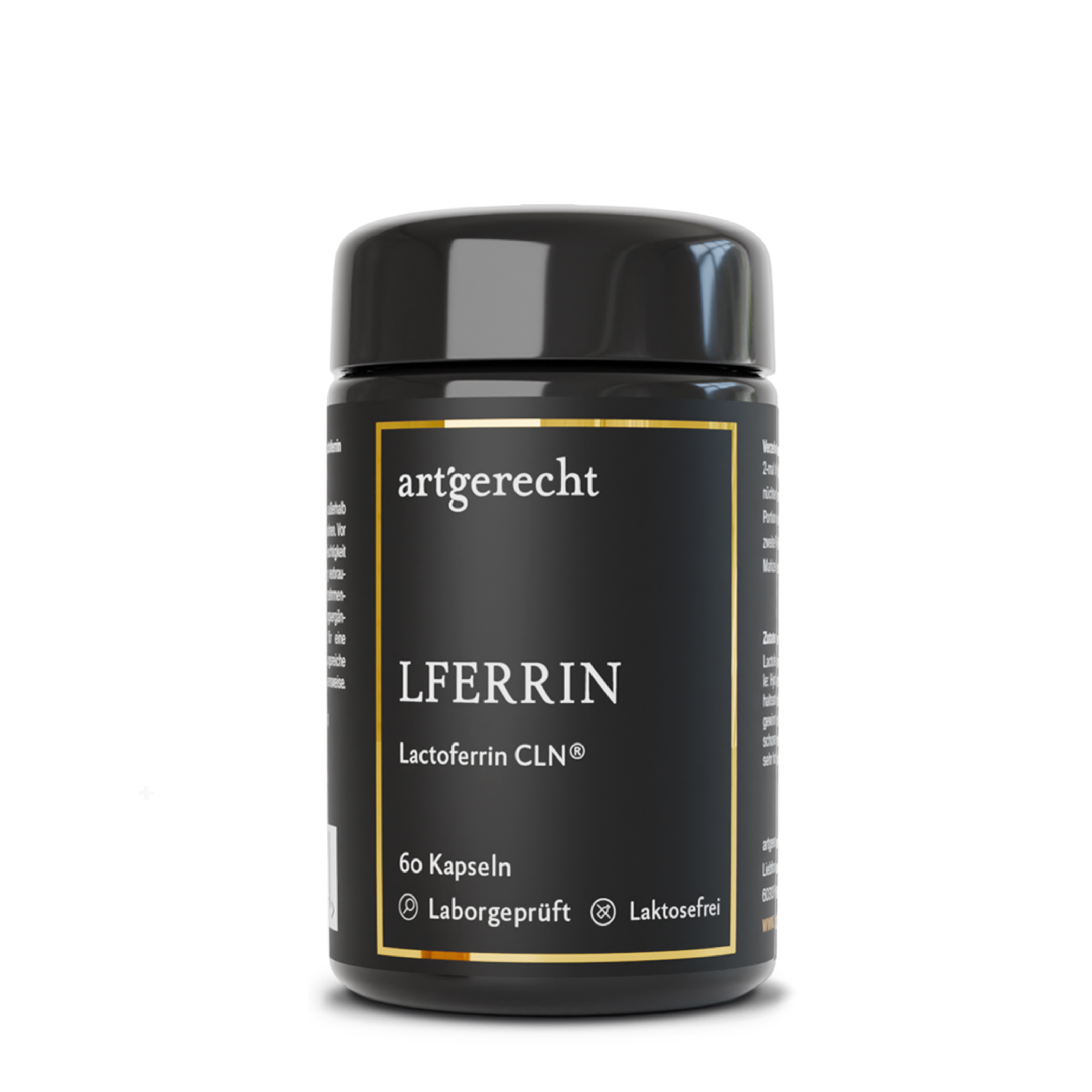
For your universal protection
As one of the most valuable proteins in the body, lactoferrin is a natural component of the immune system.
For your iron balance
Specially formulated for your iron balance with plant-based curry leaf iron, Lactoferrin CLN®, and natural Vitamin C from rose hips.