

Labyrinthula sp. – Marine Protist & Plant Pathogen
Labyrinthula sp. are unicellular, marine-associated protists known as plant pathogens that can infect marine seagrass meadows and other marine organisms.
Things worth knowing about "Labyrinthula sp."
Labyrinthula sp. are unicellular, marine-associated protists known as plant pathogens that can infect marine seagrass meadows and other marine organisms.
What is Labyrinthula sp.?
Labyrinthula sp. refers to a genus of unicellular protists belonging to the group of Labyrinthulomycetes (also known as slime net organisms). These microorganisms are predominantly found in marine and brackish water ecosystems. They are well known for their ability to form a characteristic network of slimy channels — the so-called ectoplasmic net — within which the cells move by gliding. Labyrinthula sp. are considered significant plant pathogens in marine ecosystems and are best known as the causative agents of seagrass wasting disease.
Taxonomy and Classification
Labyrinthula sp. belong to the group of Stramenopiles (also called Heterokonta) and are classified within the class Labyrinthulomycetes. This group includes various marine protists of considerable ecological and biological importance. The genus Labyrinthula was first described in the 19th century and includes several species, the most notable being Labyrinthula zosterae, regarded as the primary agent of seagrass wasting disease.
Distribution and Habitat
Labyrinthula sp. are distributed worldwide in marine ecosystems. They are commonly found in:
- Seagrass meadows (especially beds of Zostera marina)
- Shallow coastal waters
- Salt marshes and brackish water areas
- Sandy and muddy sea floors
As both saprotrophs and pathogens, they play a dual role in marine ecosystems: decomposing organic matter while simultaneously infecting living plants.
Infection Mechanism and Pathogenicity
Labyrinthula sp. penetrate their host plants through the leaf tissue of seagrasses. Inside the plant, they form their characteristic ectoplasmic net, through which they absorb nutrients from plant cells. This process leads to:
- Necrotic leaf lesions: characteristic dark brown to black spots on seagrass blades
- Tissue destruction: progressive decomposition of leaf tissue
- Plant death: in severe infections, the entire plant may die
Factors that promote severe disease progression include elevated water temperatures, high salinity levels, and nutrient pollution in the water.
Ecological Significance
The most well-known impact of Labyrinthula sp. is the so-called wasting disease, a devastating condition affecting seagrass meadows. In the 1930s, this disease destroyed up to 90% of eelgrass (Zostera marina) populations along the Atlantic coasts of North America and Europe. Seagrass meadows are of tremendous importance to marine ecosystems because they:
- Serve as nursery grounds and habitats for many marine species
- Contribute to carbon sequestration (Blue Carbon)
- Improve water quality
- Protect coastlines from erosion
The loss of these ecosystems due to Labyrinthula infections therefore has far-reaching ecological and economic consequences.
Diagnosis and Detection Methods
Detection of Labyrinthula sp. is achieved through various methods:
- Light microscopy: direct visualization of the characteristic ectoplasmic net and the gliding cells within it
- Histological examination: detection of tissue changes in infected plants
- Molecular methods: PCR-based techniques for specific detection of Labyrinthula DNA in plant or water samples
- Culture methods: cultivation on seawater agar media for isolation and further characterization
Relevance to Human Health
Labyrinthula sp. are primarily known as plant pathogens and are not considered pathogenic to healthy humans. However, there is evidence that certain Labyrinthulomycetes can infect marine animals, including shellfish and fish. This may have indirect implications for human health, as affected seafood may be of reduced quality. Immunocompromised individuals should exercise general caution when in close contact with heavily contaminated seawater.
Research and Control Approaches
Research into Labyrinthula sp. is an active field, particularly in the context of global climate change, as rising water temperatures may promote the spread and virulence of these organisms. Current research approaches include:
- Development of resistant seagrass ecotypes
- Use of biocontrol agents through antagonistic microorganisms
- Monitoring of seagrass meadows using remote sensing and environmental DNA analyses
- Investigation of environmental factors influencing the virulence of Labyrinthula sp.
References
- Bockelmann, A. C. et al. (2013): Prevalence and distribution of Labyrinthula zosterae in Northern European eelgrass (Zostera marina) beds. In: Marine Biology, 160(3), 543-549.
- Short, F. T. & Wyllie-Echeverria, S. (1996): Natural and human-induced disturbance of seagrasses. In: Environmental Conservation, 23(1), 17-27.
- Leander, C. A. & Porter, D. (2001): The Labyrinthulomycota is comprised of three distinct lineages. In: Mycologia, 93(3), 459-464.

Building Blocks for a Healthy Life
As an integrated manufacturer, we develop & produce evidence-based, patented, and non-patented formulations. We work exclusively with plant and natural extracts according to the strictest purity & quality standards.
The combination of science & modern technology with the laws of nature creates solutions consistently tailored to humans – for the highest good: health.
Verwandte Produkte

For Healthy Oral Flora & Dental Care
Formulated lozenges with Dentalac®, lactic acid bacteria, and Lactoferrin CLN®
For Healthy Oral Flora & Dental Care
Formulated lozenges with Dentalac®, lactic acid bacteria, and Lactoferrin CLN®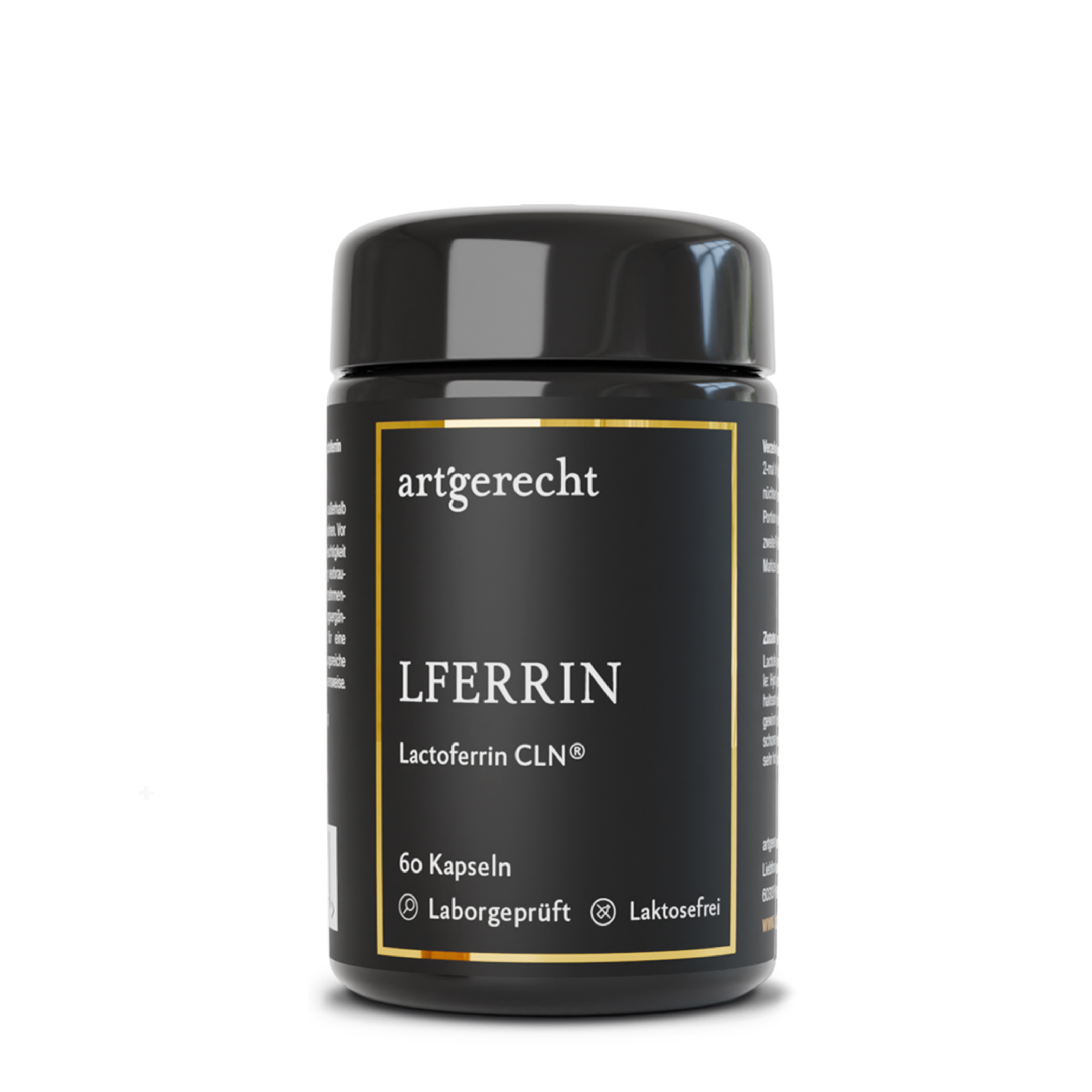
For your universal protection
As one of the most valuable proteins in the body, lactoferrin is a natural component of the immune system.
For your iron balance
Specially formulated for your iron balance with plant-based curry leaf iron, Lactoferrin CLN®, and natural Vitamin C from rose hips.