

Lactoferrin | Functional Proteins
Our Lactoferrin CLN® is manufactured in Germany using modern purification and extraction processes and achieves a purity of 98 percent. The high-dose formulation, gastro-resistant HPMC capsules, and the complete absence of additives ensure stability, purity, and controlled release. Whether as a single-ingredient or combination product, Lactoferrin is available from us in consistently tested quality.
Key protein for the immune system, iron metabolism and mucosal protection
Lactoferrin is a naturally occurring, iron-binding protein and a key component of the innate immune system. It is found in high concentrations in breast milk and in various bodily secretions, where it performs a protective function on the mucous membranes – precisely at the entry points for many pathogens. Through its ability to bind free iron, lactoferrin not only regulates the microbiome environment but also plays an important role in iron metabolism. It thus links two essential areas: immune regulation and nutrient balance.

For Healthy Oral Flora & Dental Care
Formulated lozenges with Dentalac®, probiotic lactic acid bacteria, and Lactoferrin CLN®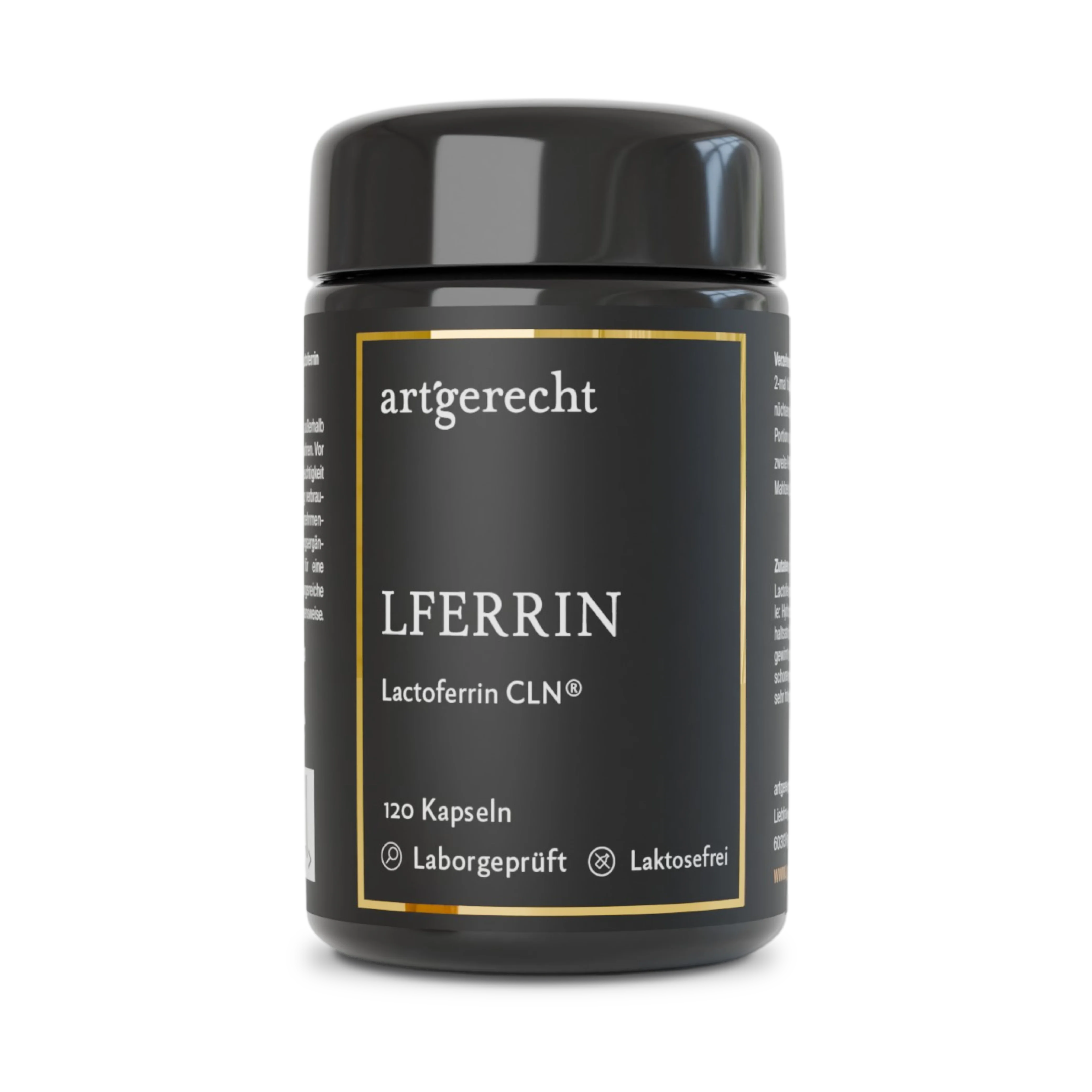
For your universal protection
As one of the most valuable proteins in the body, lactoferrin is a natural component of the immune system.

For your universal protection
As one of the most valuable proteins in the body, lactoferrin is a natural component of the immune system.
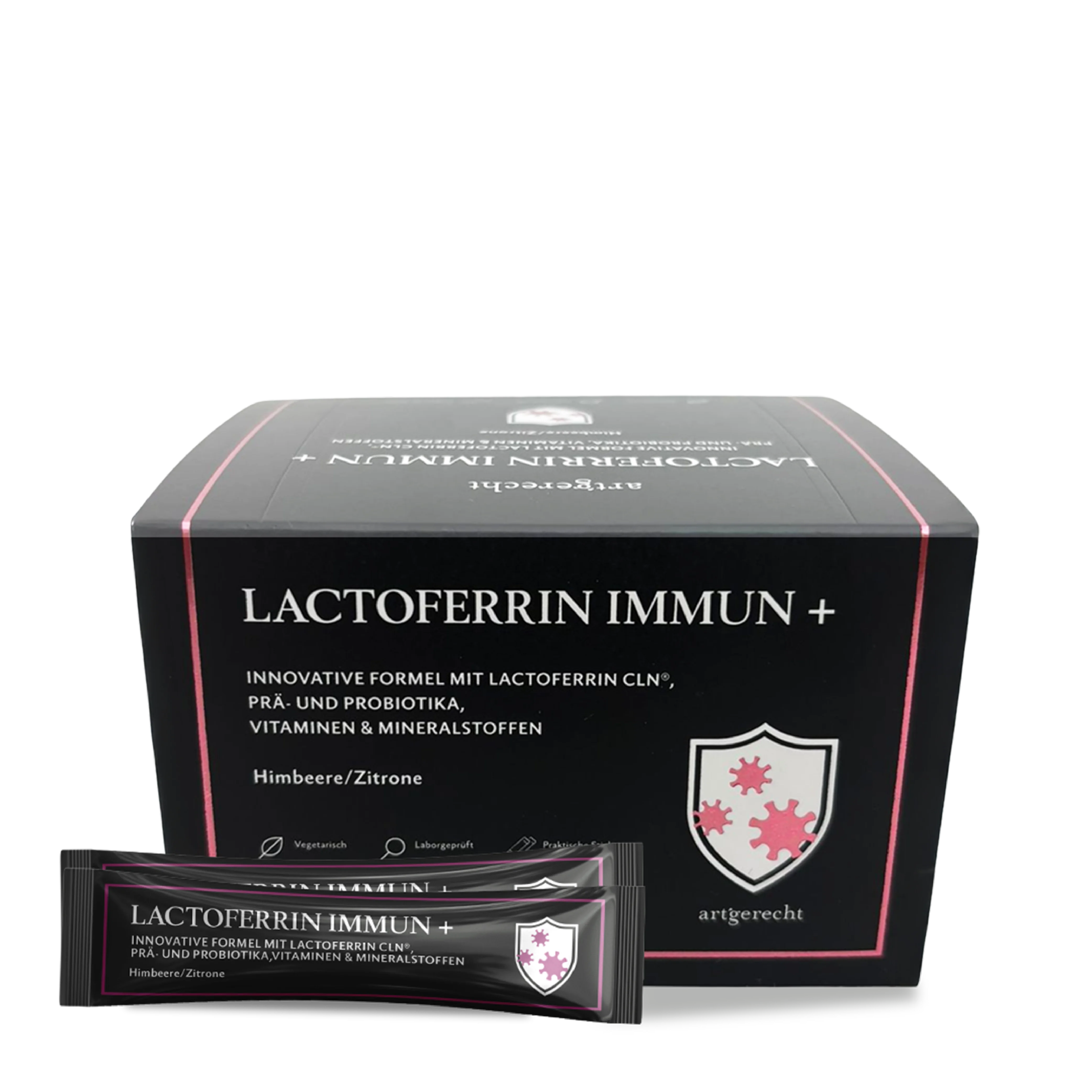
Innovative premium formula for the immune system², cell protection³ & energy⁴
Innovative premium formula for immune system, cell protection & energy

For your iron balance
Specially formulated for your iron balance with plant-based curry leaf iron, Lactoferrin CLN®, and natural Vitamin C from rose hips.

Quality Without Compromise
What is lactoferrin?
Lactoferrin is a naturally occurring, iron-binding glycoprotein belonging to the transferrin family. It is a key component of the innate immune system and is found in particularly high concentrations in colostrum (first milk), as well as in mature breast milk, saliva, tears, nasal secretions and other mucosal secretions.
Its physiological role is to protect the body’s sensitive surfaces – particularly the mucous membranes – whilst regulating immune processes. Lactoferrin is therefore not an isolated nutrient, but a functional protein with a regulatory role.
How does lactoferrin work?
The effects of lactoferrin are multifactorial. It combines iron regulation with immune modulation and mucosal protection. Central to this is its ability to bind ferrous iron (Fe²⁺). This enables it to influence the local environment and regulate the growth of certain microorganisms. Furthermore, lactoferrin interacts with immune cells such as macrophages, T and B lymphocytes, and dendritic cells. It does not act in a stimulating manner in the sense of ‘over-activation’, but rather in a modulating way – it supports the balance between the immune response and controlled inflammation regulation.
Who can benefit from lactoferrin?
Lactoferrin may be particularly beneficial for:
- People with an increased immune burden
- People with sensitive mucous membranes
- People with iron deficiency or impaired iron regulation
- People going through periods of intense physical or mental stress
- Users who wish to provide targeted, physiological support for their immune system
Due to its good tolerability and natural origin, lactoferrin is increasingly being used as a component of modern, scientifically based supplementation strategies.
Background information on Lactoferrin & Functional Proteins
-
 Baby Nutrition – Science-Based Guidance for Young MothersNutrition in the first months of life shapes long-term health. This article offers guidance for young mothers, explains key nutrients, and highlights ...
 -
 Lactoferrin for iron deficiency: effects, studies, and advantages over iron supplementsIron deficiency is widespread, but many people have difficulty tolerating traditional iron supplements. Lactoferrin offers a natural and effective alt...
 -
 DEEP DIVE: Lactoferrin – Nature's multi-talented wonderLactoferrin is a true multi-talent when it comes to your health. In this podcast episode, we explain how it supports your immune system, reduces infla...
 -
 DEEP DIVE - Iron & iron deficiencyNatural Iron combines plant-based iron from curry leaves with Lactoferrin CLN® and vitamin C from rosehip extract. In this deep dive episode, you will...
Regulation rather than overstimulation
The immune system operates within a finely balanced equilibrium between activation and control. An excessive inflammatory response can be just as problematic as an inadequate immune response.
This is where lactoferrin comes in: it supports the innate immune response whilst also regulating inflammatory signalling pathways. It helps to stabilise the barrier function, particularly in the mucous membranes – that is, in the gut, respiratory tract and urogenital tract. Lactoferrin also influences the activity of immune cells and can support communication between the innate and adaptive immune systems. This optimises the body’s own ability to respond without placing an unnecessary burden on the system.


Key role in iron metabolism
Iron is essential for life, but in its free form it can promote oxidative stress. At the same time, many microorganisms require iron for their growth. Lactoferrin has a particularly high affinity for iron ions. By binding free iron, it can:
- reduce the availability of pathogenic bacteria
- limit oxidative stress
- help regulate iron balance
In the context of iron deficiency, lactoferrin is increasingly being studied, as it can support iron absorption in a physiological manner. Unlike traditional iron supplements, it does not primarily work by providing a high intake of iron, but by regulating the distribution of iron within the body.
Häufig gestellte Fragen zu Lactoferrin & Functional Proteins
What exactly is lactoferrin?
Lactoferrin is a naturally occurring iron-binding protein and a component of the innate immune system. It is found in breast milk, as well as in saliva and other mucosal secretions. Its functions include immune regulation, iron binding and supporting the mucosal barrier.
How does lactoferrin differ from traditional iron supplements?
Whilst traditional iron supplements primarily supply iron, lactoferrin works by regulating the bodys iron availability. It binds free iron and influences its distribution. As a result, less free iron is available for oxidative processes or harmful microorganisms.
Can lactoferrin ‘overstimulate the immune system?
No. Lactoferrin does not act by providing non-specific stimulation, but rather by modulating the immune response. It helps maintain a balance between the activation and regulation of the immune response and contributes to the stability of the mucous membranes.
Is lactoferrin also suitable for people with a sensitive stomach?
Lactoferrin is generally considered to be well tolerated. Unlike some high-dose iron supplements, it is not primarily associated with direct iron overload, but rather with physiological regulation. In cases of existing medical conditions or uncertainty, dosage should be tailored to the individual.
When is it advisable to take lactoferrin?
Targeted supplementation may be particularly beneficial during periods of increased immune stress, in cases of sensitive mucous membranes, or as part of a regulated iron management programme. Lactoferrin is also frequently used during periods of intense physical or mental strain.
Can lactoferrin be combined with other micronutrients?
Yes. Lactoferrin can be effectively combined with vitamin D, zinc or vitamin C, as these nutrients perform different, complementary functions in the area of immune regulation. It is essential to ensure the dosage is tailored to individual needs as part of a holistic approach.
How long should lactoferrin be taken for?
The duration of use depends on your individual goals. Some people take lactoferrin as a short course during periods of increased physical exertion, whilst others incorporate it into their long-term supplementation routine. A personalised consultation can help you find the right approach.


✓ Go Green: CO2-neutraler Versand

✓ Zahle schnell & sicher

✓ 30 Tage Geld-zurück-Garantie

✓ Flexible Zahlungsoptionen

✓ Sichere Kreditkarten Zahlungen

✓ Bequem per Rechnung zahlen