
-
 DE
DE



Sports | Recovery
Training, recovery, and mental resilience place high demands on the body. Our sports and recovery products are based on patented amino acid formulas, fermented ingredients, and high-purity active ingredients of certified quality. From EVAA amino acids to pharmaceutical-grade L-glutamine and organic magnesium compounds, our formulas are designed for maximum purity and to thoughtfully complement your active routine.
Targeted support for performance
Physical activity places demands on the body at several levels: muscles, tendons, energy metabolism and the nervous system must adapt to training stimuli and recover. Crucial to progress and performance is not only the training itself, but the quality of recovery. A targeted supply of selected micronutrients, amino acids and functional building blocks can help to support adaptation processes, optimise recovery phases and better compensate for structural stress.
13 Products
Subscription available

Amin Refill Pack
For your fast recovery
Unique patented amino acid blend (EVAA™) for your recovery
300 g
Regular price:
€69.90
Subscription available

Amin Sticks
For your quick recovery
Unique patented amino acid mix (EVAA™) for your recovery
30 x 5 g
Regular price:
€45.90
Subscription available

Elektrolyte Pulver Plus Orange
Premium Electrolyte Complex for Nerves², Muscles³ & Energy⁴
Premium Electrolyte Complex with Orange Flavor for Nerves, Muscles & Energy
414 gr
Regular price:
€22.90
Subscription available

Elektrolyte Pure
Pure. Isotonic. Effective. artgerecht Pure.
Replenish what you lack – naturally and fast
279 g
Regular price:
€18.90
Discount
Subscription available

Gelenk Komplex
Comprehensive Joint Complex with Glucosamine, Chondroitin, MSM, and Type 2 Collagen

120 Kapseln
Sale price:
€27.90
Regular price:
€35.90
Subscription available

L-Glutamine Powder
GLUTAMIN-FIBER-KOMPLEX · VEGAN · GLUTENFREI
High-purity, pharmaceutical-grade L-glutamine combined with natural dietary fiber from baobab
300 g
Regular price:
€45.90
Subscription available

Magnesium
For your daily magnesium needs
Organic magnesium complex to reduce fatigue and tiredness and support normal muscle function
90 Capsules
Regular price:
€19.90
Discount
Subscription available

Nergy Q10 Refill Pack
Your natural source of energy for everyday life & sports
Natural energy formula for everyday life & sports[siehe Variante]
Sale price:
€25.00
Regular price:
€35.90
Discount
Subscription available
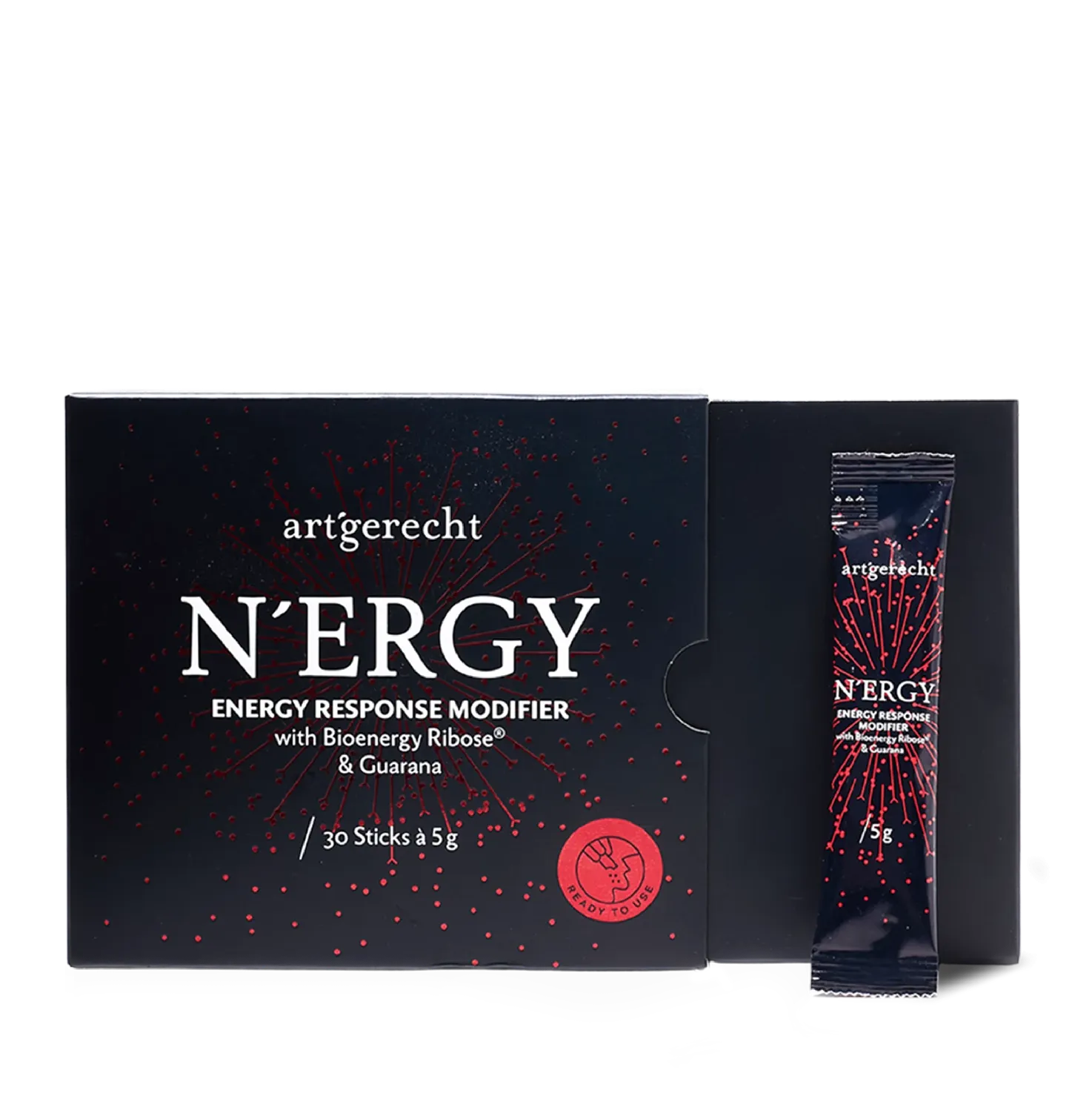
Nergy Q10 Sticks
Your natural energy source for everyday life & sport
Natural energy formulation for everyday life & sport
30 x 5 g
Sale price:
€35.90
Regular price:
€45.90
Subscription available

PureWay® Kreatin
LiposoMax® | höchste Absorption | magenschonend
100% liposomal creatine monohydrate (PureWay® creatine) embedded in a phospholipid bilayer
139 g
Regular price:
€29.90

Natural Supplements & Superfoods
At artgerecht, we combine science, innovation, and cutting-edge technology with the laws of nature to develop solutions tailored to humans. Health is the highest good.
Exercise & Recovery: What Really Happens in the Body
Intense physical activity is a targeted stress stimulus for the body. Muscles are subjected to mechanical strain, energy reserves are depleted and metabolic processes are accelerated. This results in micro-tears in muscle fibres, an increase in lactate production and a significant rise in energy requirements.
At the cellular level, several processes occur simultaneously, helping the body to respond to increased stress and adapt to repeated training stimuli. These complex processes involve energy production, cell structure, signalling pathways and regulatory mechanisms, all of which are closely interlinked:
- Increased energy consumption: ATP is utilised more rapidly; mitochondria are working at full capacity.
- Microtrauma in muscle tissue: Minor structural damage triggers repair processes.
- Oxidative stress: Increased metabolism leads to a rise in free radicals.
- Hormonal adaptation: Stress hormones such as cortisol rise, and anabolic processes are regulated.
- Electrolyte and fluid loss: Sweating affects mineral balance and hydration.
These stress responses are intentional – they form the basis for improved performance. The body responds with adaptive mechanisms such as muscle growth, improved mitochondrial function and more efficient energy utilisation.
How does regeneration work?
Recovery is the crucial process through which the body adapts to training stimuli. Without sufficient rest, performance does not improve; instead, the body becomes overloaded. The following processes take place during recovery:
- Repair of muscle structures: Damaged proteins are broken down and rebuilt.
- Replenishment of energy stores: Glycogen stores are restored.
- Reduction of oxidative stress: Antioxidant systems stabilise cell structures.
- Inflammation regulation: Local inflammatory processes are controlled and reduced.
- Hormonal rebalancing: Stress and growth hormones are brought back into balance.
Sleep plays a key role in this, as growth hormones are released and repair processes are intensified during sleep.
Optimal recovery is achieved through the interaction of:
- Adequate nutrient intake (proteins, amino acids, electrolytes)
- Hydration
- Sleep quality
- Training load management
- Stress management
Background information on Sports & Recovery
-
 Welche Magnesiumform ist die beste? Citrat, Glycinat & Co. im VergleichMagnesiumcitrat, Bisglycinat, Malat oder Oxid – welche Form die richtige ist, hängt vom Ziel ab. Dieser Artikel erklärt, was die Verbindungsformen unt...
 -
 Muscle Building Explained: Training, Protein & RecoveryMuscle building is more than just training. Learn how protein, recovery, and the right exercise stimulus work together for effective muscle growth....
 -
 Creatine: Effects, Side Effects, and Current ResearchCreatine is one of the most extensively studied supplements in the world. But what are its real benefits, are there any side effects, and what’s the t...
 -
 Build Endurance and starting to run: A Scientific GuideWant to improve your endurance or start running? This scientific guide shows you how training, heart rate, and Zone 2 really work and how to avoid beg...
 -
 22 minutes without air – breathing power & performance with Tom SietasIn this Pro Edition, world record diver Tom Sietas explains how breathing techniques influence physical performance, mental strength and regeneration....
 -
 Exercise After 40: How to Protect Your Heart and Metabolism – Even with Weekend WorkoutsBeing active after 40 is crucial to prevent cardiovascular disease and diabetes. Even if you can only work out on weekends, you’ll gain huge health be...
 -
 Electrolytes – How to Refill Your Electrolyte Balance When DehydratedWhether from exercise, heat, or illness: electrolytes are lost quickly and must be replaced deliberately. Learn how to restore your electrolyte balanc...
 -
 Omega-3 in sport - an interdisciplinary talentOmega 3 fatty acids are key to heart health - but they can also help repair muscles, relieve pain, burn fat and make training easier. What many athlet...
 -
 Podcast Pro Edition with Yannick Obenauer: Smart Training - Healthy Exercise & Muscle BuildingYannick Obenauer explains how to train smartly: build muscles, avoid injuries, and support energy, recovery, and overall health sustainably.
 -
 Regeneration after sport: progress through a break. The best tips for your recovery.Sport challenges us - and that's a good thing. In order to achieve progress in training, regeneration is particularly important alongside the strenuou...
Muscle building, recovery and cramp prevention
Amino acids are the key building blocks of muscle proteins and are essential for repair and adaptation processes following exercise. Essential amino acids, in particular, support muscle protein synthesis and help to structurally regenerate micro-injuries in the tissue.
Magnesium plays a crucial role in muscle contraction and relaxation. It is involved in neuromuscular signalling and supports normal muscle function. During intense exercise or heavy sweating, the body’s requirement for magnesium may increase. Ensuring an adequate supply helps to prevent muscular imbalances and supports efficient recovery.


Cellular energy for performance
During physical exertion, energy requirements at the cellular level increase significantly. Coenzyme Q10 is an essential component of the mitochondrial respiratory chain and supports the body’s own energy production.
In combination with other energy-related micronutrients, Nergy Q10 is designed to support mitochondrial function and aid energy supply during intense exercise. The focus is on metabolic stability, efficient ATP production and sustained performance – not on short-term stimulation.
Häufig gestellte Fragen zu Sports & Recovery
Why is recovery just as important as training?
Performance improvements do not occur during exercise, but during the recovery phase. It is only during recovery that muscle fibres are repaired, energy stores are replenished and adaptive processes take place. Without sufficient recovery, performance may plateau or lead to overtraining.
What role do amino acids play in sport?
Amino acids are the building blocks of muscle proteins and are essential for muscle growth, repair processes and adaptation to training stimuli. They support muscle tissue recovery, particularly after intense workouts.
Why is magnesium important for athletes?
Magnesium contributes to normal muscle function and plays a role in neuromuscular signalling. The bodys requirement for magnesium may increase during heavy sweating or intense physical exertion. An adequate intake supports muscle relaxation and resilience.
How can I boost my energy levels during training?
Mitochondrial energy production is crucial for performance. Micronutrients such as coenzyme Q10 play a role in cellular ATP production and support efficient energy supply – particularly during prolonged or intense exercise.
Can I combine several products?
Yes. Amino acids, magnesium and energy-related micronutrients work at different levels and can complement each other effectively. The key is to use them in a structured way that is tailored to individual needs.
How can I tell if my recovery isnt optimal?
Symptoms may include persistent tiredness, muscle soreness lasting several days, a drop in performance, sleep disturbances or an increased susceptibility to infections. In such cases, training intensity, sleep quality and nutritional intake should be reviewed.
Are supplements essential in sport?
A balanced diet forms the basis. Supplements can be useful if your needs increase due to intensive training or if your diet does not provide sufficient amounts of certain nutrients.
How long does optimal recovery take?
The duration depends on training intensity, individual resilience, sleep quality and nutritional intake. Sufficient recovery periods should be scheduled between intense sessions to allow the body to fully adapt.


✓ CO₂-reduzierter Versand mit DHL GoGreen Plus

✓ Zahle schnell & sicher

✓ 30 Tage Geld-zurück-Garantie

✓ Flexible Zahlungsoptionen

✓ Sichere Kreditkarten Zahlungen

✓ Bequem per Rechnung zahlen