Hypothyroidism and overweight: Current insights and data
Hypothyroidism is one of the most common endocrine disorders and is often associated with weight problems. Typical symptoms of hypothyroidism include fatigue, cold intolerance, depressive mood and, in particular, unexplained weight gain [1].
An underactive thyroid slows down the entire metabolism and can therefore contribute to overweight. At the same time, overweight and obesity themselves are widespread health problems: worldwide, the proportion of people with obesity has almost tripled since 1975 according to the WHO [2]. In Germany, around 53.5% of adults are currently overweight (BMI ≥ 25), of whom around 19% are obese (BMI ≥ 30) [3]. This article examines the relationship between hypothyroidism and overweight, presents new scientific findings on pathophysiology, current epidemiological data from Europe and Germany, as well as developments in diagnostics and therapy – in conventional medicine and complementary medicine.
Pathophysiology: How hypothyroidism affects body weight
A deficiency of thyroid hormones (thyroxine T4 and triiodothyronine T3) lowers basal metabolic rate and affects numerous organ systems.
- Slowed metabolism: In hypothyroidism, the body reduces its energy expenditure. Resting energy expenditure decreases and the organism burns fewer calories even at rest [1].
- Altered appetite regulation: Newer findings indicate that low thyroid hormone levels can also influence hunger and satiety signals [1].
- Fluid retention: A large part of the weight gain in hypothyroidism is not only due to fat, but also to water retention [1].
These factors often lead to a moderate weight gain. It is estimated that about half of untreated patients with hypothyroidism gain weight – usually about 2 to 5 kg. Greater weight increases are possible, especially if the hormone deficiency persists over a longer period. However, it is important to know that severe obesity (e.g. more than 20 kg overweight) usually cannot be explained by a thyroid disorder alone [1].
While hypothyroidism can cause weight gain, studies suggest that obesity can negatively affect thyroid function. Adipose tissue produces inflammatory mediators that may interfere with the thyroid. It appears that overweight and hypothyroidism can reinforce each other [4].
Epidemiology: Prevalence of hypothyroidism and overweight
Hypothyroidism in Europe and Germany: A meta analysis estimates the average prevalence of hypothyroidism in Europe at around 3–5% [5]. In addition, more recent studies show that the average prevalence of hypothyroidism in Europe is around 3.05%, with women being more frequently affected than men. In Germany, the prevalence of Hashimoto thyroiditis is estimated at 5–10% [6].
Overweight and obesity: According to the Robert Koch Institute (RKI), 53.5% of adults in Germany are overweight, of whom 19% are obese. Men are more often affected than women, and prevalence increases with age [3]. Around one in two adults in Europe is overweight and roughly 20% are obese [2].
Interaction: Studies show that the metabolic syndrome is associated with an increased risk of subclinical hypothyroidism. At the same time, people with severe overweight more often show slightly elevated TSH levels, even without manifest hypothyroidism [7].
Diagnosis: New recommendations and developments
The diagnosis is primarily based on laboratory tests (TSH, fT3, fT4). In suspected hypothyroidism, TSH is the most sensitive marker [8]. Antibodies such as TPO antibodies support the diagnosis of Hashimoto thyroiditis.
Age dependence: New recommendations point out that TSH levels can physiologically increase with age. In older people, a higher TSH value (> 10 mU/l) is sometimes tolerated, whereas stricter limits apply in pregnancy [9].
Therapy: Thyroid hormones and weight control
The standard therapy is substitution with levothyroxine (T4). With successful titration, a moderate weight loss can occur, usually in the range of 2–5 kg [1]. However, a drastic weight loss is rarely achieved by hormone replacement alone.
Subclinical hypothyroidism: In the case of mildly elevated TSH without symptoms, a watchful waiting approach is often chosen first. Treatment is usually recommended only when TSH > 10 mU/l or if there is significant symptom burden [8].
Combination therapy with T3 is not routinely recommended, as clear advantages have not been demonstrated and the risk of side effects increases [8].
Complementary measures / therapeutic framework
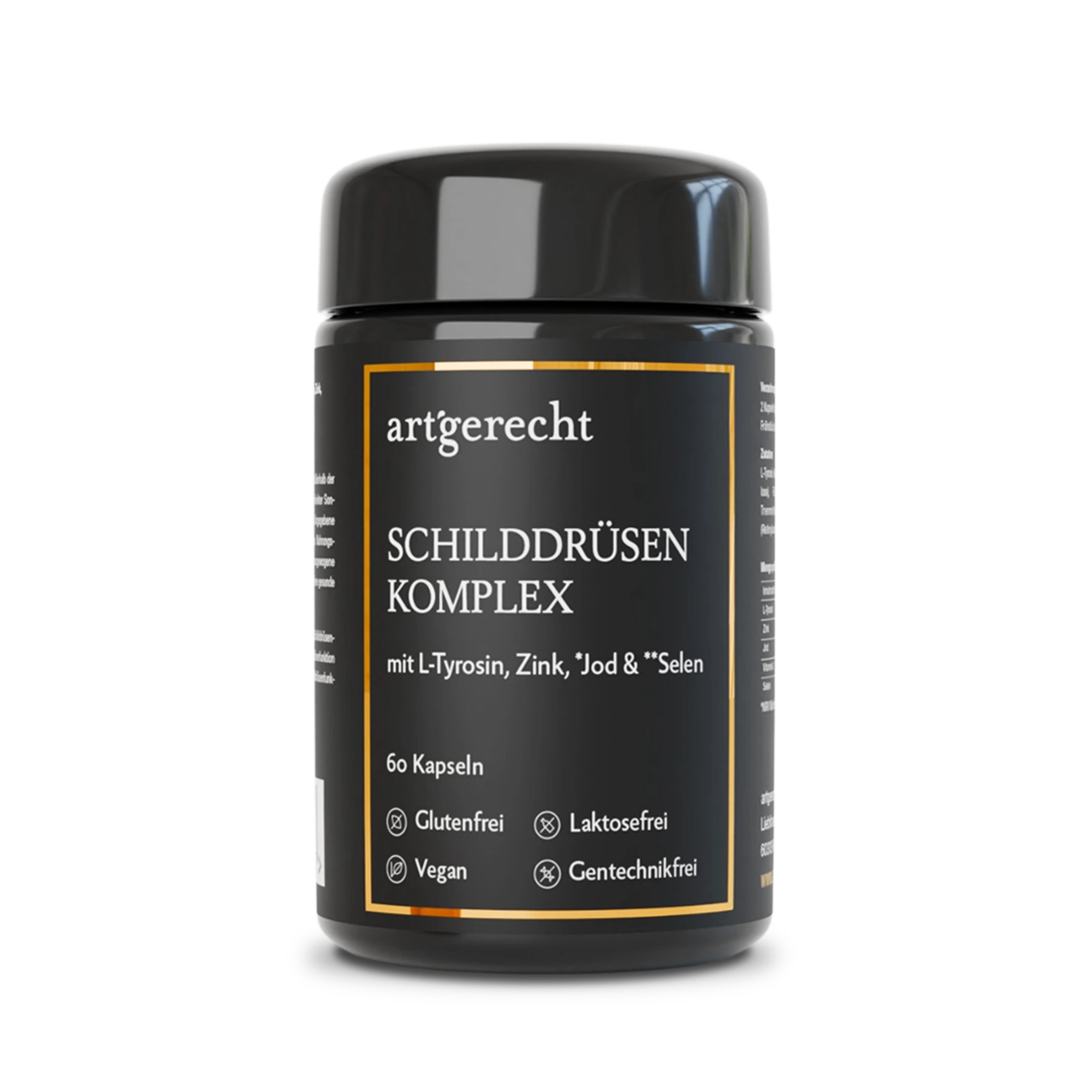
Iodine and selenium play an important role in thyroid health. In Germany, iodine intake has been declining, which is why adequate intake via iodised salt and sea fish is recommended [10]. Selenium can reduce antibody levels and inflammation in Hashimoto thyroiditis.
Vitamin D, iron, zinc and, if necessary, myo inositol can also provide supportive benefits – particularly in autoimmune diseases or in the case of documented deficiency. The following micronutrients and compounds are considered therapeutically relevant:
- Selenium: supports the conversion of T4 to T3 and has anti inflammatory properties.
- Zinc: essential for thyroid hormone production and for the immune system.
- Iron: involved in thyroid hormone synthesis; deficiency can impair conversion of T4 to T3.
- Vitamin D: has immunomodulatory functions; low levels are common in Hashimoto thyroiditis.
- Tyrosine: amino acid building block of thyroid hormones.
In orthomolecular medicine, these nutrients are supplemented in a targeted way in order to support optimal thyroid function and relieve secondary symptoms. In addition, exercise, strength training and an overall balanced diet are essential for long term weight stabilisation.
Conclusion
Hypothyroidism can lead to moderate weight gain through a reduction in basal metabolic rate and fluid retention. At the same time, overweight can also affect thyroid function via hormonal and inflammatory mechanisms. Careful diagnostics, individual therapy with levothyroxine and holistic lifestyle interventions form the basis for successful management.
References
[1] NIH: National Institute of Diabetes and Digestive and Kidney Diseases (NIDDK), 2023.
[2] WHO: Obesity and overweight – Factsheet, 2023.
[3] Robert Koch Institute (RKI): GEDA 2019/2020 survey.
[4] Longhi S. et al., European Journal of Endocrinology, 2018.
[5] Vanderpump MPJ, Lancet Diabetes Endocrinol, 2014.
[6] German Society of Endocrinology (DGE), 2022.
[7] Pearce EN et al., Thyroid, 2016.
[8] DEGAM guideline Hypothyroidism, version 2023.
[9] ATA Guidelines for the Treatment of Hypothyroidism, 2019.
[10] German Nutrition Society (DGE): Reference values iodine, 2021. [11] Winther KH et al., Clinical Endocrinology, 2023.