Nails & Hair — Signs of Iron Deficiency
Iron is essential for oxygen transport, energy production and many enzymes. Deficiency can cause fatigue, low drive and infections. Because nails and hair grow slowly and react to metabolic change, they can serve as a window into inner health — often signalling deficiency early.
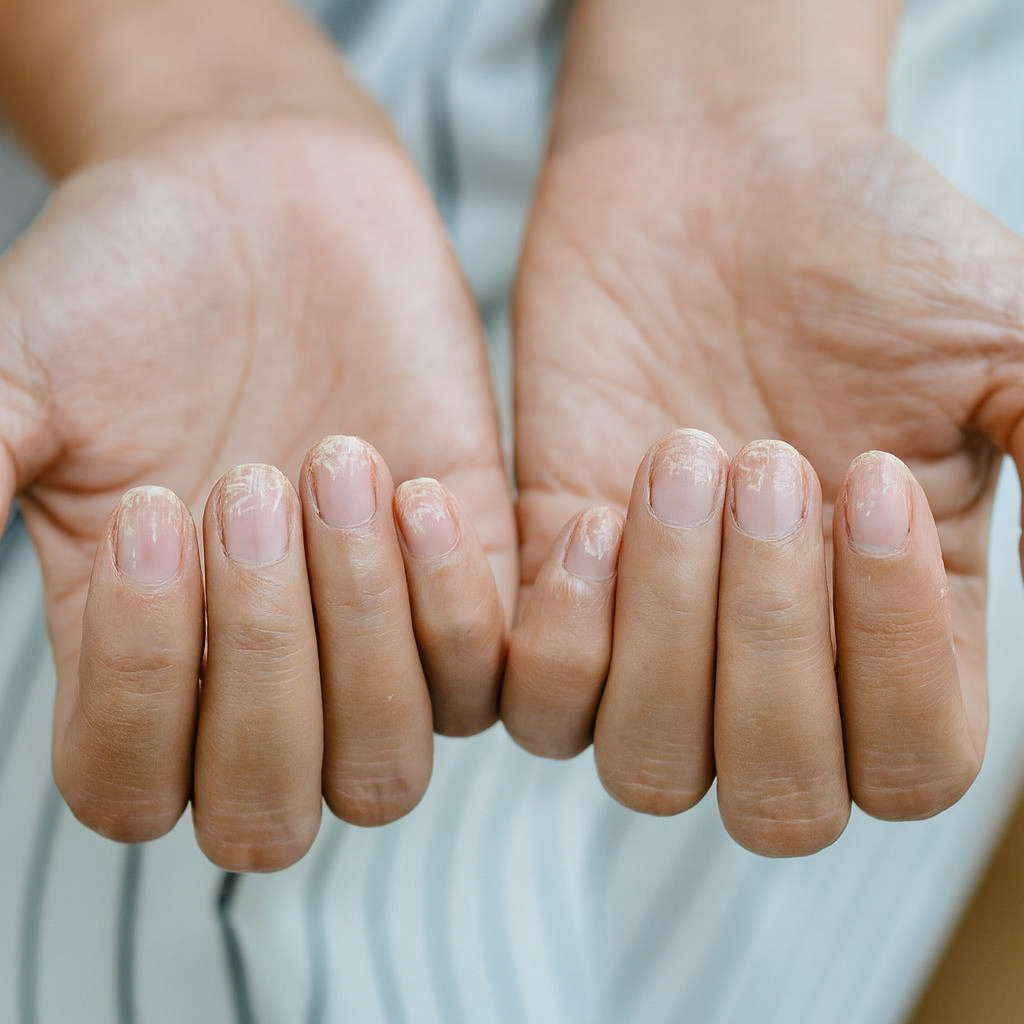
What do nails look like with iron deficiency?
- Brittleness: splitting and breaking with minor stress
- Ridges: more pronounced longitudinal/transverse ridges
- Spoon nails (koilonychia): thin, flattened, sometimes upturned plates
- Pale, matte colour
- Slower growth and poor repair of cracks
Iron is needed to build keratin and to oxygenate the nail matrix; deficits reduce structural stability and elasticity.
Accompanying signs in hair & skin
- Hair loss: a leading cause of diffuse shedding; hair looks thin and weak
- Texture changes: dull, dry, brittle
- Pallor & dry skin
- Angular cheilitis (cracked mouth corners)
Why the body reacts so quickly
Even mild iron shortage reduces cellular oxygen. High-turnover tissues — hair follicles, nail matrix — slow proliferation, producing brittle nails, slower growth and increased shedding.
Therapy: not just the amount — the form matters
Standard ferrous/ferric salts can irritate the gut and are often suboptimally absorbed. Lactoferrin, an innate iron-binding protein, can deliver iron gently via mucosal receptors (notably as holo-lactoferrin), improving tolerance and uptake and reducing GI side effects.
Conclusion
Nails and hair are sensitive indicators. When you notice ridges, brittleness or spoon nails — plus hair changes and fatigue — check iron status. Prioritize well-tolerated, bioavailable forms (e.g., iron bound to lactoferrin) to refill stores sustainably.