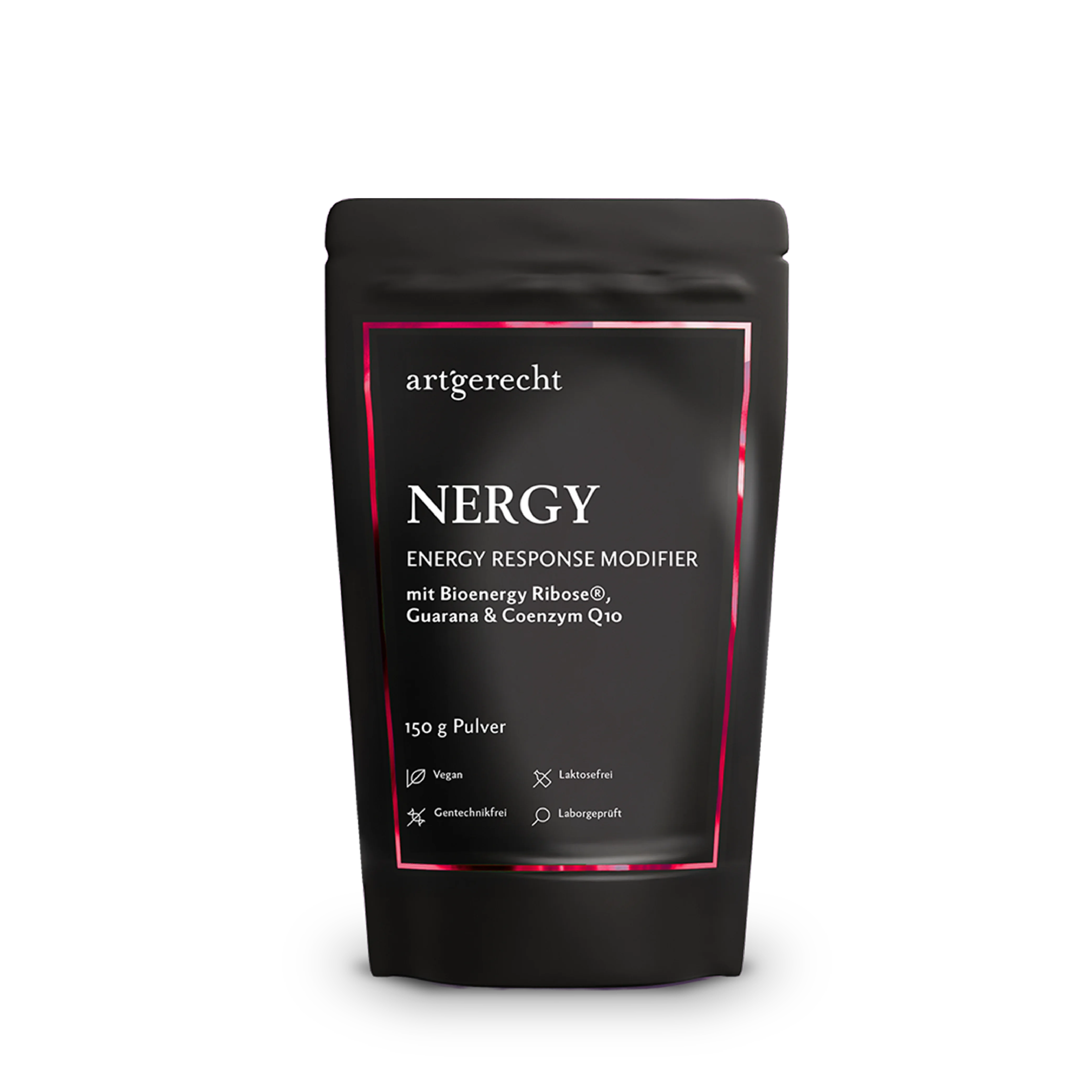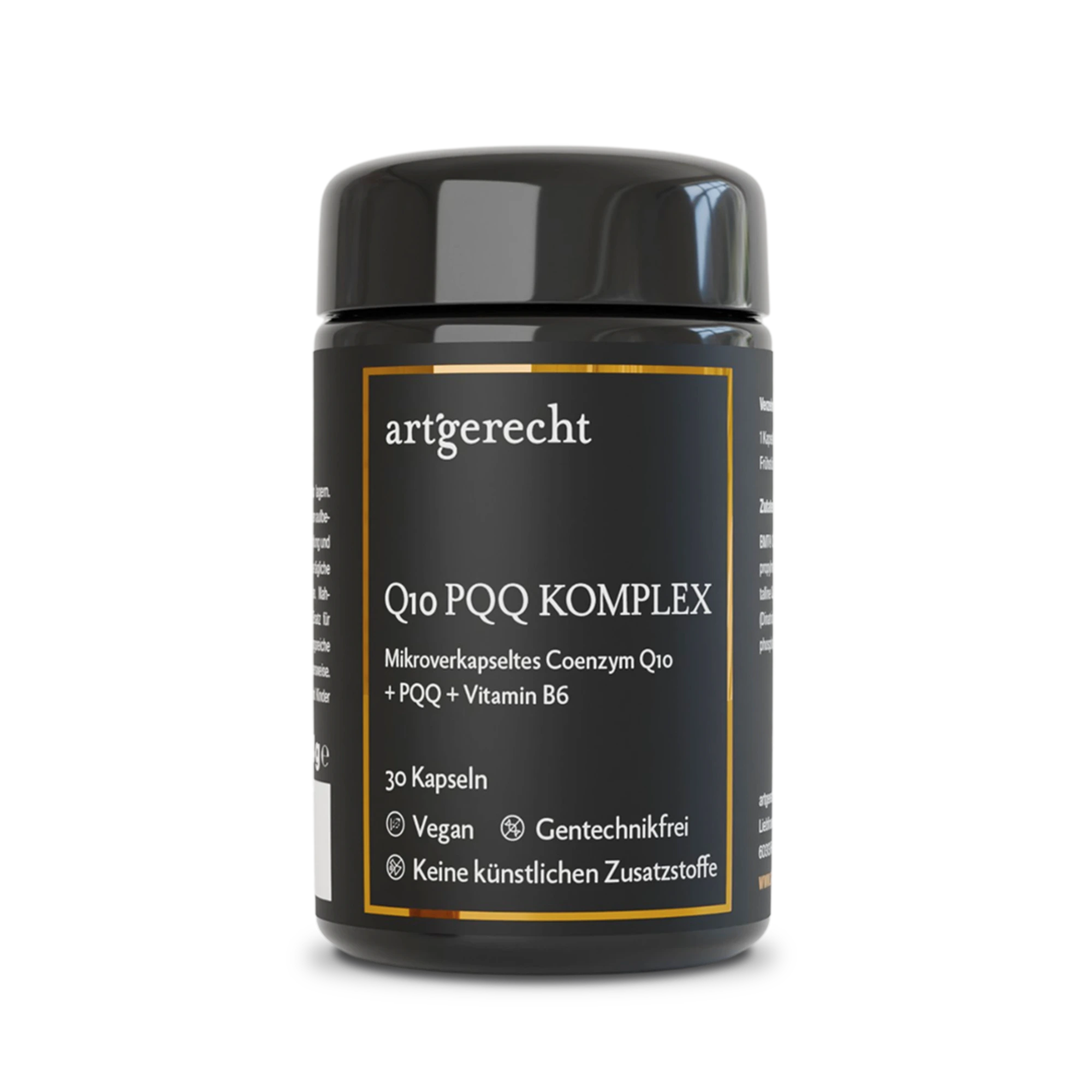
Coenzyme Q10: Functions and Effects on Health
Coenzyme Q10 (also known as ubiquinone or ubiquinol) plays a central role in heart health, performance, and protection against oxidative stress. With increasing age or with medication such as statins, the body’s Q10 level declines, which can lead to fatigue, muscle weakness, or reduced cellular function.
In this article, you’ll learn everything important about how coenzyme Q10 works, the differences between ubiquinone and ubiquinol, and current scientific insights on its use for more energy, vitality, and health.
What is coenzyme Q10 and how does it work?
Coenzyme Q10 (CoQ10) is a fat-soluble, “vitamin-like” molecule found in every cell of the body. It serves as an electron transporter in the mitochondrial respiratory chain and is essential for the production of ATP (adenosine triphosphate), the cell’s energy currency. CoQ10 also protects membranes and lipoproteins against oxidative stress, regenerates other antioxidants (such as vitamins C & E), and promotes the formation of antioxidant enzymes. Endogenous Q10 synthesis peaks around the age of 20 and then declines, which is why many people consider supplementation. [1,2,4]
Difference between ubiquinone & ubiquinol
CoQ10 exists in two forms in the body and in supplements: oxidized ubiquinone and reduced ubiquinol. The two forms interconvert and ultimately serve the same purpose in the body. In the bloodstream, CoQ10 is present mainly as ubiquinol.
Ubiquinol is often marketed as the “active” form because it is immediately antioxidative, whereas ubiquinone must first be reduced. However, studies show that the bioavailability difference is small with high-quality formulations. Well-formulated ubiquinone is reliably converted to ubiquinol and utilized. [1,2,3]
Coenzyme Q10 for health
Which concrete health benefits does coenzyme Q10 offer? Below is a look at scientifically studied areas of use.
Q10 for energy production and cellular metabolism
CoQ10 is indispensable for cellular energy production. It plays a key role in the respiratory chain within the mitochondria, where it transfers electrons—a decisive step in forming ATP, the body’s main energy source.
If CoQ10 is lacking, ATP production drops. Energy-hungry organs such as the heart, brain, and muscles are especially affected. To keep the process running, CoQ10 switches every second between ubiquinone (oxidized) and ubiquinol (reduced). When insufficient Q10 is available, energy production stalls, which may manifest as fatigue, exhaustion, or performance dips.
Scientifically speaking: because natural CoQ10 production declines with age, supplementation can support the energy metabolism of older cells. Clinical data show that Q10 may improve physical performance and recovery. A recent review in athletes found that 30–300 mg Q10 per day can increase antioxidant capacity, lower muscle-damage markers, and improve anaerobic performance. People with mitochondrial metabolic issues have also shown better endurance. [1,4,6]
Q10 for heart health
CoQ10 is particularly well studied in cardiovascular health. Many people with heart failure show significantly low Q10 levels in the blood.
A large analysis of 33 studies including over 4,000 patients found that regular CoQ10 supplementation can lead to:
- lower mortality,
- fewer hospitalizations due to heart problems,
- better cardiac function.
Why does CoQ10 help the heart? It improves the energy supply of heart muscle cells and shields them from oxidative stress, partly by supporting a healthier vascular tone (better vessel dilation). Clinical guidelines from the American College of Cardiology (ACC) and the American Heart Association (AHA) also acknowledge potential benefits of CoQ10 for moderate to severe heart failure. [4,5,9]
Q10 for brain & cognitive performance
In the brain, coenzyme Q10 provides important protection. It helps safeguard neurons from oxidative stress, which plays a key role in many neurodegenerative diseases such as Alzheimer’s.
In animal studies, Q10 improved memory, reduced harmful brain deposits (e.g., beta-amyloid plaques), and mitigated cellular damage. Evidence in humans is less conclusive to date. [8,10]
Q10 for muscle recovery
Studies indicate that daily intake of 30–300 mg Q10 lowers exercise-induced muscle oxidation in athletes and improves recovery. Overall, post-exercise oxidative damage appears to drop, inflammatory markers decrease, and endurance benefits are seen particularly under heavy loads. Given higher Q10 demand during intense phases, athletes often use high-quality Q10 (sometimes combined with other micronutrients). [4,6]
Q10 & healthy aging
Researchers see strong potential for cellular aging: CoQ10 helps neutralize damaging by-products of metabolism and actively supports cell health. It is also used in skin care, as skin cells require plenty of energy and are susceptible to oxidative stress.
So far, human studies have not demonstrated direct anti-aging effects (e.g., longer lifespan). Still, supplementing coenzyme Q10 can help compensate age-related declines and keep cells protected and efficient for longer.
Bioavailability and Q10 formulations
Because CoQ10 is highly fat-soluble, the body absorbs it only to a limited extent from conventional supplements. Various technologies have been developed to enhance uptake. For instance, finely dispersed Q10 crystals in microcrystalline or microencapsulated forms can boost intestinal absorption by up to 75%.
Hence many manufacturers use modern techniques such as nanoemulsions, liposomes, specialized milling, or microencapsulation. Absorption also increases when taken with dietary fat—for example, with oil or a main meal. Some products additionally include pyridoxal-5’-phosphate (the active form of vitamin B6) to support the body’s Q10 synthesis and further facilitate metabolism.
Bottom line: use coenzyme Q10 strategically for cellular energy
Coenzyme Q10 is biologically important, with proven roles in energy production and as an antioxidant. Numerous studies support health benefits—especially in heart failure, under physical load (e.g., sports), and potentially in age-related fatigue. Supplementation can be useful, particularly when demand is elevated (e.g., age, illness, or statin-related reduction). Product quality is key: microencapsulated or oil-based forms improve absorption.
References:
[1] López-Lluch, G., & Rodríguez-Aguilera, J. C. (2015). Quantitation of coenzyme Q10 in human tissues and plasma by HPLC-MS/MS: Update on its role in health and disease. Mitochondrion, 21, 1–12. https://doi.org/10.1016/j.mito.2015.01.004
[2] Bhagavan, H. N., & Chopra, R. K. (2006). Coenzyme Q10: Absorption, tissue uptake, metabolism and pharmacokinetics. Free Radical Research, 40(5), 445–453. https://doi.org/10.1080/10715760600617843
[3] López-Lluch, G. et al. (2019). Bioavailability of coenzyme Q10 supplements depends on carrier lipids and solubilization. Nutrients, 11(10), 2451. https://doi.org/10.3390/nu11102451
[4] Littarru, G. P., & Tiano, L. (2010). Clinical aspects of coenzyme Q10: An update. Nutrition, 26(3), 250–254. https://www.sciencedirect.com/science/article/pii/S089990070900344X?via%3Dihub
[5] Fotino, A. D., Thompson-Paul, A. M., & Bazzano, L. A. (2013). Effect of coenzyme Q10 supplementation on heart failure: a meta-analysis. American Journal of Clinical Nutrition, 97(2), 268–275. https://www.sciencedirect.com/science/article/pii/S0002916523054060?via%3Dihub
[6] Santos, G. C. J. et al. (2023). Coenzyme Q10 Supplementation in Athletes: A Systematic Review. Nutrients, 15(3), 794. https://doi.org/10.3390/nu15030794
[7] Semenova, Y., Peana, M., et al. (2022). Combined Supplementation of Coenzyme Q10 and Other Nutrients in Specific Medical Conditions. Nutrients, 14(20), 4383. https://doi.org/10.3390/nu14204383
[8] Jiménez-Jiménez, F. J., et al. (2023). Coenzyme Q10 and Dementia: A Systematic Review. Antioxidants (Basel), 12(2), 533. https://doi.org/10.3390/antiox12020533
[9] Wang, D. et al. (2014). The effect of coenzyme Q10 on statin-associated muscle symptoms: a meta-analysis of randomized controlled trials. Mayo Clinic Proceedings, 89(4), 501–510. https://doi.org/10.1016/j.mayocp.2013.11.013
[10] Hidaka, T., & Fujii, K. (2008). Safety assessment of Coenzyme Q10 (CoQ10). BioFactors, 32(1–4), 199–208. https://iubmb.onlinelibrary.wiley.com/doi/10.1002/biof.5520320122
[11] Hoppe, U., et al. (1999). Coenzyme Q10, a cutaneous antioxidant and energizer. BioFactors, 9(2–4), 371–378. https://doi.org/10.1002/biof.5520090225