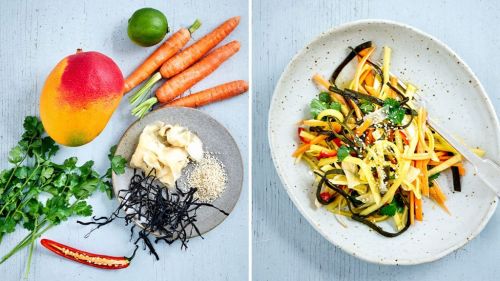
Refreshingly delicious: vegan mango carrot salad. A quick and easy recipe that works perfectly for both lunch and dinner. It is also RESET compatible.
Ready in: 30 minutes
4
30
MinutenIngredients
20 g dried sea spaghetti
1 mango
4 carrots
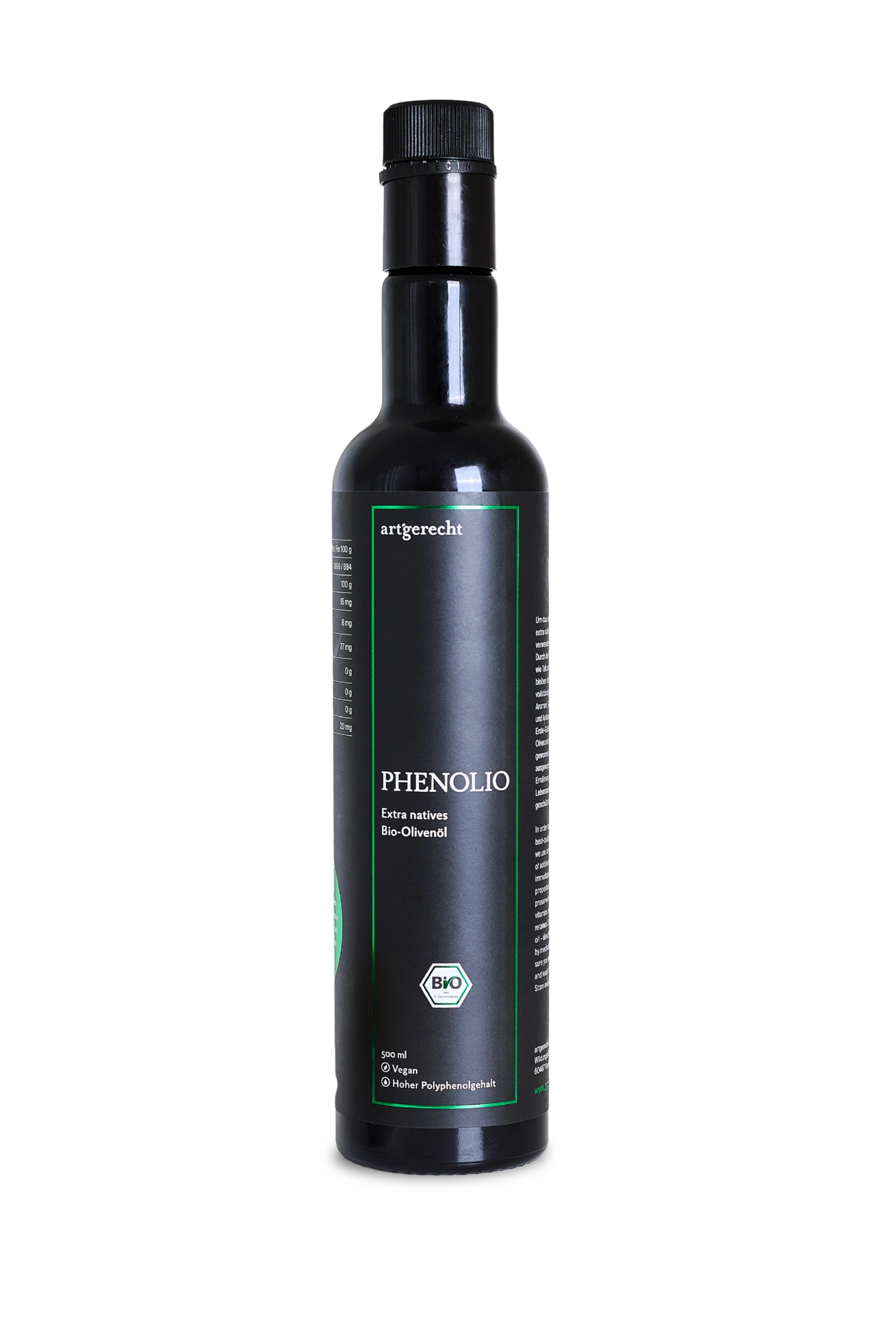
4 tbsp olive oil, e.g. PHENOLIO
1 lime
½ chilli pepper
10 sprigs coriander
1 tbsp sesame
3 tbsp sushi ginger (available in organic stores, without colourings, preservatives or added sugar)
Preparation
- Soak the sea spaghetti in cold water for 15 minutes. Then discard the soaking water.
- In the meantime, peel the mango and cut the flesh into thin strips. Peel the carrots and also cut them into thin strips.
- Deseed the chilli pepper and cut into thin rings. Wash and chop the coriander. Toast the sesame in a pan without any fat. Cut the pickled ginger into strips.
- In a bowl, mix olive oil, the juice of one lime, chilli pepper and a generous pinch of salt. Add the mango, carrots and ginger and leave to marinate for a few minutes.
- Once the sea spaghetti has finished soaking, fold it into the salad as well and finish with coriander and sesame.
Artgerecht food facts
Sea spaghetti are brown algae and particularly popular in raw food cuisine. In Germany they are also called Riementang. Algae can help eliminate toxins from our body and contain vitamins, trace elements and minerals in high amounts with good bioavailability. Particularly noteworthy is the amount of iodine, vitamin K and a usable precursor of our human thyroid hormone.
The mango has a high content of vitamins, especially vitamin C and beta-carotene, as well as trace elements and secondary plant compounds. It also contains tyrosine, an amino acid that is metabolised in the body into dopamine, our “motivation hormone”.
Carrots, as root vegetables, store their carbohydrate content directly in active cell structures, which also remain intact during cooking and are only slowly released during digestion – which in turn has a positive effect on the balance of our gut flora. They also contain plenty of fibre that serves as food for our beneficial gut microbes.
Limes have a high content of vitamins, especially vitamin C, trace elements and secondary plant compounds. They also activate liver enzymes that help us detoxify.
Chillies contain capsaicin, which has very positive effects on blood sugar levels, blood clotting and the defence against free radicals.
Sesame seeds are technically seeds, but in small amounts they can be used in species-appropriate cuisine thanks to their beneficial fatty acids.
Ginger contains many secondary plant compounds that vigorously support our immune system.