
-
 DE
DE


Arteriovenous – Definition and Medical Meaning
Arteriovenous refers to a connection or relationship between arteries and veins. The term is central to vascular medicine and cardiology.
Things worth knowing about "Arteriovenous"
Arteriovenous refers to a connection or relationship between arteries and veins. The term is central to vascular medicine and cardiology.
What Does Arteriovenous Mean?
Arteriovenous is a medical term referring to the simultaneous involvement of arteries (blood vessels that carry blood away from the heart) and veins (blood vessels that return blood to the heart). The term is used to describe anatomical structures, pathological connections, or physiological processes in which both vessel types play a role.
Physiological Background
In the normal circulatory system, blood flows from the heart through arteries into progressively smaller vessels (arterioles and capillaries), where the exchange of oxygen, nutrients, and metabolic waste products between blood and tissue takes place. The blood then returns to the heart via venules and veins. The arteriovenous difference describes the difference in oxygen or nutrient content between arterial and venous blood and is an important clinical parameter.
Arteriovenous Connections and Diseases
Arteriovenous Malformation (AVM)
An arteriovenous malformation is a congenital defect in which arteries and veins are directly connected without the presence of intervening capillaries. This can occur in various organs, most commonly in the brain and spinal cord. The high arterial blood pressure can overload the thin-walled veins, increasing the risk of rupture and hemorrhage.
Arteriovenous Fistula (AV Fistula)
An arteriovenous fistula is an abnormal connection between an artery and a vein. It can be congenital or result from injury, surgery, or disease. AV fistulas are also deliberately created surgically, for example in the forearm of dialysis patients, to provide a durable and accessible vascular access point for hemodialysis.
Arteriovenous Shunt
An arteriovenous shunt is a short-circuit connection between the arterial and venous circulatory systems. Such shunts can be physiological (e.g., for thermoregulation in the skin), pathological (e.g., in liver cirrhosis), or iatrogenic (created intentionally by medical procedures, such as for dialysis). A significant shunt can impair cardiac output, as blood bypasses the capillary circulation.
Atrioventricular Block (AV Block)
The term atrioventricular block (AV block) is used in the field of cardiac rhythm disorders and describes a disturbance in the electrical conduction between the atria and ventricles of the heart. AV blocks are classified into grades I through III and can range from asymptomatic to life-threatening.
Diagnosis of Arteriovenous Disorders
Various imaging methods are used to diagnose arteriovenous malformations and conditions:
- Doppler Ultrasound: Ultrasound-based examination to visualize blood flow and vascular structures
- Magnetic Resonance Imaging (MRI): Detailed cross-sectional imaging, especially for the brain and soft tissues
- CT Angiography (CTA): Vascular imaging using contrast agents and computed tomography
- Digital Subtraction Angiography (DSA): Gold standard for precise vascular imaging, especially before interventional procedures
Treatment of Arteriovenous Disorders
Treatment depends on the type, location, and severity of the arteriovenous abnormality:
- Surgical Resection: Operative removal of the malformation, particularly for accessible AVMs
- Embolization: A minimally invasive procedure in which the abnormal connection is occluded by introducing embolic material
- Radiation Therapy (Radiosurgery): Targeted irradiation, e.g., using Gamma Knife technology, to close brain AVMs
- Conservative Management: Watchful waiting and medical therapy for small, asymptomatic findings
References
- Longo, D.L. et al. - Harrison's Principles of Internal Medicine. 21st Edition, McGraw-Hill, 2022.
- Rutherford, R.B. - Vascular Surgery. 6th Edition, Elsevier Saunders, 2005.
- World Health Organization (WHO) - Cardiovascular Diseases: Fact Sheets. https://www.who.int/news-room/fact-sheets/detail/cardiovascular-diseases-(cvds), accessed 2024.

Building Blocks for a Healthy Life
As an integrated manufacturer, we develop & produce evidence-based, patented, and non-patented formulations. We work exclusively with plant and natural extracts according to the strictest purity & quality standards.
The combination of science & modern technology with the laws of nature creates solutions consistently tailored to humans – for the highest good: health.
Verwandte Produkte

Floral
For Healthy Oral Flora & Dental Care
Formulated lozenges with Dentalac®, lactic acid bacteria, and Lactoferrin CLN®30 lozenges
Regular price:
€22.90
Floral
For Healthy Oral Flora & Dental Care
Formulated lozenges with Dentalac®, lactic acid bacteria, and Lactoferrin CLN®30 lozenges
Regular price:
€22.90
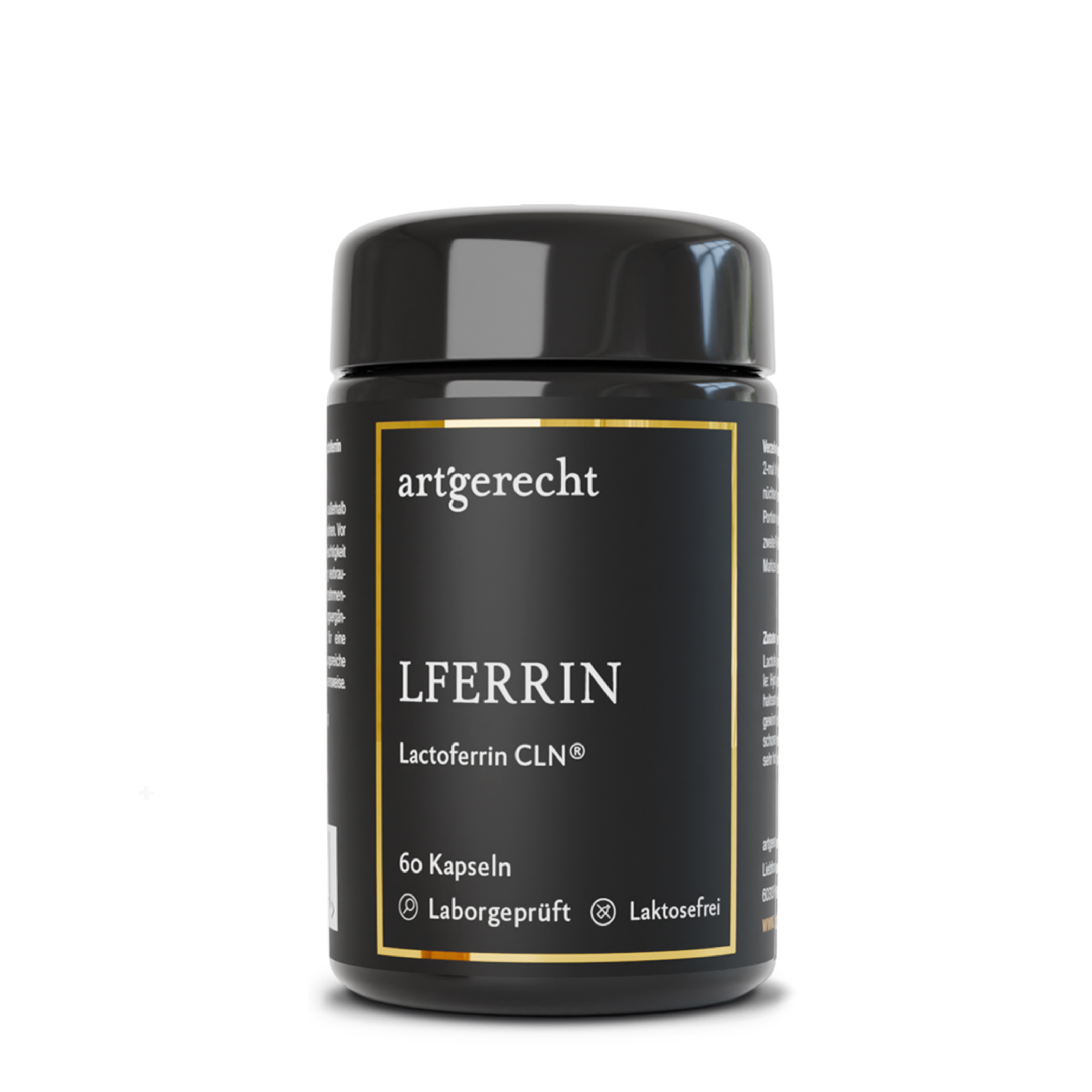
Lactoferrin
For your universal protection
As one of the most valuable proteins in the body, lactoferrin is a natural component of the immune system.[siehe Varianten]
Regular price:
€59.90

Natural Iron

For your iron balance
Specially formulated for your iron balance with plant-based curry leaf iron, Lactoferrin CLN®, and natural Vitamin C from rose hips.
30 Capsules
Regular price:
€35.90
Most read entries
3 Posts in this encyclopedia categoryMagnesiumcarbonat
Magnesiumcarbonat ist eine anorganische Magnesiumverbindung mit säure-neutralisierender (antazidischer) Wirkung. Erfahre mehr über Vorteile, Einsatzgebiete und Unterschiede zu besser resorbierbaren Magnesiumformen.
Calorie content
The choice of food influences our energy intake. The calorie content varies greatly - some provide little energy, others a lot.
Cologne list
The Cologne List ® is an important initiative in competitive sports that offers athletes guidance in the selection of nutritional supplements.