
-
 DE
DE



Galactitol – Sugar Alcohol in Galactosemia
Galactitol is a sugar alcohol produced during galactose metabolism. In the metabolic disorder galactosemia, it can accumulate in the body and cause serious tissue damage.
Things worth knowing about "Galactitol"
Galactitol is a sugar alcohol produced during galactose metabolism. In the metabolic disorder galactosemia, it can accumulate in the body and cause serious tissue damage.
What is Galactitol?
Galactitol (also known as dulcitol) is a six-carbon sugar alcohol formed by the reduction of galactose, a simple sugar found in lactose (milk sugar). Under normal conditions, galactose is metabolized through a series of enzymatic steps. Galactitol is produced as a byproduct when galactose is converted by the enzyme aldose reductase via the polyol pathway. Because the human body cannot efficiently break down galactitol further, it accumulates in tissues when galactose metabolism is impaired.
Biochemical Background
In normal galactose metabolism, galactose is first phosphorylated by galactokinase and subsequently processed by galactose-1-phosphate uridylyltransferase (GALT). When either of these enzymatic steps is blocked due to an inherited enzyme deficiency, excess galactose is redirected through the polyol pathway and reduced to galactitol by aldose reductase. Due to its polar molecular structure, galactitol cannot easily cross cell membranes, causing it to become trapped inside cells. This leads to osmotic stress and cellular damage.
Clinical Relevance in Galactosemia
Galactosemia is a rare inherited metabolic disorder characterized by impaired galactose metabolism. Several types are distinguished:
- Classic Galactosemia (Type I): Caused by a deficiency of GALT. This is the most common and most severe form, leading to accumulation of both galactose-1-phosphate and galactitol.
- Galactokinase Deficiency (Type II): Results in pronounced galactitol accumulation since galactose cannot be phosphorylated and is channeled primarily through the polyol pathway. The hallmark symptom is cataract formation.
- Galactose Epimerase Deficiency (Type III): A rarer form with variable clinical severity.
Symptoms and Complications of Galactitol Accumulation
The buildup of galactitol in specific tissues is associated with distinct clinical complications:
- Cataracts: Galactitol accumulates in the lens of the eye, causing osmotic swelling and lens opacification. This is the primary manifestation of galactokinase deficiency.
- Neurological damage: In classic galactosemia, galactitol in brain tissue may contribute to neuronal injury and long-term cognitive difficulties.
- Liver damage: Together with galactose-1-phosphate, galactitol contributes to hepatocellular injury.
- Premature ovarian insufficiency: Affected girls and women may experience early loss of ovarian function, impacting fertility.
Diagnosis
Galactosemia and elevated galactitol levels are identified through several diagnostic methods:
- Newborn screening: Most countries include galactosemia in their newborn screening programs. Elevated galactose or reduced GALT enzyme activity in blood spots signals potential disease.
- Urine organic acid analysis: Galactitol can be detected and quantified in urine using gas chromatography-mass spectrometry (GC-MS). Elevated urinary galactitol is a key diagnostic and monitoring marker.
- Enzyme activity testing: Measurement of GALT or galactokinase activity in red blood cells confirms the diagnosis.
- Molecular genetic testing: Mutation analysis of the relevant gene provides precise disease classification.
Treatment and Management
Since the body cannot efficiently clear galactitol, the cornerstone of treatment is strict dietary restriction of galactose intake:
- Lactose-free diet: Milk and dairy products containing lactose (and therefore galactose) are eliminated. Infants are given specialized lactose-free formula.
- Low-galactose diet: Certain vegetables, legumes, and processed foods may contain free galactose and require monitoring.
- Regular monitoring: Periodic measurement of urinary galactitol, along with neurological and ophthalmological assessments, is part of long-term care.
- No specific pharmacological therapy: Currently, no approved enzyme replacement or gene therapy exists for galactosemia. Research into novel approaches, such as substrate reduction therapy, is ongoing.
Galactitol as a Biomarker
Urinary galactitol is a well-established biomarker for metabolic control in patients with galactosemia. Elevated levels indicate insufficient dietary restriction or increased endogenous galactose production. Regular measurement of galactitol in urine is therefore used routinely for therapeutic monitoring and disease management.
References
- Bosch, A. M. - Classical galactosaemia revisited. Journal of Inherited Metabolic Disease, 2006; 29(4): 516-525.
- Fridovich-Keil, J. L. & Walter, J. H. - Galactosemia. In: Valle, D. et al. (eds.), The Online Metabolic and Molecular Bases of Inherited Disease (OMMBID), McGraw-Hill, 2008.
- Berry, G. T. - Galactosemia: When is it a newborn screening emergency? Molecular Genetics and Metabolism, 2012; 106(1): 7-11.

Building Blocks for a Healthy Life
As an integrated manufacturer, we develop & produce evidence-based, patented, and non-patented formulations. We work exclusively with plant and natural extracts according to the strictest purity & quality standards.
The combination of science & modern technology with the laws of nature creates solutions consistently tailored to humans – for the highest good: health.
Verwandte Produkte

Floral
For Healthy Oral Flora & Dental Care
Formulated lozenges with Dentalac®, lactic acid bacteria, and Lactoferrin CLN®30 lozenges
Regular price:
€22.90
Floral
For Healthy Oral Flora & Dental Care
Formulated lozenges with Dentalac®, lactic acid bacteria, and Lactoferrin CLN®30 lozenges
Regular price:
€22.90
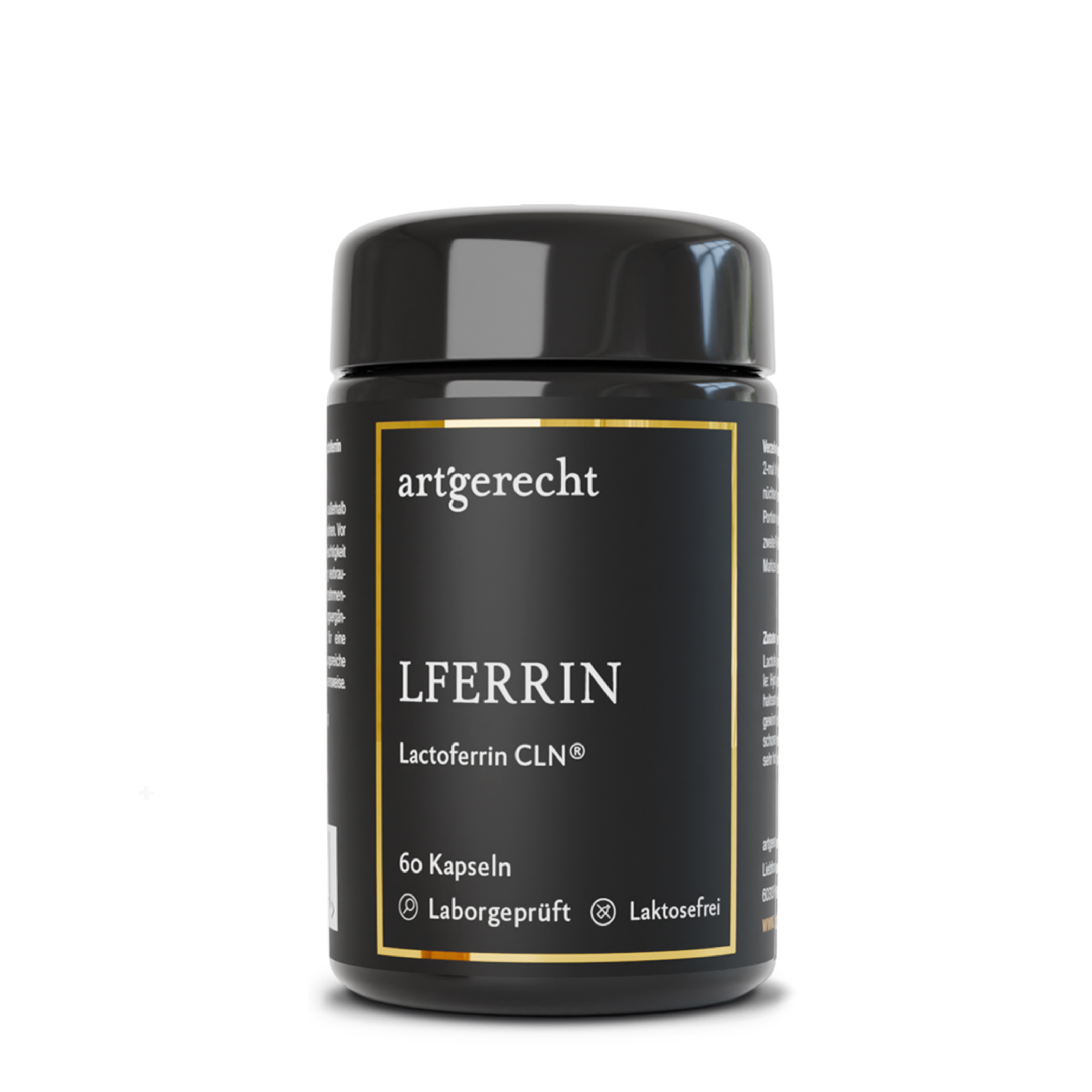
Lactoferrin
For your universal protection
As one of the most valuable proteins in the body, lactoferrin is a natural component of the immune system.[siehe Varianten]
Regular price:
€59.90

Natural Iron

For your iron balance
Specially formulated for your iron balance with plant-based curry leaf iron, Lactoferrin CLN®, and natural Vitamin C from rose hips.
30 Capsules
Regular price:
€35.90
Most read entries
3 Posts in this encyclopedia categoryMagnesiumcarbonat
Magnesiumcarbonat ist eine anorganische Magnesiumverbindung mit säure-neutralisierender (antazidischer) Wirkung. Erfahre mehr über Vorteile, Einsatzgebiete und Unterschiede zu besser resorbierbaren Magnesiumformen.
Calorie content
The choice of food influences our energy intake. The calorie content varies greatly - some provide little energy, others a lot.
Cologne list
The Cologne List ® is an important initiative in competitive sports that offers athletes guidance in the selection of nutritional supplements.