
-
 DE
DE



Sphingolipids: Function, Structure and Disease
Sphingolipids are essential components of cell membranes and play key roles in cell signaling, structural integrity, and metabolic regulation.
Things worth knowing about "Sphingolipids"
Sphingolipids are essential components of cell membranes and play key roles in cell signaling, structural integrity, and metabolic regulation.
What Are Sphingolipids?
Sphingolipids are a class of lipids (fat molecules) that form a fundamental part of biological membranes. They are derived from the amino alcohol sphingosine and are present in virtually all eukaryotic cells -- those of animals, plants, and fungi. Particularly high concentrations are found in nerve tissue, skin, and red blood cells.
The term was coined in the 19th century because the enigmatic properties of these molecules at the time reminded researchers of the Sphinx from Greek mythology. Today it is well established that sphingolipids are far more than structural building blocks: they play a critical role in cell communication, cell growth, and programmed cell death (apoptosis).
Chemical Structure and Classes
All sphingolipids share a common backbone consisting of sphingosine, a long hydrocarbon chain. A fatty acid is attached to this backbone via an amide bond, forming the intermediate product ceramide. Ceramide serves as the precursor for all other sphingolipids.
- Sphingomyelin: The most abundant sphingolipid in the human body. It is the primary component of the myelin sheath, which envelops nerve fibers and enables rapid conduction of nerve impulses.
- Ceramide: The central intermediate of sphingolipid metabolism; acts as an important signaling molecule, for example in regulating apoptosis and cell growth.
- Glycolipids (Glycosphingolipids): Sphingolipids with one or more sugar units attached. These include cerebrosides, sulfatides, and gangliosides. They are especially abundant in brain tissue and are involved in cell recognition and signaling processes.
- Gangliosides: Complex glycolipids containing sialic acid residues; particularly important for neuronal signaling and nervous system development.
Biological Functions
Structural Function
Sphingolipids are essential building blocks of the cell membrane. Together with cholesterol, they form so-called lipid rafts -- specialized membrane domains that serve as platforms for signaling proteins and membrane transport processes. These ordered regions are critical for regulating numerous cell functions.
Signal Transduction
Ceramide and other sphingolipid metabolites such as sphingosine-1-phosphate (S1P) act as intracellular and extracellular messengers. S1P regulates inflammation, cell migration, immune responses, and vascular tone. Ceramide, in contrast, often promotes apoptosis and inhibits cell growth.
Skin Barrier Function
In the skin, ceramides are essential for the barrier function of the epidermis. They keep the skin supple, protect against water loss, and defend against pathogens. A deficiency in ceramides is associated with skin conditions such as atopic dermatitis (eczema).
Sphingolipids and Disease
Disruptions in sphingolipid metabolism can cause serious diseases:
- Lysosomal storage diseases: In these genetically determined disorders, enzymes required to break down sphingolipids are absent or deficient. Sphingolipids then accumulate in cells and organs. Well-known examples include Gaucher disease (accumulation of glucocerebroside), Niemann-Pick disease (accumulation of sphingomyelin), and Fabry disease (accumulation of globotriaosylceramide).
- Neurological diseases: Alterations in ganglioside and ceramide metabolism are associated with neurodegenerative conditions such as Alzheimer disease and Parkinson disease.
- Cancer: Dysregulated sphingolipid signaling pathways play a role in tumor development and progression. Ceramide-based therapeutic approaches are being investigated, as ceramide can promote apoptosis in tumor cells.
- Cardiovascular diseases: Sphingomyelin and ceramide are involved in atherosclerotic processes; elevated plasma levels of certain sphingolipids are considered risk factors.
Sphingolipids in Nutrition and Cosmetics
Sphingolipids are found in many foods, including dairy products, eggs, meat, and certain plant-based sources such as soybeans. Dietary sphingolipids are cleaved in the intestine and can influence the body's own ceramide levels. In cosmetics, ceramides are specifically used to strengthen the skin barrier and reduce moisture loss.
References
- Merrill, A. H. Jr. (2011). Sphingolipid and glycosphingolipid metabolic pathways in the era of sphingolipidomics. Chemical Reviews, 111(10), 6387-6422. doi:10.1021/cr2002917
- Hannun, Y. A. & Obeid, L. M. (2018). Sphingolipids and their metabolism in physiology and disease. Nature Reviews Molecular Cell Biology, 19(3), 175-191. doi:10.1038/nrm.2017.107
- Kolter, T. & Sandhoff, K. (2006). Sphingolipid metabolism diseases. Biochimica et Biophysica Acta, 1758(12), 2057-2079. doi:10.1016/j.bbamem.2006.05.027

Building Blocks for a Healthy Life
As an integrated manufacturer, we develop & produce evidence-based, patented, and non-patented formulations. We work exclusively with plant and natural extracts according to the strictest purity & quality standards.
The combination of science & modern technology with the laws of nature creates solutions consistently tailored to humans – for the highest good: health.
Verwandte Produkte

Floral
For Healthy Oral Flora & Dental Care
Formulated lozenges with Dentalac®, lactic acid bacteria, and Lactoferrin CLN®30 lozenges
Regular price:
€22.90
Floral
For Healthy Oral Flora & Dental Care
Formulated lozenges with Dentalac®, lactic acid bacteria, and Lactoferrin CLN®30 lozenges
Regular price:
€22.90
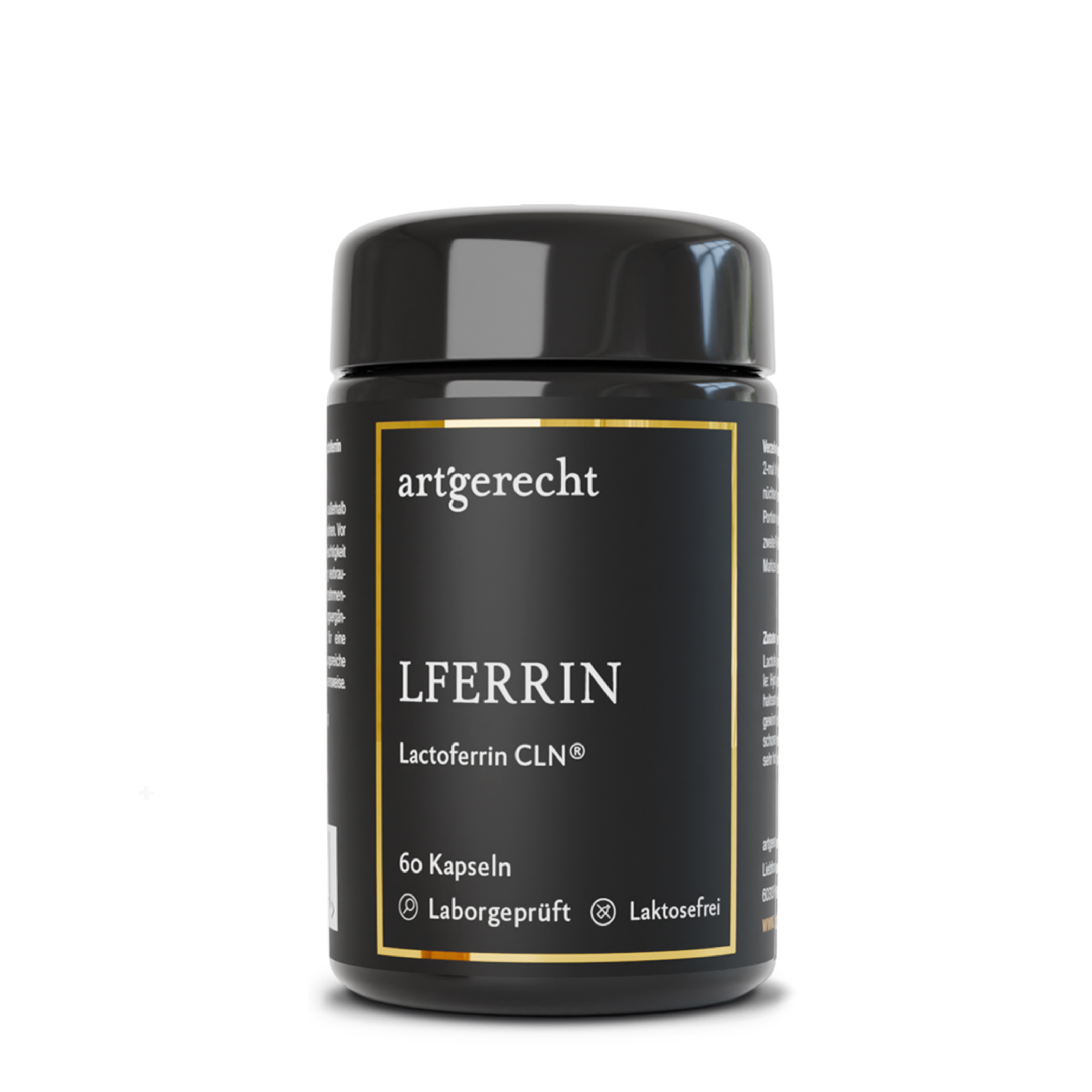
Lactoferrin
For your universal protection
As one of the most valuable proteins in the body, lactoferrin is a natural component of the immune system.[siehe Varianten]
Regular price:
€59.90

Natural Iron

For your iron balance
Specially formulated for your iron balance with plant-based curry leaf iron, Lactoferrin CLN®, and natural Vitamin C from rose hips.
30 Capsules
Regular price:
€35.90
Most read entries
3 Posts in this encyclopedia categoryMagnesiumcarbonat
Magnesiumcarbonat ist eine anorganische Magnesiumverbindung mit säure-neutralisierender (antazidischer) Wirkung. Erfahre mehr über Vorteile, Einsatzgebiete und Unterschiede zu besser resorbierbaren Magnesiumformen.
Calorie content
The choice of food influences our energy intake. The calorie content varies greatly - some provide little energy, others a lot.
Cologne list
The Cologne List ® is an important initiative in competitive sports that offers athletes guidance in the selection of nutritional supplements.