
-
 DE
DE



Telomerase Enzyme – Function, Role and Research
The telomerase enzyme is a specialized enzyme that extends the protective ends of chromosomes – the telomeres – helping to prevent cellular aging and maintain genomic stability.
Things worth knowing about "Telomerase Enzyme"
The telomerase enzyme is a specialized enzyme that extends the protective ends of chromosomes – the telomeres – helping to prevent cellular aging and maintain genomic stability.
What Is the Telomerase Enzyme?
The telomerase enzyme (also known simply as telomerase) is a ribonucleoprotein enzyme responsible for maintaining and extending the telomeres – the protective DNA caps found at the ends of chromosomes. Telomeres function much like the plastic tips on shoelaces: they protect the ends of chromosomes from deterioration and prevent chromosomes from fusing with each other.
With every cell division, telomeres become slightly shorter. Once telomeres reach a critically short length, cells stop dividing or undergo programmed cell death – a key mechanism of cellular aging, also known as senescence. The telomerase enzyme can slow or reverse this shortening by adding specific DNA sequences back onto the chromosome ends.
Structure and Mechanism of Action
The telomerase enzyme is composed of two essential components:
- TERT (Telomerase Reverse Transcriptase): The catalytic protein subunit responsible for synthesizing new DNA sequences.
- TERC (Telomerase RNA Component): An RNA template that guides the synthesis of new telomeric DNA.
Telomerase functions as a reverse transcriptase: it uses its own built-in RNA template to synthesize complementary DNA and attach it to the chromosome ends. This process allows certain cell types to divide indefinitely or over many generations without losing critical genetic material.
Where Is Telomerase Found in the Human Body?
In most differentiated (mature) somatic cells, telomerase activity is very low or completely switched off. High telomerase activity is found in:
- Germ cells (eggs and sperm)
- Stem cells of the bone marrow and other tissues
- Immune cells, particularly T lymphocytes during an immune response
- Cancer cells – reactivated telomerase is a key driver of uncontrolled tumor cell proliferation
Medical and Research Relevance
Cellular Aging and Anti-Aging Research
Telomerase research is closely linked to the biology of aging. Short telomeres have been associated with age-related conditions including cardiovascular disease, type 2 diabetes, and neurodegenerative disorders. Increasing telomerase activity could theoretically extend the lifespan of cells, but this approach carries significant risks (see below).
Cancer and Telomerase
In approximately 85–90% of all human cancer cells, the telomerase enzyme is reactivated. This allows tumor cells to divide without limit – a hallmark of malignant disease. As a result, telomerase inhibition is an intensively studied strategy in oncology. Telomerase inhibitors such as imetelstat are currently undergoing clinical trials for various blood cancers.
Telomeropathies (Hereditary Diseases)
Mutations in genes encoding components of the telomerase enzyme (e.g., TERT, TERC, DKC1) lead to rare inherited diseases known as telomeropathies. These include:
- Dyskeratosis congenita: Characterized by abnormalities of the skin and mucous membranes, along with bone marrow failure
- Idiopathic pulmonary fibrosis (IPF): Scarring of lung tissue caused by prematurely shortened telomeres
- Aplastic anemia: Failure of blood cell production in the bone marrow
Diagnostic Applications
Measuring telomere length and telomerase activity – for example using the TRAP assay (Telomeric Repeat Amplification Protocol) – is used in research and increasingly in clinical settings to assess the biological age of tissues and estimate disease risk.
Opportunities and Risks of Telomerase Activation
Targeted activation of the telomerase enzyme to rejuvenate cells is a promising but double-edged area of research:
- Opportunities: Slowing the aging process, treating telomeropathies, improving stem cell therapies
- Risks: Uncontrolled telomerase activation can increase cancer risk, as tumor cells also benefit from elongated telomeres
Current research focuses on tissue-specific or time-limited activation strategies that could extend cellular lifespan without promoting tumor development.
References
- Blackburn E.H., Greider C.W., Szostak J.W. – Telomeres and telomerase: the path from maize, Tetrahymena and yeast to human cancer and aging. Nature Medicine, 2006.
- Armanios M., Blackburn E.H. – The telomere syndromes. Nature Reviews Genetics, 2012; 13(10): 693–704.
- National Cancer Institute (NCI) – Telomeres and Telomerase in Cancer. U.S. National Institutes of Health, 2023. Available at: https://www.cancer.gov

Building Blocks for a Healthy Life
As an integrated manufacturer, we develop & produce evidence-based, patented, and non-patented formulations. We work exclusively with plant and natural extracts according to the strictest purity & quality standards.
The combination of science & modern technology with the laws of nature creates solutions consistently tailored to humans – for the highest good: health.
Verwandte Produkte

Floral
For Healthy Oral Flora & Dental Care
Formulated lozenges with Dentalac®, lactic acid bacteria, and Lactoferrin CLN®30 lozenges
Regular price:
€22.90
Floral
For Healthy Oral Flora & Dental Care
Formulated lozenges with Dentalac®, lactic acid bacteria, and Lactoferrin CLN®30 lozenges
Regular price:
€22.90
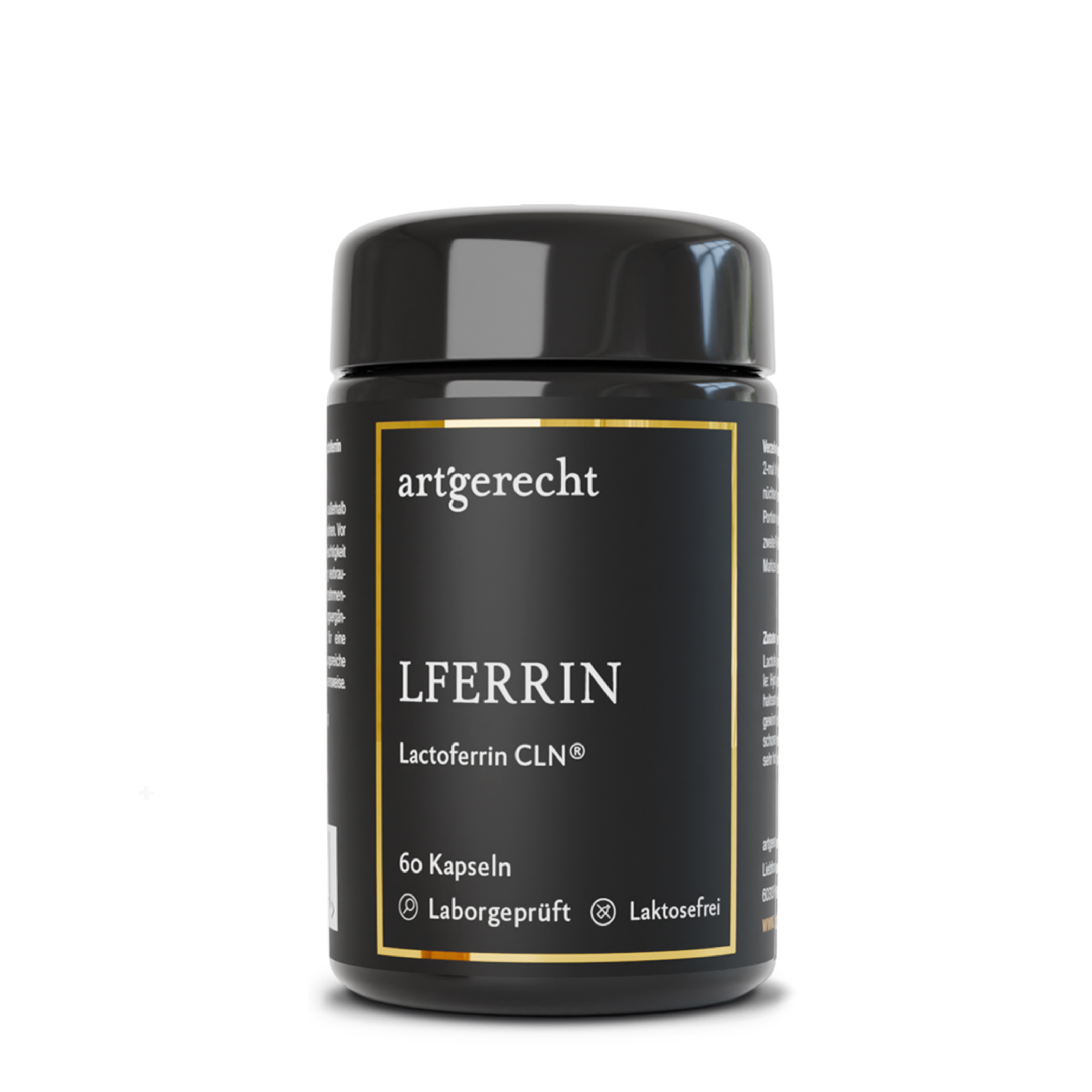
Lactoferrin
For your universal protection
As one of the most valuable proteins in the body, lactoferrin is a natural component of the immune system.[siehe Varianten]
Regular price:
€59.90

Natural Iron

For your iron balance
Specially formulated for your iron balance with plant-based curry leaf iron, Lactoferrin CLN®, and natural Vitamin C from rose hips.
30 Capsules
Regular price:
€35.90
Most read entries
3 Posts in this encyclopedia categoryMagnesiumcarbonat
Magnesiumcarbonat ist eine anorganische Magnesiumverbindung mit säure-neutralisierender (antazidischer) Wirkung. Erfahre mehr über Vorteile, Einsatzgebiete und Unterschiede zu besser resorbierbaren Magnesiumformen.
Calorie content
The choice of food influences our energy intake. The calorie content varies greatly - some provide little energy, others a lot.
Cologne list
The Cologne List ® is an important initiative in competitive sports that offers athletes guidance in the selection of nutritional supplements.