
-
 DE
DE



Implantation – Definition, Process and Pregnancy
Implantation is the process by which a fertilized egg embeds itself into the uterine lining – a critical step in establishing early pregnancy.
Things worth knowing about "Implantation"
Implantation is the process by which a fertilized egg embeds itself into the uterine lining – a critical step in establishing early pregnancy.
What is Implantation?
Implantation, also known as nidation, is the biological process by which a fertilized egg – at this stage called a blastocyst – attaches to and embeds itself into the lining of the uterus (endometrium). This process typically occurs approximately 6 to 10 days after fertilization and marks the beginning of a clinical pregnancy. Without successful implantation, a pregnancy cannot develop.
How Implantation Occurs
After fertilization in the fallopian tube, the developing embryo travels toward the uterus over several days while undergoing repeated cell divisions. By the time it reaches the uterus, it has developed into a blastocyst – a hollow ball of cells consisting of an inner cell mass (embryoblast) and an outer cell layer (trophoblast).
Implantation occurs in three key stages:
- Apposition: The blastocyst loosely attaches to the endometrial surface.
- Adhesion: A stronger connection forms between the blastocyst and the uterine lining.
- Invasion: The trophoblast actively penetrates the endometrium, anchoring the embryo and establishing access to maternal blood supply.
The uterine lining must be in a receptive state – known as the implantation window – for successful attachment. This is regulated primarily by the hormones estrogen and progesterone.
Hormonal Regulation
Implantation is controlled by a precisely timed hormonal cascade. Progesterone, produced by the corpus luteum after ovulation, prepares the endometrium for embryo reception. After successful implantation, the trophoblast begins producing human chorionic gonadotropin (hCG), which maintains the corpus luteum and sustains progesterone production to support the early pregnancy. The rise in hCG levels is also the basis for pregnancy tests.
Signs and Symptoms of Implantation
Many women do not notice any specific symptoms during implantation. However, some may experience mild signs, including:
- Implantation bleeding: Light spotting or a pinkish-brown discharge that may be mistaken for a light period.
- Mild cramping or a pulling sensation in the lower abdomen.
- Breast tenderness or a feeling of fullness.
- Mild nausea or fatigue.
These symptoms typically appear 6 to 12 days after fertilization and are generally brief and mild in nature.
Causes of Implantation Failure
Not every fertilized egg successfully implants in the uterus. Common reasons for failed or impaired implantation include:
- Chromosomal abnormalities in the embryo (the most frequent cause).
- Structural abnormalities of the uterus, such as fibroids, polyps, or adhesions.
- Hormonal imbalances, particularly insufficient progesterone levels.
- Conditions affecting the uterine lining, such as Asherman syndrome.
- Immunological factors, where the immune system interferes with embryo attachment.
- Thrombophilias (blood clotting disorders).
Relevance in Reproductive Medicine
Implantation is a central focus in reproductive medicine and infertility treatment. During in vitro fertilization (IVF), a laboratory-fertilized embryo is transferred into the uterus in a procedure known as an embryo transfer. The success of IVF depends heavily on successful implantation. To support this process, patients are often given supplemental progesterone therapy following the embryo transfer.
Diagnosis and Medical Monitoring
Successful implantation can be confirmed by detecting hCG in blood or urine – the principle behind home and clinical pregnancy tests. An ultrasound examination can typically visualize a gestational sac from around the 5th to 6th week of pregnancy, confirming intrauterine implantation.
References
- Sadler, T.W. - Langman's Medical Embryology. 14th edition. Lippincott Williams & Wilkins, 2018.
- Wilcox, A.J. et al. - Time of implantation of the conceptus and loss of pregnancy. New England Journal of Medicine, 340(23):1796-1799, 1999. PubMed PMID: 10362823.
- World Health Organization (WHO) - Reproductive Health and Research. Available at: https://www.who.int/reproductivehealth/en/

Building Blocks for a Healthy Life
As an integrated manufacturer, we develop & produce evidence-based, patented, and non-patented formulations. We work exclusively with plant and natural extracts according to the strictest purity & quality standards.
The combination of science & modern technology with the laws of nature creates solutions consistently tailored to humans – for the highest good: health.
Verwandte Produkte
Subscription available

Floral
For Healthy Oral Flora & Dental Care
Formulated lozenges with Dentalac®, lactic acid bacteria, and Lactoferrin CLN®30 lozenges
Regular price:
€22.90
Subscription available
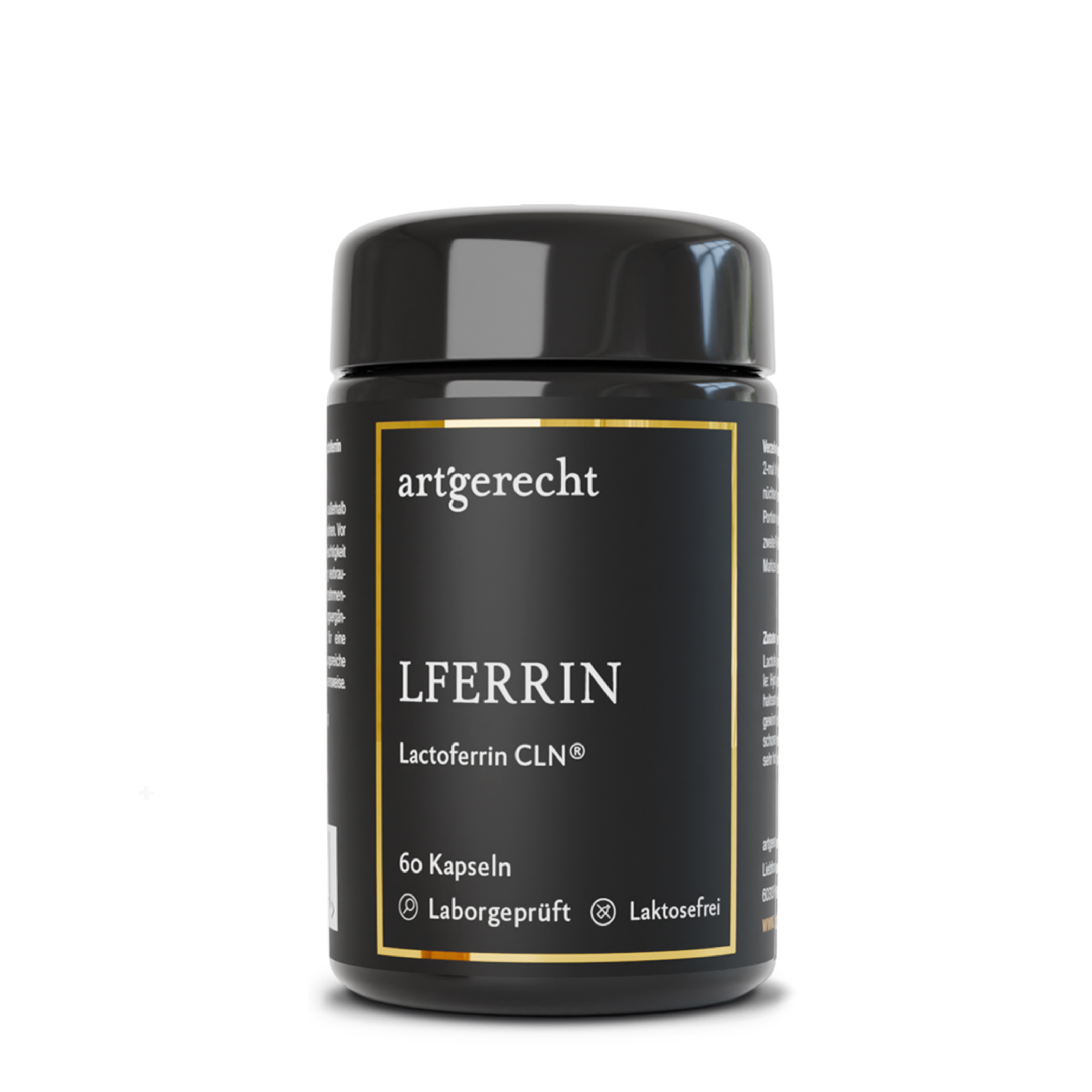
Lactoferrin
For your universal protection
As one of the most valuable proteins in the body, lactoferrin is a natural component of the immune system.[siehe Varianten]
Regular price:
€59.90
Subscription available

Natural Iron

For your iron balance
Specially formulated for your iron balance with plant-based curry leaf iron, Lactoferrin CLN®, and natural Vitamin C from rose hips.
30 Capsules
Regular price:
€35.90
Most read entries
3 Posts in this encyclopedia categoryMagnesiumcarbonat
Magnesiumcarbonat ist eine anorganische Magnesiumverbindung mit säure-neutralisierender (antazidischer) Wirkung. Erfahre mehr über Vorteile, Einsatzgebiete und Unterschiede zu besser resorbierbaren Magnesiumformen.
Calorie content
The choice of food influences our energy intake. The calorie content varies greatly - some provide little energy, others a lot.
Cologne list
The Cologne List ® is an important initiative in competitive sports that offers athletes guidance in the selection of nutritional supplements.