
-
 DE
DE



Adaptation Reaction – Definition and Medical Significance
An adaptation reaction describes the body ability to adjust to changing internal or external conditions. It is a fundamental biological principle in medicine.
Things worth knowing about "Adaptation Reaction"
An adaptation reaction describes the body ability to adjust to changing internal or external conditions. It is a fundamental biological principle in medicine.
What Is an Adaptation Reaction?
An adaptation reaction refers to the full range of biological and physiological adjustment processes that an organism undergoes in response to changing internal or external conditions. It is a fundamental principle of biology and medicine, enabling the body to maintain or restore its internal equilibrium, known as homeostasis.
Adaptation reactions can occur at different levels: cellular, tissue, organ, or systemic. They arise in response to both physiological (normal) and pathological (disease-related) stimuli.
Causes and Triggering Factors
Adaptation reactions are triggered by a wide range of stimuli, including:
- Mechanical stress: e.g., muscle growth through physical training (hypertrophy)
- Oxygen deficiency (hypoxia): e.g., acclimatization to high altitudes through increased red blood cell production
- Thermal stimuli: e.g., adaptation to cold or heat through changes in circulation and metabolic rate
- Chemical stimuli: e.g., liver adaptation to increased toxin exposure through enzyme induction
- Psychosocial stress: e.g., neuroendocrine responses via the hypothalamic-pituitary-adrenal (HPA) axis
- Chronic disease: e.g., cardiac enlargement (hypertrophy) due to persistently elevated blood pressure
Types of Adaptation Reactions
Physiological Adaptation
These are normal, healthy adaptation processes. Classic examples include an increase in muscle mass with regular strength training, or increased production of erythropoietin (EPO) and red blood cells at high altitudes.
Pathological Adaptation
Under persistent or excessive stress, adaptation reactions can become pathological. Examples include:
- Hypertrophy: Enlargement of an organ or tissue, e.g., the heart in chronic high blood pressure
- Atrophy: Wasting of tissue due to disuse, e.g., muscle loss from prolonged bed rest
- Hyperplasia: Increase in cell number as an adaptive response, e.g., of the uterine lining
- Metaplasia: Conversion of one cell type to another in response to chronic irritation, e.g., in the esophagus due to persistent acid reflux (Barrett esophagus)
Adaptive Immune System
The immune system also shows pronounced adaptation reactions. Following exposure to a pathogen or vaccine, it forms specific antibodies and memory cells, enabling a faster and stronger immune response upon re-exposure. This process is known as immunological memory.
Stress Response as a Special Form
One of the most thoroughly studied adaptation reactions is the stress response described by Hans Selye through his concept of the General Adaptation Syndrome (GAS). It consists of three phases:
- Alarm reaction: Immediate activation of the sympathetic nervous system, release of adrenaline and cortisol
- Resistance phase: The body mobilizes resources to cope with the stressor
- Exhaustion phase: With prolonged stress, resources become depleted, potentially leading to illness
Diagnosis
Depending on the clinical context, adaptation reactions are assessed using various diagnostic methods:
- Laboratory tests (e.g., blood count, hormone levels, inflammatory markers)
- Imaging techniques (e.g., echocardiography for cardiac hypertrophy)
- Functional tests (e.g., pulmonary function tests, stress ECG)
- Histological tissue analysis (e.g., detection of metaplasia)
Clinical Relevance and Treatment
Adaptation reactions are of great clinical importance, as they can represent both useful protective functions and precursors to serious disease. Treatment strategies depend on the nature of the adaptation:
- For pathological adaptations, the primary goal is to eliminate or reduce the triggering stimulus (e.g., blood pressure reduction in cardiac hypertrophy)
- Physiological adaptations are deliberately utilized in rehabilitation medicine and sports medicine
- Pharmacological interventions can modulate adaptation processes (e.g., immunosuppressants, beta-blockers)
References
- Junqueira, L.C. & Carneiro, J. - Basic Histology: Text and Atlas. McGraw-Hill, 13th edition (2013).
- Selye, H. - The Stress of Life. McGraw-Hill, New York (1956).
- Kumar, V., Abbas, A.K. & Aster, J.C. - Robbins & Cotran Pathologic Basis of Disease. Elsevier, 10th edition (2020).

Building Blocks for a Healthy Life
As an integrated manufacturer, we develop & produce evidence-based, patented, and non-patented formulations. We work exclusively with plant and natural extracts according to the strictest purity & quality standards.
The combination of science & modern technology with the laws of nature creates solutions consistently tailored to humans – for the highest good: health.
Verwandte Produkte
Subscription available

Floral
For Healthy Oral Flora & Dental Care
Formulated lozenges with Dentalac®, lactic acid bacteria, and Lactoferrin CLN®30 lozenges
Regular price:
€22.90
Subscription available
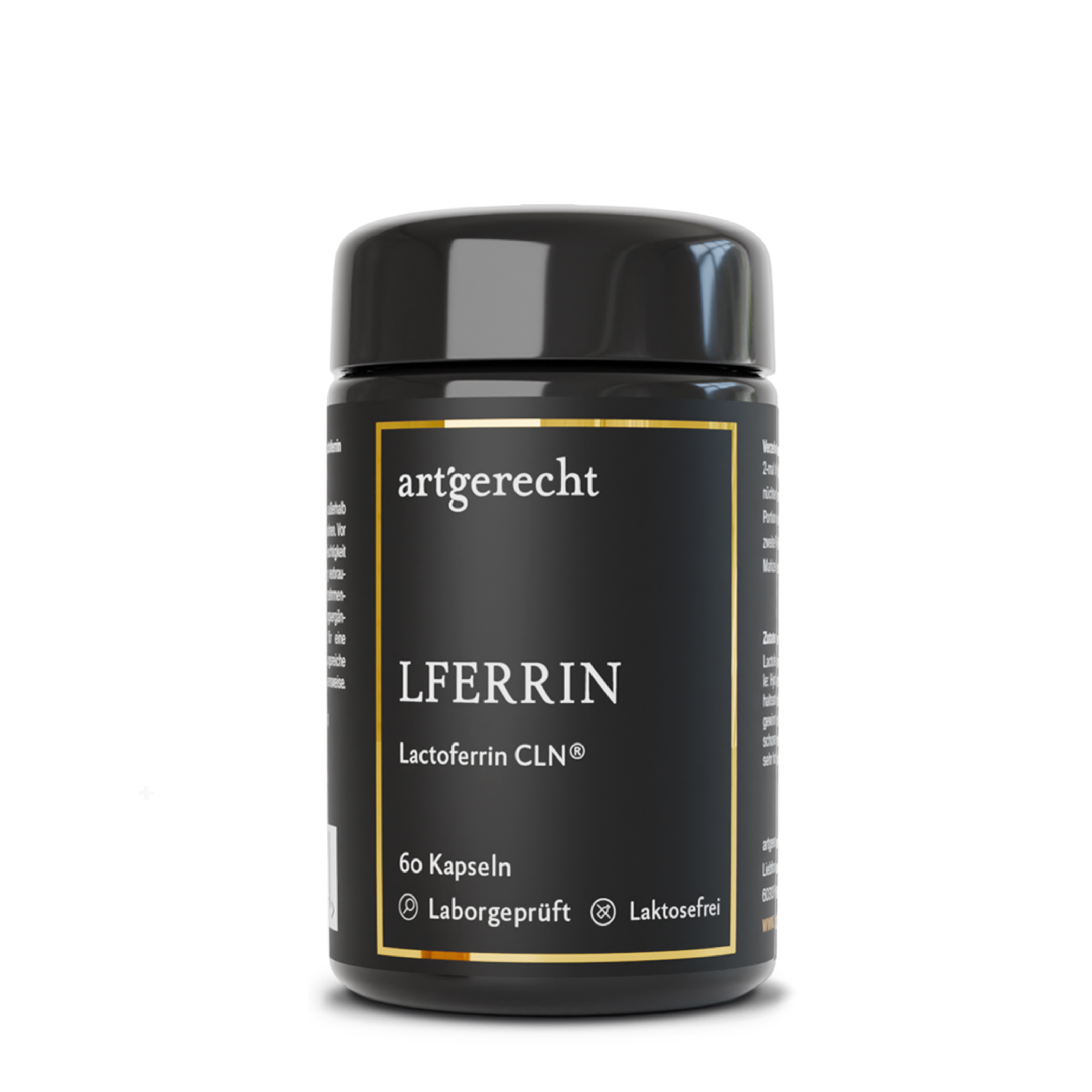
Lactoferrin
For your universal protection
As one of the most valuable proteins in the body, lactoferrin is a natural component of the immune system.[siehe Varianten]
Regular price:
€59.90
Subscription available

Natural Iron

For your iron balance
Specially formulated for your iron balance with plant-based curry leaf iron, Lactoferrin CLN®, and natural Vitamin C from rose hips.
30 Capsules
Regular price:
€35.90
Most read entries
3 Posts in this encyclopedia categoryMagnesiumcarbonat
Magnesiumcarbonat ist eine anorganische Magnesiumverbindung mit säure-neutralisierender (antazidischer) Wirkung. Erfahre mehr über Vorteile, Einsatzgebiete und Unterschiede zu besser resorbierbaren Magnesiumformen.
Calorie content
The choice of food influences our energy intake. The calorie content varies greatly - some provide little energy, others a lot.
Cologne list
The Cologne List ® is an important initiative in competitive sports that offers athletes guidance in the selection of nutritional supplements.