
-
 DE
DE



Adipocyte Activation – Fat Cells and Metabolism
Adipocyte activation refers to the stimulation of fat cells to release stored energy or secrete hormonal signals. It plays a key role in metabolic regulation and energy balance.
Things worth knowing about "Adipocyte Activation"
Adipocyte activation refers to the stimulation of fat cells to release stored energy or secrete hormonal signals. It plays a key role in metabolic regulation and energy balance.
What is Adipocyte Activation?
Adipocyte activation describes the process by which fat cells (adipocytes) are stimulated to alter their metabolic activity. Adipocytes are specialized cells within adipose tissue that serve not only as energy reservoirs but also as active endocrine cells. Upon activation, they can break down stored fats, release adipokines, and respond to hormonal and neural signals.
Biological Foundations
Fat cells are broadly classified into two main types: white adipose tissue (WAT) and brown adipose tissue (BAT). Both types can be activated by different stimuli, but their functional responses differ significantly.
White Adipose Tissue
In white adipose tissue, activation primarily triggers lipolysis - the breakdown of stored triglycerides into free fatty acids and glycerol, which are then released into the bloodstream as an energy source. This process is mainly initiated by hormones such as adrenaline, noradrenaline, and glucagon.
Brown Adipose Tissue
Brown adipose tissue is activated especially by cold exposure and the sympathetic nervous system. Here, activation leads to thermogenesis - the production of body heat through the action of UCP-1 (Uncoupling Protein 1), which burns energy without generating ATP.
Triggering Factors
Adipocyte activation can be triggered by a variety of factors:
- Hormones: Adrenaline, noradrenaline, glucagon, insulin (inhibitory), leptin
- Cold exposure: Cold stimuli activate brown adipose tissue via the sympathetic nervous system
- Physical activity: Exercise increases catecholamine release, which activates fat cells
- Diet: Caloric restriction and certain nutrients can promote lipolysis
- Medications: Beta-agonists and other pharmacological agents can specifically stimulate adipocytes
Adipocytes as Endocrine Cells
An important aspect of adipocyte activation is the secretion of adipokines - signaling molecules produced by adipose tissue that exert systemic effects throughout the body. The most important adipokines include:
- Leptin: Regulates satiety and energy balance
- Adiponectin: Has anti-inflammatory effects and improves insulin sensitivity
- Resistin: Associated with insulin resistance
- TNF-alpha and IL-6: Pro-inflammatory cytokines, secreted in greater amounts in obesity
Clinical Significance
The regulation of adipocyte activation is of great clinical importance. Disruptions in this process are closely linked to the development of obesity, type 2 diabetes, metabolic syndrome, and cardiovascular diseases. Excessive activation of white adipose tissue can lead to chronic inflammatory responses, while reduced activity of brown adipose tissue is associated with weight gain.
In modern medicine and research, the targeted activation of brown adipose tissue is being investigated as a promising therapeutic approach for treating obesity and metabolic disorders.
Therapeutic Approaches
Promoting adipocyte activation - particularly of brown adipose tissue - is the subject of intensive research. Potential strategies include:
- Regular physical activity to enhance lipolysis
- Cold therapy to stimulate brown adipose tissue
- Pharmacological interventions using beta-3 agonists
- Nutritional strategies that support fat metabolism
References
- Cannon B, Nedergaard J. Brown adipose tissue: function and physiological significance. Physiological Reviews. 2004;84(1):277-359.
- Rosen ED, Spiegelman BM. What we talk about when we talk about fat. Cell. 2014;156(1-2):20-44.
- World Health Organization (WHO). Obesity and overweight. Fact Sheet. Geneva, 2024. Available at: https://www.who.int/news-room/fact-sheets/detail/obesity-and-overweight

Building Blocks for a Healthy Life
As an integrated manufacturer, we develop & produce evidence-based, patented, and non-patented formulations. We work exclusively with plant and natural extracts according to the strictest purity & quality standards.
The combination of science & modern technology with the laws of nature creates solutions consistently tailored to humans – for the highest good: health.
Verwandte Produkte
Subscription available

Floral
For Healthy Oral Flora & Dental Care
Formulated lozenges with Dentalac®, lactic acid bacteria, and Lactoferrin CLN®30 lozenges
Regular price:
€22.90
Subscription available
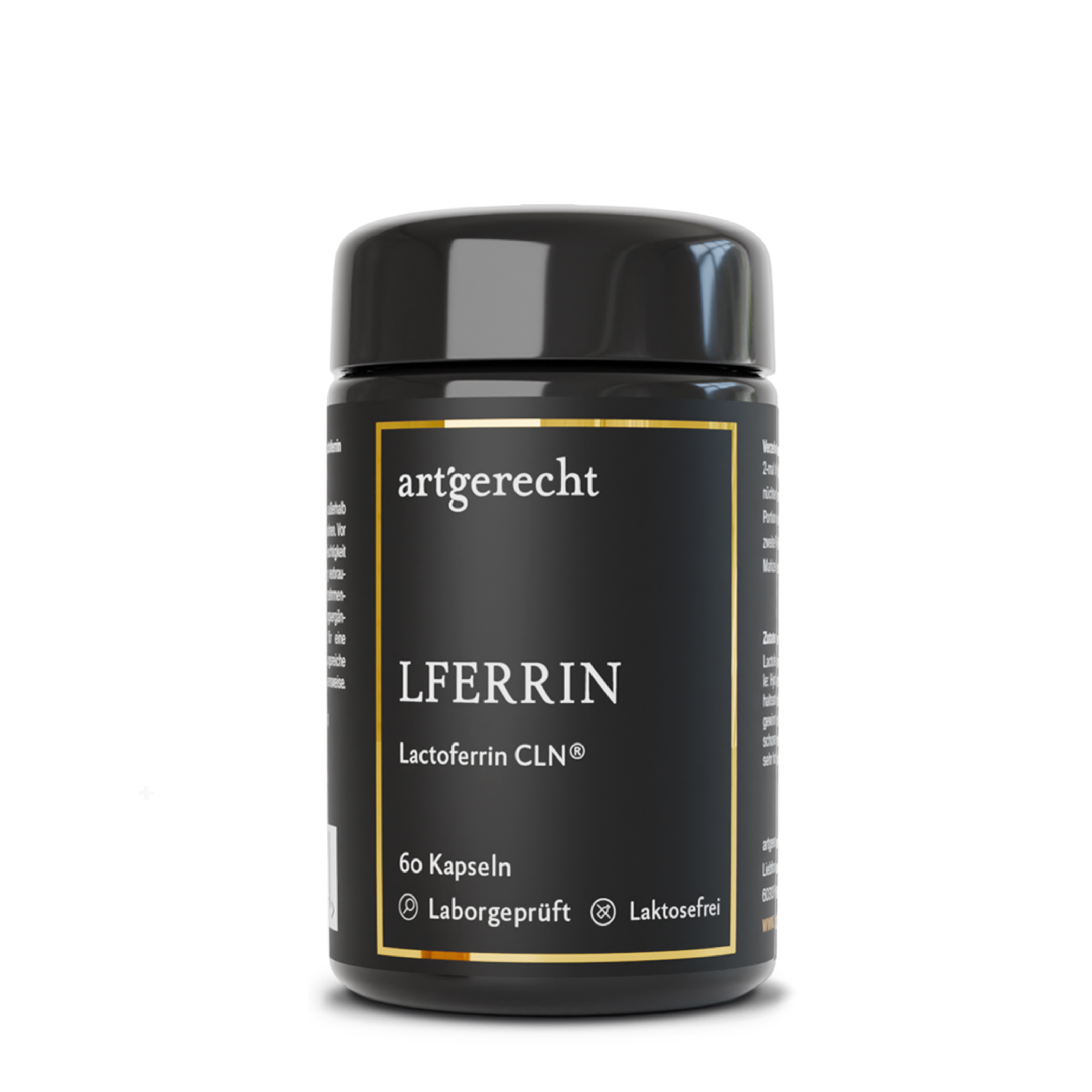
Lactoferrin
For your universal protection
As one of the most valuable proteins in the body, lactoferrin is a natural component of the immune system.[siehe Varianten]
Regular price:
€59.90
Subscription available

Natural Iron

For your iron balance
Specially formulated for your iron balance with plant-based curry leaf iron, Lactoferrin CLN®, and natural Vitamin C from rose hips.
30 Capsules
Regular price:
€35.90
Most read entries
3 Posts in this encyclopedia categoryMagnesiumcarbonat
Magnesiumcarbonat ist eine anorganische Magnesiumverbindung mit säure-neutralisierender (antazidischer) Wirkung. Erfahre mehr über Vorteile, Einsatzgebiete und Unterschiede zu besser resorbierbaren Magnesiumformen.
Calorie content
The choice of food influences our energy intake. The calorie content varies greatly - some provide little energy, others a lot.
Cologne list
The Cologne List ® is an important initiative in competitive sports that offers athletes guidance in the selection of nutritional supplements.