


Ametropia: Causes, Symptoms & Treatment
Ametropia is a refractive error of the eye in which light is not focused precisely on the retina. It includes myopia, hyperopia, and astigmatism.
Things worth knowing about "Ametropia"
Ametropia is a refractive error of the eye in which light is not focused precisely on the retina. It includes myopia, hyperopia, and astigmatism.
What is Ametropia?
Ametropia (from Greek ametros = disproportionate, ops = eye) is a collective term for refractive errors of the eye, in which incoming light is not focused accurately on the retina. This contrasts with emmetropia, the state of normal vision, where light rays converge precisely on the retinal surface. Ametropia is one of the most prevalent visual impairments worldwide and affects people of all ages.
Types of Ametropia
Several distinct forms of refractive error fall under the umbrella of ametropia:
- Myopia (Nearsightedness): The eyeball is too long or the cornea too curved, causing the focal point to fall in front of the retina. Distant objects appear blurry.
- Hyperopia (Farsightedness): The eyeball is too short or the refractive power is insufficient, causing the focal point to fall behind the retina. Near objects are difficult to focus on.
- Astigmatism: An irregular curvature of the cornea or lens causes light to be refracted unequally across different meridians, resulting in distorted or blurred vision at all distances.
- Anisometropia: A condition in which the two eyes have significantly different refractive powers, which can interfere with binocular vision and depth perception.
Causes
The causes of ametropia are multifactorial and include:
- Genetic predisposition: Refractive errors tend to run in families, indicating a strong hereditary component.
- Axial length of the eye: Variations in eyeball length due to growth processes, especially during childhood and adolescence, are a primary cause.
- Corneal shape variations: Differences in corneal curvature directly affect how light is bent.
- Lens changes: With age, the lens may lose elasticity (presbyopia) or develop opacities (cataract), altering its refractive power.
- Environmental factors: Prolonged near work and limited time outdoors have been associated with increased risk of myopia development.
Symptoms
The symptoms of ametropia depend on the type of refractive error but commonly include:
- Blurred or unclear vision at distance and/or near range
- Headaches, especially after reading or screen work
- Eye fatigue and eye strain
- Squinting to see more clearly
- Distorted or double vision (particularly with astigmatism)
- Difficulties in reading or learning in children
Diagnosis
Ametropia is diagnosed by an ophthalmologist or optometrist using a range of tests:
- Visual acuity testing: Assessment of sharpness of vision using standardized eye charts (e.g., Snellen chart).
- Retinoscopy / Autorefraction: Objective measurement of the refractive error using optical instruments.
- Subjective refraction: The patient indicates which lens strengths provide the clearest vision.
- Slit-lamp examination: Evaluation of the cornea, lens, and other ocular structures.
- Corneal topography: Detailed mapping of corneal curvature, particularly relevant in astigmatism.
Treatment
Treatment of ametropia aims to improve visual acuity and reduce symptoms. Available options include:
Glasses and Contact Lenses
The most common and safest method of correcting refractive errors is the use of prescription glasses or contact lenses. These compensate for the refractive deviation and enable clear vision.
Refractive Surgery
For suitable patients, surgical correction of refractive errors may be performed:
- LASIK (Laser-in-situ Keratomileusis): A laser reshapes the cornea to adjust its refractive power.
- PRK (Photorefractive Keratectomy): Another laser-based technique in which the corneal surface is ablated.
- Implantable Collamer Lens (ICL): Artificial lenses are implanted inside the eye.
- Clear lens extraction: The natural lens is replaced with an artificial intraocular lens in cases of high refractive error.
Orthokeratology
Specially designed rigid contact lenses are worn overnight to temporarily reshape the cornea, allowing clear vision during the day without corrective aids. This approach is frequently used in children as part of myopia control strategies.
References
- World Health Organization (WHO): World report on vision. Geneva: WHO; 2019. Available at: https://www.who.int/publications/i/item/9789241516570
- Flitcroft DI et al.: IMI - Defining and Classifying Myopia: A Proposed Set of Standards for Clinical and Epidemiologic Studies. Investigative Ophthalmology & Visual Science. 2019;60(3):M20-M30.
- American Academy of Ophthalmology: Refractive Errors - Clinical Guidelines. San Francisco: AAO; 2023. Available at: https://www.aao.org

Building Blocks for a Healthy Life
As an integrated manufacturer, we develop & produce evidence-based, patented, and non-patented formulations. We work exclusively with plant and natural extracts according to the strictest purity & quality standards.
The combination of science & modern technology with the laws of nature creates solutions consistently tailored to humans – for the highest good: health.
Verwandte Produkte

For Healthy Oral Flora & Dental Care
Formulated lozenges with Dentalac®, lactic acid bacteria, and Lactoferrin CLN®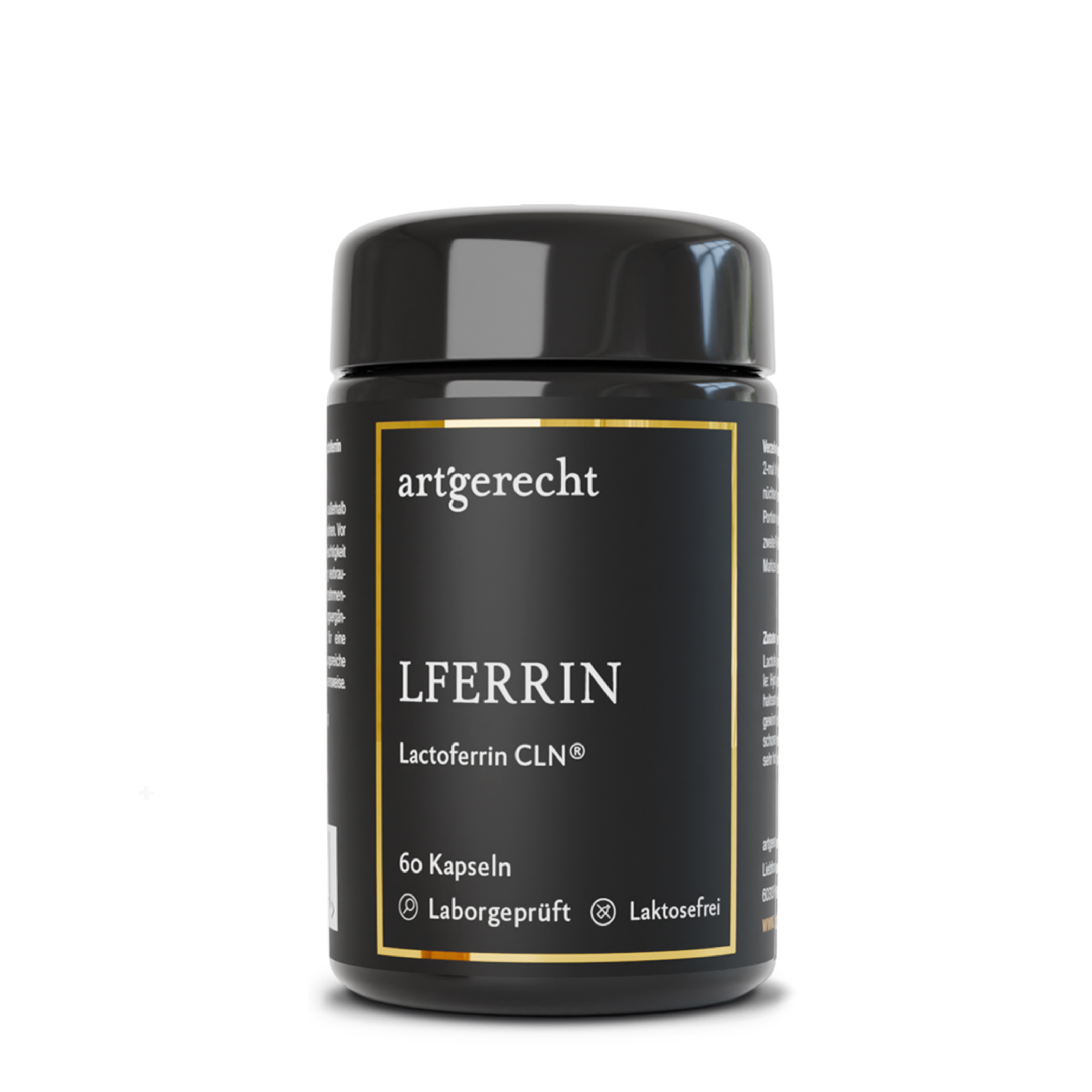
For your universal protection
As one of the most valuable proteins in the body, lactoferrin is a natural component of the immune system.
For your iron balance
Specially formulated for your iron balance with plant-based curry leaf iron, Lactoferrin CLN®, and natural Vitamin C from rose hips.