


Arthrodesis: Joint Fusion Surgery Explained
Arthrodesis is a surgical procedure that permanently fuses a joint to relieve pain and improve stability. It is used when a joint is severely damaged and other treatments have failed.
Things worth knowing about "Arthrodesis"
Arthrodesis is a surgical procedure that permanently fuses a joint to relieve pain and improve stability. It is used when a joint is severely damaged and other treatments have failed.
What is Arthrodesis?
Arthrodesis, commonly known as joint fusion, is a surgical procedure in which two bones forming a joint are permanently fused together. The goal is to eliminate painful movement at the joint by allowing the bones to grow into a single, solid unit. While the procedure results in a permanent loss of joint mobility, it provides significant pain relief and long-term stability.
Indications – When is Arthrodesis Performed?
Arthrodesis is typically considered when conservative treatments have been exhausted and the joint is severely damaged. Common indications include:
- Advanced osteoarthritis with debilitating pain
- Rheumatoid arthritis with severe joint destruction
- Post-traumatic joint damage following injuries or infections
- Joint instability or deformity
- Severe joint infections (septic arthritis)
- Failed joint replacement (prosthesis failure)
Arthrodesis is most commonly performed on the spine (spinal fusion), the ankle, the foot joints, the wrist, and smaller joints of the fingers and toes.
Surgical Techniques
During arthrodesis, the cartilage is completely removed from the joint surfaces so that the exposed bone ends can grow together. The bones are then held in position using various fixation methods:
- Screws and plates (internal fixation)
- Intramedullary nails (nail fixation through the bone canal)
- External fixator (external frame stabilization)
- Bone grafting to promote new bone growth
The procedure can be performed as open surgery or minimally invasively (arthroscopic approach), depending on the joint involved and the extent of the damage.
Recovery and Healing
Following arthrodesis, thorough post-operative care is essential. Bone fusion typically takes three to six months. During this period, the joint must be immobilized using casts, orthotic braces, or specialized footwear. Physical therapy is a key component of rehabilitation, helping to strengthen surrounding muscles and maintain the function of adjacent joints.
Benefits and Risks
Advantages of Arthrodesis
- Reliable and lasting pain relief
- High joint stability after fusion
- Long-term durability without the need for joint replacement
Possible Risks and Complications
- Non-union (pseudarthrosis): Failure of the bones to fuse properly
- Infection at the wound site or in the bone
- Nerve or vascular injury during surgery
- Increased stress on adjacent joints due to altered biomechanics
- Permanent loss of joint mobility
- Deep vein thrombosis or pulmonary embolism during recovery
Arthrodesis vs. Joint Replacement (Arthroplasty)
Arthrodesis and joint replacement (arthroplasty) are two different surgical approaches for severely damaged joints. While arthroplasty preserves joint movement, arthrodesis sacrifices mobility in favor of stability and pain elimination. The choice between the two depends on the patient's age, activity level, the joint involved, and overall health status. For certain joints – such as the ankle or small foot joints – arthrodesis may be preferred over prosthetic replacement.
References
- Canale, S.T., Beaty, J.H. (Eds.): Campbell's Operative Orthopaedics, 13th Edition. Elsevier, Philadelphia, 2017.
- Buckwalter, J.A., Saltzman, C., Brown, T.: The impact of osteoarthritis: implications for research. Clinical Orthopaedics and Related Research, 2004; 427: S6–S15.
- National Institute for Health and Care Excellence (NICE): Osteoarthritis: care and management. Clinical guideline CG177. NICE, London, 2014. Available at: www.nice.org.uk/guidance/cg177

Building Blocks for a Healthy Life
As an integrated manufacturer, we develop & produce evidence-based, patented, and non-patented formulations. We work exclusively with plant and natural extracts according to the strictest purity & quality standards.
The combination of science & modern technology with the laws of nature creates solutions consistently tailored to humans – for the highest good: health.
Verwandte Produkte

For Healthy Oral Flora & Dental Care
Formulated lozenges with Dentalac®, lactic acid bacteria, and Lactoferrin CLN®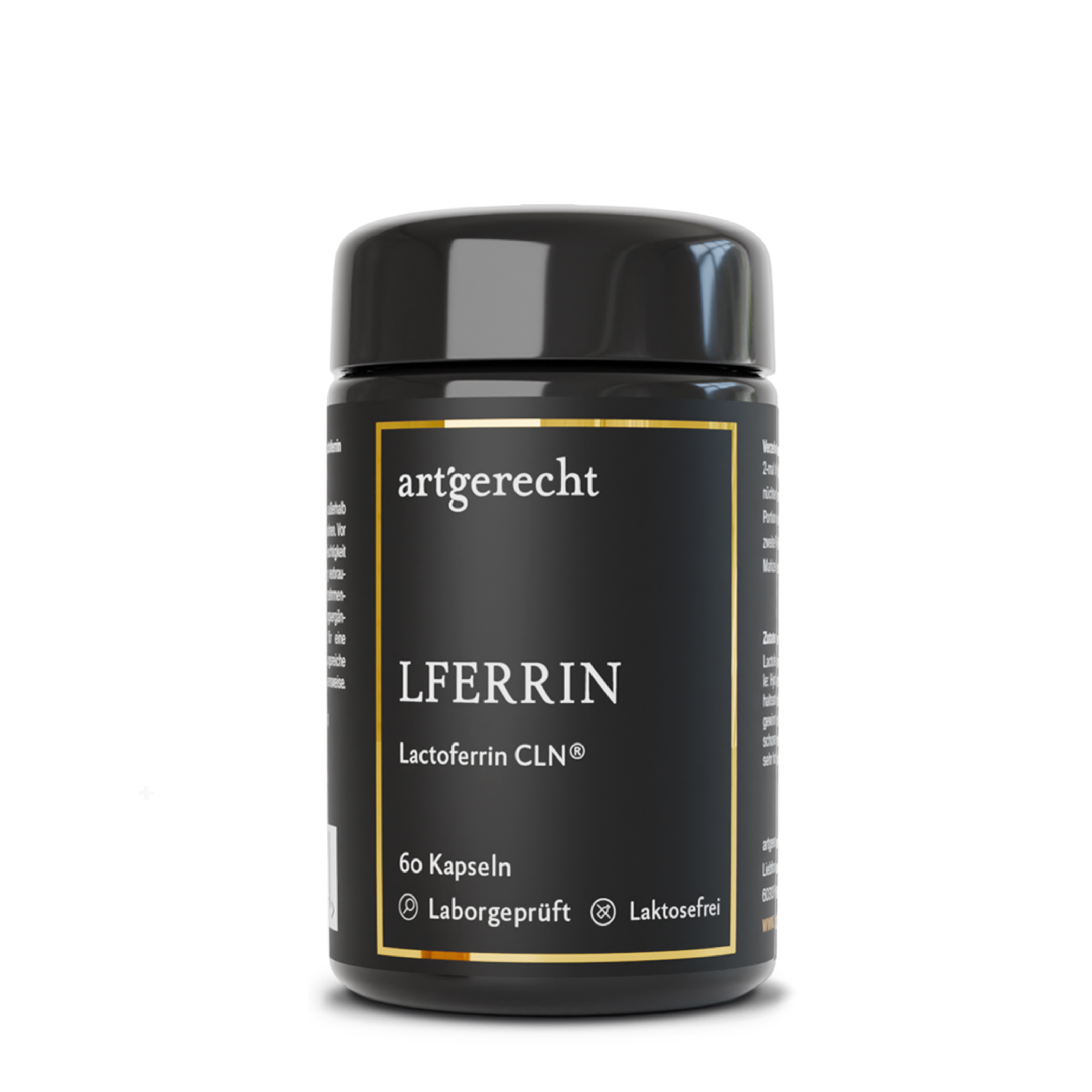
For your universal protection
As one of the most valuable proteins in the body, lactoferrin is a natural component of the immune system.
For your iron balance
Specially formulated for your iron balance with plant-based curry leaf iron, Lactoferrin CLN®, and natural Vitamin C from rose hips.