
-
 DE
DE



Articulatio costochondralis – Anatomy & Disorders
The articulatio costochondralis is the junction between the bony part of a rib and its costal cartilage. It provides stability and flexibility to the thoracic cage.
Things worth knowing about "Articulatio costochondralis"
The articulatio costochondralis is the junction between the bony part of a rib and its costal cartilage. It provides stability and flexibility to the thoracic cage.
Definition
The articulatio costochondralis, also referred to as the costochondral joint, is the anatomical junction between the osseous (bony) portion of a rib and the corresponding costal cartilage (cartilago costalis). Strictly speaking, this is not a true synovial joint with a joint cavity, but rather a cartilage-to-bone junction (synchondrosis) that provides a firm yet slightly flexible connection between the two components.
Anatomy and Location
The human thoracic cage consists of twelve pairs of ribs. Each rib has a posterior bony section that articulates with the vertebral column, and an anterior cartilaginous section composed of hyaline cartilage. The articulatio costochondralis lies at the boundary between these two portions. The junction is stabilized by a periosteal and perichondral sleeve that firmly unites bone and cartilage.
- The connection consists of hyaline cartilage fitting into a cupped depression in the bone.
- There is no joint capsule or joint space, which is why the structure is classified as a synchondrosis.
- The junction is highly elastic in children and adolescents, and tends to calcify progressively with age.
Function
The articulatio costochondralis allows a degree of flexibility in the thoracic cage and plays a key role in respiratory mechanics. During inhalation and exhalation, the chest wall expands and contracts; the costochondral junctions absorb and distribute the resulting forces, protecting the ribs from fracture. They also contribute to the overall structural integrity of the thorax.
Clinical Significance
Costochondritis
Costochondritis is one of the most common conditions affecting the articulatio costochondralis. It involves inflammation of the costal cartilage and the costochondral junction, presenting as localized chest pain that worsens with palpation of the affected area or during deep inspiration. The cause is often idiopathic but may follow infections or physical strain.
Tietze Syndrome
Tietze syndrome is a painful, non-suppurative swelling of the costochondral or sternocostal junctions, most commonly involving the second and third ribs. Unlike costochondritis, Tietze syndrome features a visible or palpable swelling at the site of pain.
Traumatic Injuries
Significant mechanical force -- such as that sustained in motor vehicle accidents or falls -- can result in dislocation or fracture at the costochondral junction. Such injuries cause intense pain and may impair respiratory function.
Age-Related Changes
With advancing age, progressive calcification or ossification of the costal cartilage at the costochondral junction is common. This leads to stiffening of the thoracic cage and can reduce the respiratory reserve in older individuals.
Diagnosis
Disorders of the articulatio costochondralis are typically diagnosed clinically through patient history and physical examination. Imaging modalities such as X-ray, ultrasound, CT, or MRI may be used as adjuncts to rule out fractures, inflammatory conditions, or neoplasms. Point tenderness at the costochondral junction upon palpation is a key clinical finding.
Treatment
Treatment depends on the underlying condition:
- Costochondritis and Tietze syndrome: Often self-limiting; managed with nonsteroidal anti-inflammatory drugs (NSAIDs), local heat application, and rest.
- Traumatic injuries: Conservative management with analgesics; surgical intervention may be required for severe dislocations.
- Age-related changes: Physiotherapy to maintain thoracic mobility and respiratory capacity.
References
- Schiebler, T.H. & Korf, H.W. (2007). Anatomie. Steinkopff Verlag, 10th edition.
- Proulx, A.M. & Zryd, T.W. (2009). Costochondritis: Diagnosis and Treatment. American Family Physician, 80(6), 617-620.
- Pujalte, G.G.A. & Reyes, B.P. (2009). Costochondritis and Tietze Syndrome. Current Reviews in Musculoskeletal Medicine, 2(2), 88-90.

Building Blocks for a Healthy Life
As an integrated manufacturer, we develop & produce evidence-based, patented, and non-patented formulations. We work exclusively with plant and natural extracts according to the strictest purity & quality standards.
The combination of science & modern technology with the laws of nature creates solutions consistently tailored to humans – for the highest good: health.
Verwandte Produkte
Subscription available

Floral
For Healthy Oral Flora & Dental Care
Formulated lozenges with Dentalac®, lactic acid bacteria, and Lactoferrin CLN®30 lozenges
Regular price:
€22.90
Subscription available
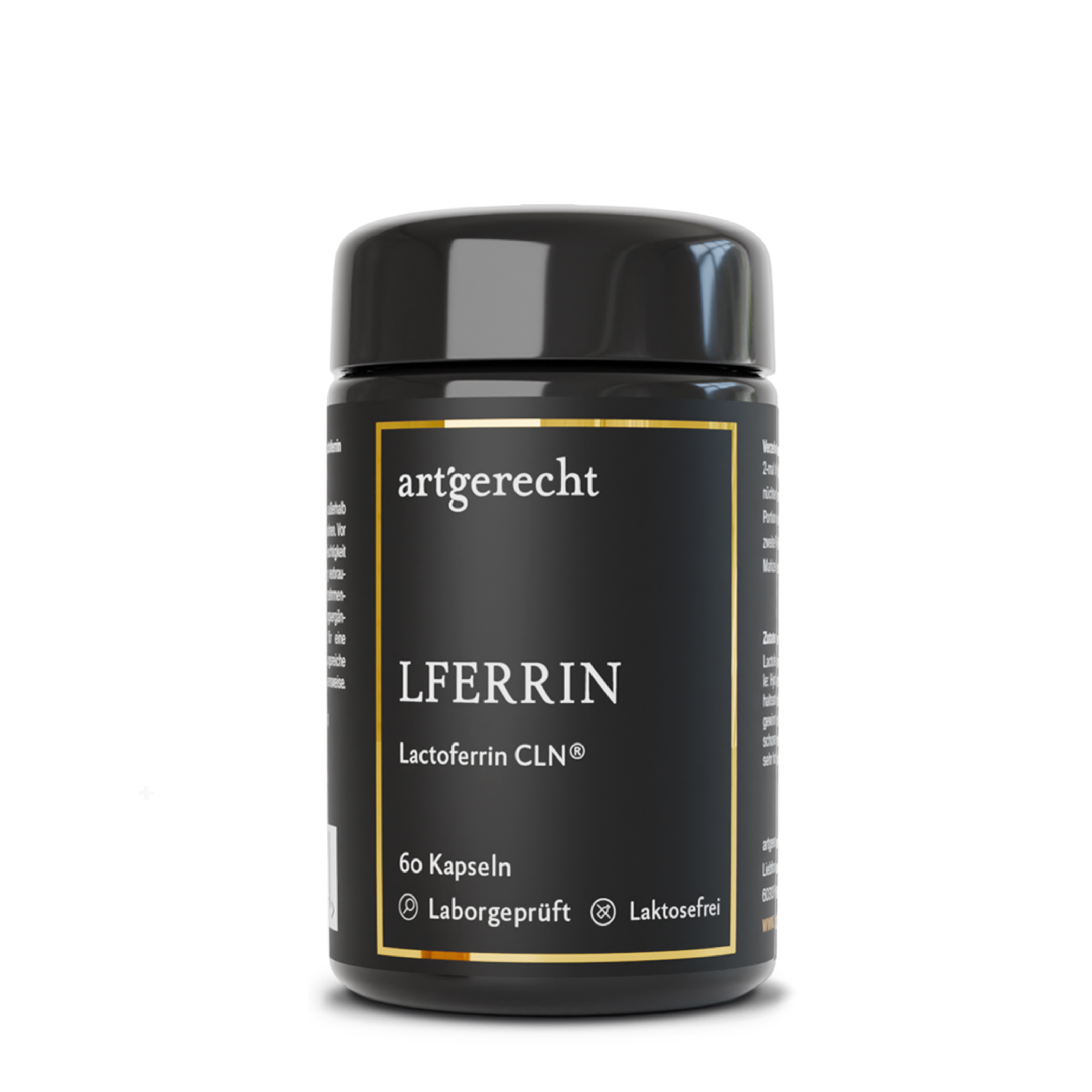
Lactoferrin
For your universal protection
As one of the most valuable proteins in the body, lactoferrin is a natural component of the immune system.[siehe Varianten]
Regular price:
€59.90
Subscription available

Natural Iron

For your iron balance
Specially formulated for your iron balance with plant-based curry leaf iron, Lactoferrin CLN®, and natural Vitamin C from rose hips.
30 Capsules
Regular price:
€35.90
Most read entries
3 Posts in this encyclopedia categoryMagnesiumcarbonat
Magnesiumcarbonat ist eine anorganische Magnesiumverbindung mit säure-neutralisierender (antazidischer) Wirkung. Erfahre mehr über Vorteile, Einsatzgebiete und Unterschiede zu besser resorbierbaren Magnesiumformen.
Calorie content
The choice of food influences our energy intake. The calorie content varies greatly - some provide little energy, others a lot.
Cologne list
The Cologne List ® is an important initiative in competitive sports that offers athletes guidance in the selection of nutritional supplements.