
-
 DE
DE



Cholesterol Biosynthesis – Pathway, Regulation & Significance
Cholesterol biosynthesis is the biochemical process by which the body produces its own cholesterol. It occurs mainly in the liver and is essential for cell membrane integrity, hormone production, and bile acid formation.
Things worth knowing about "Cholesterol Biosynthesis"
Cholesterol biosynthesis is the biochemical process by which the body produces its own cholesterol. It occurs mainly in the liver and is essential for cell membrane integrity, hormone production, and bile acid formation.
What is Cholesterol Biosynthesis?
Cholesterol biosynthesis is the metabolic pathway through which the human body synthesizes cholesterol endogenously. Cholesterol is an essential lipid molecule that serves as a structural component of cell membranes and as a precursor for steroid hormones, bile acids, and vitamin D. Approximately 70–80% of total body cholesterol is produced through endogenous synthesis, while the remainder is absorbed from dietary sources.
Where Does Cholesterol Biosynthesis Occur?
Although cholesterol biosynthesis can take place in virtually all nucleated cells, the primary site is the liver (hepatocytes), where it occurs in the endoplasmic reticulum. Other important sites include the small intestine, adrenal cortex, and gonads.
Steps of Cholesterol Biosynthesis
The biosynthetic pathway involves more than 30 enzymatic reactions and is divided into the following major phases:
1. Formation of Acetyl-CoA
The starting material for cholesterol synthesis is Acetyl-CoA, derived from the catabolism of carbohydrates, fatty acids, and amino acids. Two molecules of Acetyl-CoA condense to form Acetoacetyl-CoA.
2. Formation of HMG-CoA and Mevalonate
Acetoacetyl-CoA combines with another Acetyl-CoA molecule to produce 3-hydroxy-3-methylglutaryl-CoA (HMG-CoA). The enzyme HMG-CoA reductase then catalyzes the reduction of HMG-CoA to mevalonate. This is the rate-limiting step of cholesterol biosynthesis and the primary pharmacological target of statins.
3. Formation of Isopentenyl Pyrophosphate (IPP)
Mevalonate undergoes a series of phosphorylation and decarboxylation reactions to produce isopentenyl pyrophosphate (IPP) and its isomer dimethylallyl pyrophosphate (DMAPP). These C5 units are the universal building blocks of isoprenoid metabolism.
4. Formation of Squalene
Multiple IPP units are condensed stepwise to form geranyl pyrophosphate (GPP, C10) and then farnesyl pyrophosphate (FPP, C15). Two molecules of FPP are joined by the enzyme squalene synthase to produce squalene (C30).
5. Cyclization to Lanosterol and Conversion to Cholesterol
Squalene is oxidized by squalene epoxidase to squalene-2,3-epoxide and then cyclized by lanosterol synthase to form the first steroid, lanosterol. Through approximately 19 further enzymatic steps, lanosterol is converted to the final product, cholesterol (C27).
Regulation of Cholesterol Biosynthesis
The body tightly regulates cholesterol production to maintain homeostasis through several mechanisms:
- HMG-CoA reductase is the central regulatory enzyme, controlled by cellular cholesterol levels.
- When intracellular cholesterol is high, the SREBP transcription factor cascade (Sterol Regulatory Element-Binding Proteins) is suppressed, reducing HMG-CoA reductase expression.
- Insulin stimulates HMG-CoA reductase activity, while glucagon inhibits it.
- Cholesterol itself inhibits its own synthesis via a negative feedback mechanism.
Clinical Relevance
Dysregulation of cholesterol biosynthesis can lead to elevated blood cholesterol levels (hypercholesterolemia), a major risk factor for atherosclerosis, myocardial infarction, and stroke. Conversely, rare genetic defects in biosynthetic enzymes can cause sterol synthesis disorders, such as Smith-Lemli-Opitz syndrome, which results from a deficiency in 7-dehydrocholesterol reductase.
Pharmacological Relevance: Statins
Statins (e.g., atorvastatin, simvastatin, rosuvastatin) are the most widely prescribed cholesterol-lowering medications. They act as competitive inhibitors of HMG-CoA reductase, blocking the rate-limiting step of cholesterol biosynthesis. The resulting decrease in intracellular cholesterol production upregulates LDL receptor expression on hepatocytes, effectively reducing circulating LDL cholesterol levels.
References
- Berg JM, Tymoczko JL, Stryer L. Biochemistry. 8th ed. New York: W.H. Freeman and Company; 2015. Chapter 26: Biosynthesis of Membrane Lipids and Steroids.
- Goldstein JL, Brown MS. A century of cholesterol and coronaries: from plaques to genes to statins. Cell. 2015;161(1):161-172. doi:10.1016/j.cell.2015.01.036
- World Health Organization (WHO). Cardiovascular diseases: key facts. Geneva: WHO; 2023. Available at: https://www.who.int/news-room/fact-sheets/detail/cardiovascular-diseases-(cvds)

Building Blocks for a Healthy Life
As an integrated manufacturer, we develop & produce evidence-based, patented, and non-patented formulations. We work exclusively with plant and natural extracts according to the strictest purity & quality standards.
The combination of science & modern technology with the laws of nature creates solutions consistently tailored to humans – for the highest good: health.
Verwandte Produkte
Subscription available

Floral
For Healthy Oral Flora & Dental Care
Formulated lozenges with Dentalac®, lactic acid bacteria, and Lactoferrin CLN®30 lozenges
Regular price:
€22.90
Subscription available
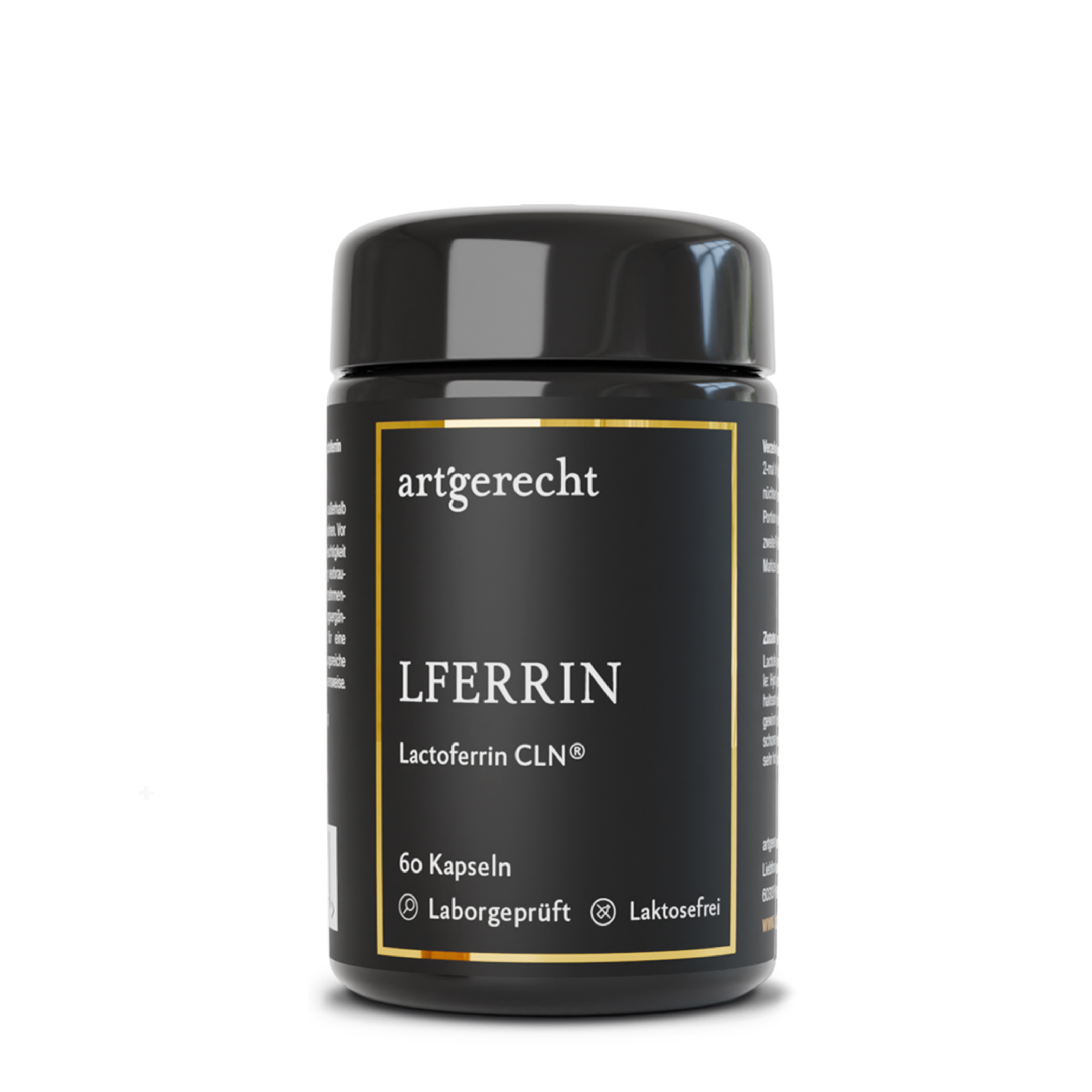
Lactoferrin
For your universal protection
As one of the most valuable proteins in the body, lactoferrin is a natural component of the immune system.[siehe Varianten]
Regular price:
€59.90
Subscription available

Natural Iron

For your iron balance
Specially formulated for your iron balance with plant-based curry leaf iron, Lactoferrin CLN®, and natural Vitamin C from rose hips.
30 Capsules
Regular price:
€35.90
Most read entries
3 Posts in this encyclopedia categoryMagnesiumcarbonat
Magnesiumcarbonat ist eine anorganische Magnesiumverbindung mit säure-neutralisierender (antazidischer) Wirkung. Erfahre mehr über Vorteile, Einsatzgebiete und Unterschiede zu besser resorbierbaren Magnesiumformen.
Calorie content
The choice of food influences our energy intake. The calorie content varies greatly - some provide little energy, others a lot.
Cologne list
The Cologne List ® is an important initiative in competitive sports that offers athletes guidance in the selection of nutritional supplements.