


Clavicle (Collarbone) - Anatomy and Conditions
The clavicle (collarbone) is an S-shaped bone connecting the shoulder to the sternum. It plays a key role in shoulder stability and movement.
Things worth knowing about "Clavicle"
The clavicle (collarbone) is an S-shaped bone connecting the shoulder to the sternum. It plays a key role in shoulder stability and movement.
What is the Clavicle?
The clavicle, commonly known as the collarbone, is a paired, S-shaped bone present on both sides of the body. It connects the sternum (breastbone) to the scapula (shoulder blade), forming an essential part of the shoulder girdle. In most people, the clavicle is visible and easily felt beneath the skin.
Anatomy and Location
The clavicle lies horizontally across the upper chest and consists of three sections:
- Medial end (sternal end): Articulates with the sternum to form the sternoclavicular joint.
- Shaft (body of clavicle): The middle, gently curved section of the bone.
- Lateral end (acromial end): Connects with the acromion of the scapula to form the acromioclavicular (AC) joint.
The clavicle serves as the only bony connection between the upper limb and the axial skeleton. Important muscles, nerves, and blood vessels run in close proximity to it.
Functions of the Clavicle
The clavicle performs several important functions:
- Shoulder stabilization: It keeps the scapula and arm in proper position.
- Force transmission: It transfers forces between the arm and the trunk.
- Protection: It shields underlying structures including the brachial plexus and the subclavian artery.
- Mobility: It enables a wide range of shoulder movements.
Common Conditions and Injuries
Clavicle Fracture (Broken Collarbone)
A clavicle fracture is one of the most common bone fractures, particularly in children and young adults. It typically results from a direct fall onto the shoulder or an outstretched arm. Symptoms include severe pain, swelling, and visible deformity in the shoulder area. Treatment is often conservative with a sling, but displaced fractures may require surgery.
Acromioclavicular (AC) Joint Dislocation
An AC joint dislocation occurs when the ligaments between the clavicle and acromion are stretched or torn, often due to a fall onto the shoulder. Depending on severity, treatment may be conservative or surgical.
Osteitis and Osteomyelitis of the Clavicle
Inflammation of the clavicle, such as from bacterial infection (osteomyelitis) or as part of conditions like SAPHO syndrome, can cause pain, swelling, and localized warmth over the bone.
Tumors of the Clavicle
Bone tumors of the clavicle are rare but can be benign (e.g., osteochondroma) or malignant (e.g., bone sarcoma or metastases).
Diagnosis
The following diagnostic methods are used to assess the clavicle:
- X-ray: The standard method for detecting fractures and joint changes.
- Ultrasound: Useful for evaluating soft tissues and ligaments.
- Computed Tomography (CT): Used for complex fractures or suspected tumors.
- Magnetic Resonance Imaging (MRI): Provides detailed visualization of ligaments, muscles, and bone marrow.
Treatment
Treatment depends on the specific condition or injury:
- Conservative treatment: Immobilization with a sling, pain management, and physiotherapy.
- Surgical treatment: For significantly displaced fractures or AC joint dislocations, using plate fixation or other surgical techniques.
- Physiotherapy: Following injury or surgery to restore shoulder strength and range of motion.
References
- Drake R.L., Vogl A.W., Mitchell A.W.M. - Gray's Anatomy for Students. Elsevier, 4th edition (2019).
- Lenza M., Faloppa F. - Conservative interventions for treating middle third clavicle fractures in adolescents and adults. Cochrane Database of Systematic Reviews, 2015.
- Rockwood C.A., Matsen F.A. - The Shoulder. Elsevier Saunders, 4th edition (2009).

Building Blocks for a Healthy Life
As an integrated manufacturer, we develop & produce evidence-based, patented, and non-patented formulations. We work exclusively with plant and natural extracts according to the strictest purity & quality standards.
The combination of science & modern technology with the laws of nature creates solutions consistently tailored to humans – for the highest good: health.
Verwandte Produkte

For Healthy Oral Flora & Dental Care
Formulated lozenges with Dentalac®, lactic acid bacteria, and Lactoferrin CLN®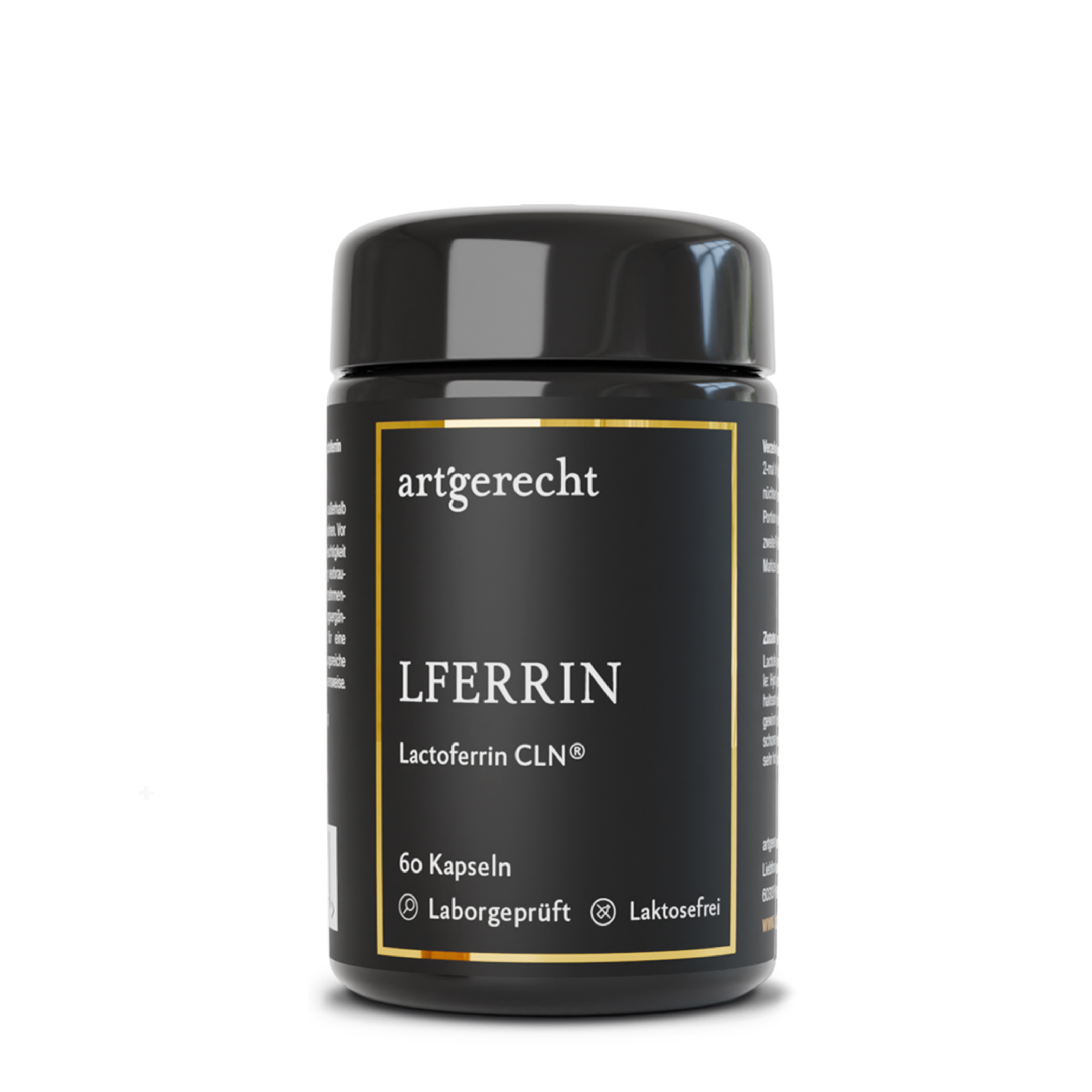
For your universal protection
As one of the most valuable proteins in the body, lactoferrin is a natural component of the immune system.
For your iron balance
Specially formulated for your iron balance with plant-based curry leaf iron, Lactoferrin CLN®, and natural Vitamin C from rose hips.