


Dendritic Process – Function and Significance
A dendritic process is a branched extension of a nerve cell that receives signals from other neurons and transmits them to the cell body.
Things worth knowing about "Dendritic Process"
A dendritic process is a branched extension of a nerve cell that receives signals from other neurons and transmits them to the cell body.
What Is a Dendritic Process?
A dendritic process is a tree-shaped cellular extension of a neuron (nerve cell). The term derives from the Greek word dendron, meaning tree. Together with the cell body (soma) and the axon, dendrites form the three principal structural components of a neuron. Their primary function is to receive incoming signals from neighbouring nerve cells or sensory cells and to conduct these signals toward the cell body.
Structure and Anatomy
Dendritic processes emerge directly from the neuronal cell body and branch repeatedly, creating a characteristic tree-like architecture. Their surface is studded with small protrusions known as dendritic spines. These spines substantially increase the surface area of the dendrite and serve as the sites where synaptic connections with other neurons are formed.
- Dendritic tree: The entirety of all dendritic processes of a single neuron is collectively referred to as the dendritic tree.
- Dendritic spines: Small, finger-like protrusions at which synapses are established.
- Postsynaptic density: A specialised region within dendritic spines that harbours receptors for neurotransmitters.
Function and Mechanism of Action
Dendritic processes receive electrochemical signals in the form of neurotransmitters released by the upstream nerve cell at the synapse. These chemical messengers bind to specific receptors on the dendritic surface, triggering local changes in electrical potential known as postsynaptic potentials. These potentials travel along the dendrite toward the cell body, where they are integrated. If the cumulative signal reaches a defined threshold, an action potential is generated and transmitted along the axon to the next neuron.
Dendritic processes can receive both excitatory and inhibitory signals, allowing for precise regulation of neuronal activity.
Plasticity of Dendritic Processes
A particularly important feature of dendritic processes is their structural plasticity. This means that the shape, number, and size of dendritic spines can change in response to learning, experience, and the frequency of synaptic activity. This mechanism is considered the cellular basis of learning and memory.
- Repeated activation of a synapse leads to the strengthening and enlargement of dendritic spines (long-term potentiation).
- Lack of synaptic activity can cause spines to shrink or disappear (long-term depression).
Clinical Relevance
Alterations in dendritic processes play a significant role in numerous neurological and psychiatric conditions:
- Alzheimer disease: Early loss of dendritic spines is considered one of the first structural indicators of the disease.
- Schizophrenia: Studies report a reduced density of dendritic spines in the prefrontal cortex.
- Epilepsy: Structural changes in dendrites may contribute to increased neuronal excitability.
- Intellectual developmental disorders: Abnormalities in the number and shape of dendritic spines have been described in various genetic syndromes (e.g. Fragile X syndrome).
References
- Kandel E. R., Schwartz J. H., Jessell T. M. et al. - Principles of Neural Science, 5th edition, McGraw-Hill, 2013.
- Bhatt D. L., Bhatt D. L., Bhatt D. L. - Bhatt et al.: Dendritic spine dynamics. Annual Review of Physiology, 2009, 71:261-282. PubMed PMID: 19575680.
- Spruston N. - Pyramidal neurons: dendritic structure and synaptic integration. Nature Reviews Neuroscience, 2008, 9(3):206-221. PubMed PMID: 18270515.

Building Blocks for a Healthy Life
As an integrated manufacturer, we develop & produce evidence-based, patented, and non-patented formulations. We work exclusively with plant and natural extracts according to the strictest purity & quality standards.
The combination of science & modern technology with the laws of nature creates solutions consistently tailored to humans – for the highest good: health.
Verwandte Produkte

For Healthy Oral Flora & Dental Care
Formulated lozenges with Dentalac®, lactic acid bacteria, and Lactoferrin CLN®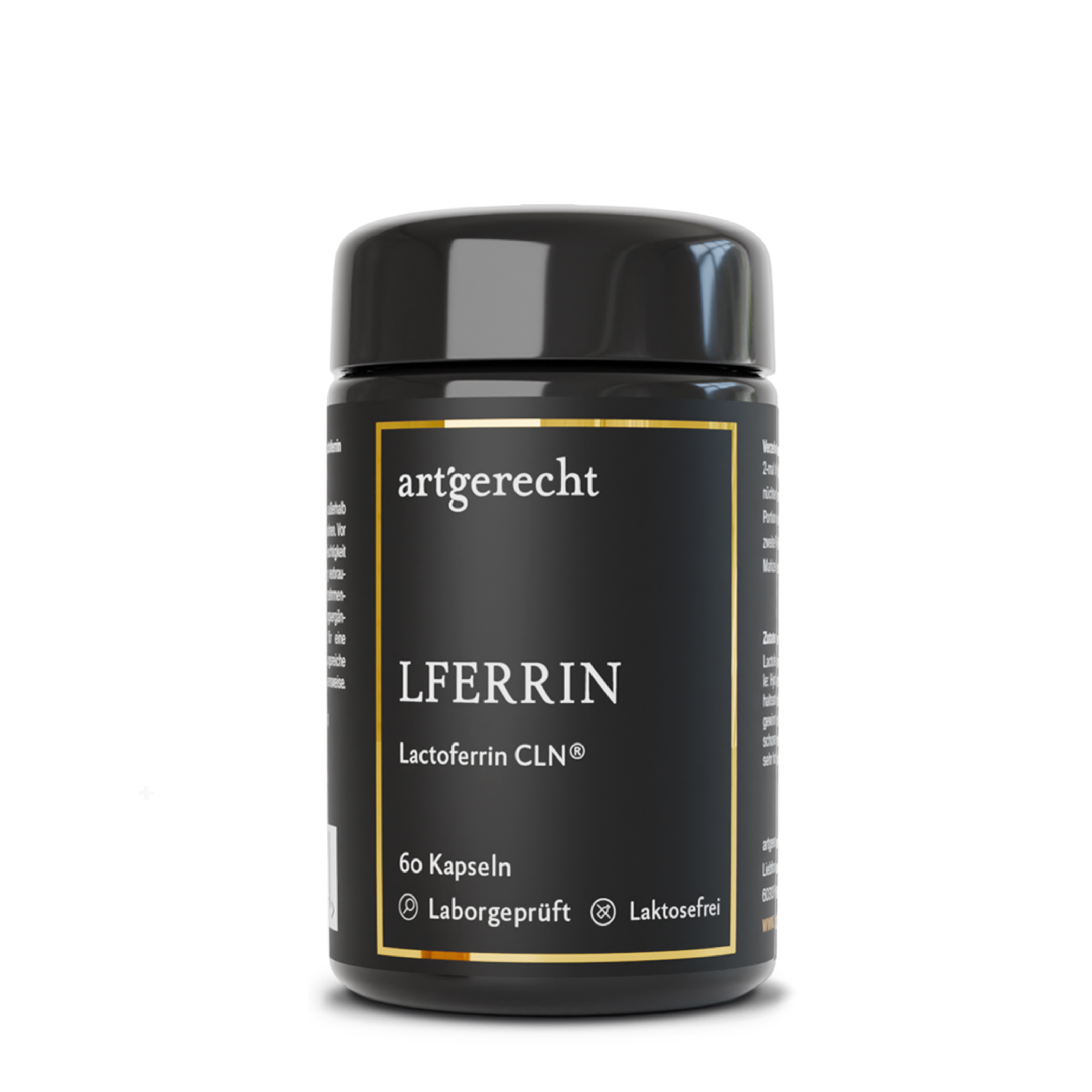
For your universal protection
As one of the most valuable proteins in the body, lactoferrin is a natural component of the immune system.
For your iron balance
Specially formulated for your iron balance with plant-based curry leaf iron, Lactoferrin CLN®, and natural Vitamin C from rose hips.