


Discectomy – Spinal Disc Surgery Explained
A discectomy is a surgical procedure to remove a herniated disc that is compressing spinal nerves, causing pain, numbness, or weakness.
Things worth knowing about "Discectomy"
A discectomy is a surgical procedure to remove a herniated disc that is compressing spinal nerves, causing pain, numbness, or weakness.
What Is a Discectomy?
A discectomy is a neurosurgical or orthopaedic procedure in which a herniated or severely degenerated portion of an intervertebral disc is surgically removed. The goal of the procedure is to relieve pressure on surrounding nerve structures – particularly the spinal cord or individual nerve roots – in order to reduce pain, numbness, tingling, or paralysis.
Intervertebral discs are located between the vertebral bodies of the spine and act as shock absorbers. When the soft inner core (nucleus pulposus) pushes through the tough outer ring (anulus fibrosus), a disc herniation (prolapse) occurs, which can compress nerves and cause significant symptoms.
Indications
A discectomy is generally recommended when conservative treatments – such as physiotherapy, pain medications, or epidural injections – have not provided sufficient relief after an adequate period, or when neurological deficits are present. Common indications include:
- Disc herniation with persistent, severe nerve pain (radiculopathy), such as sciatica
- Motor weakness or paralysis of a leg or arm due to nerve root compression
- Cauda equina syndrome (compression of the cauda equina nerve bundle) as an emergency indication
- Confirmed disc prolapse with nerve compression on MRI imaging
Types of Discectomy
Microdiscectomy
Microdiscectomy is the most commonly performed technique. Using a surgical microscope through a small incision (approximately 2–4 cm), the back muscles are gently retracted and the herniated disc material is precisely removed. This minimally invasive approach preserves surrounding tissue and allows for shorter recovery times.
Endoscopic Discectomy
In an endoscopic discectomy, a thin endoscope with a camera is inserted through a very small incision. This approach is even less invasive and is increasingly being adopted, although it requires specialised surgical expertise.
Open Discectomy
The traditional open discectomy involves a larger incision and provides the surgeon with direct access to the affected spinal region. It is used in complex cases or when simultaneous spinal stabilisation is planned.
Surgical Procedure
The procedure is typically performed under general anaesthesia and lasts between 30 minutes and 2 hours depending on the technique and complexity. The patient is usually positioned face down (prone position). After gaining access to the spine, the herniated or damaged disc material is removed under microscopic or endoscopic visualisation, and the wound is then closed in layers.
Recovery and Rehabilitation
Following a microdiscectomy, many patients are discharged from hospital within 1–3 days. Rehabilitation typically includes:
- Physiotherapy to strengthen the back muscles
- Avoidance of heavy physical activity for several weeks
- Pain management and wound care
- Gradual increase in activity levels under medical supervision
Full recovery generally takes 4–12 weeks, depending on the extent of the surgery and the overall health of the patient.
Benefits and Risks
Studies show that discectomy results in significant pain relief in more than 80–90% of suitable patients. However, as with any surgical procedure, certain risks exist:
- Infection (wound or disc space infection)
- Bleeding or haematoma formation
- Injury to nerve roots or the spinal cord
- Recurrent disc herniation
- Scar tissue formation around nerves (epidural fibrosis)
- General anaesthesia-related risks
References
- Peul WC et al. – Surgery versus prolonged conservative treatment for sciatica. New England Journal of Medicine, 2007; 356(22): 2245–2256.
- Deyo RA, Mirza SK – Herniated Lumbar Intervertebral Disk. New England Journal of Medicine, 2016; 374(18): 1763–1772.
- Watkins RG – Surgical Approaches to the Spine. Springer, 2nd edition, 2003.

Building Blocks for a Healthy Life
As an integrated manufacturer, we develop & produce evidence-based, patented, and non-patented formulations. We work exclusively with plant and natural extracts according to the strictest purity & quality standards.
The combination of science & modern technology with the laws of nature creates solutions consistently tailored to humans – for the highest good: health.
Verwandte Produkte

For Healthy Oral Flora & Dental Care
Formulated lozenges with Dentalac®, lactic acid bacteria, and Lactoferrin CLN®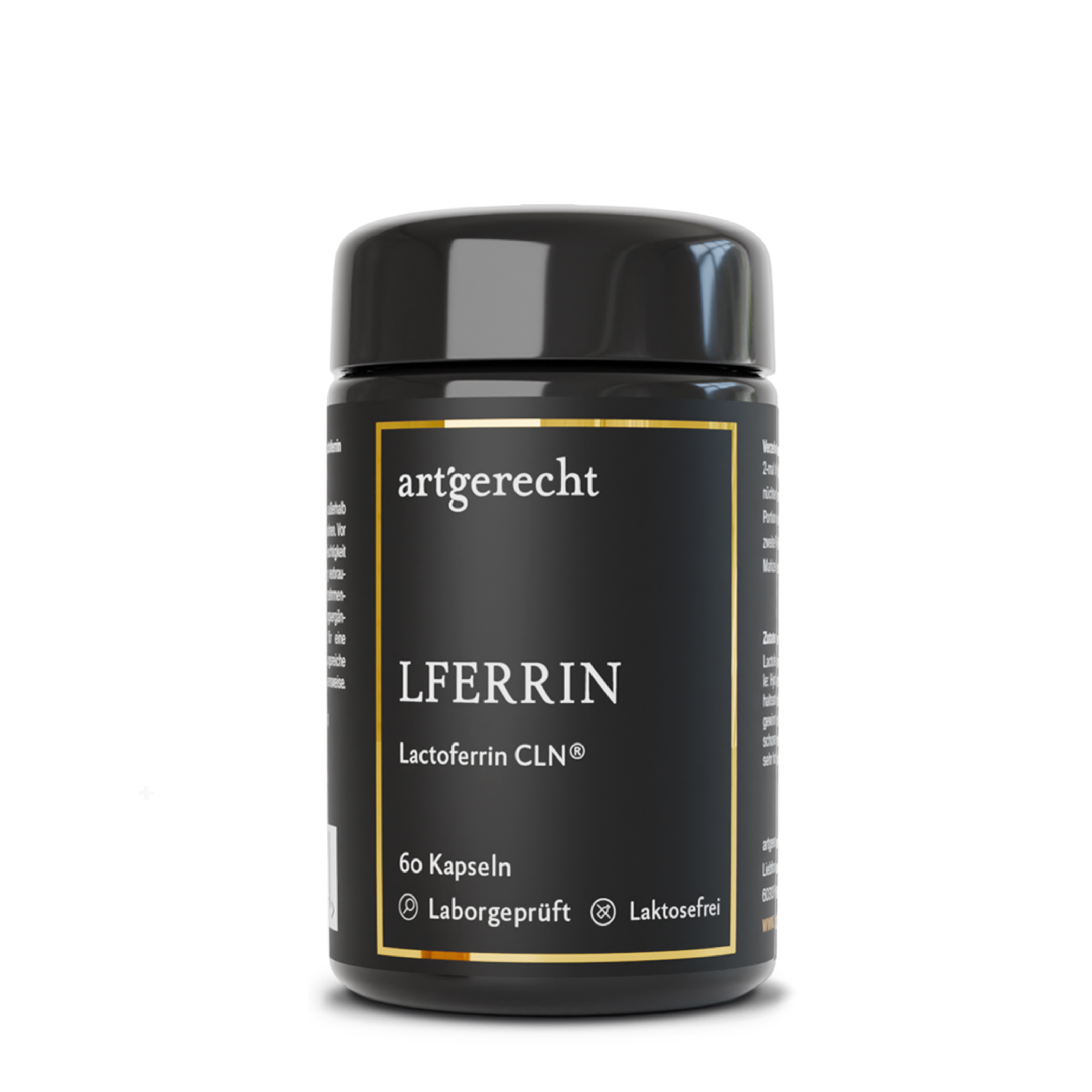
For your universal protection
As one of the most valuable proteins in the body, lactoferrin is a natural component of the immune system.
For your iron balance
Specially formulated for your iron balance with plant-based curry leaf iron, Lactoferrin CLN®, and natural Vitamin C from rose hips.