


E469 – Enzymatically Hydrolyzed CMC
E469 is an approved food additive – enzymatically hydrolyzed carboxymethylcellulose – used as a thickener and stabilizer in processed foods.
Things worth knowing about "E469"
E469 is an approved food additive – enzymatically hydrolyzed carboxymethylcellulose – used as a thickener and stabilizer in processed foods.
What is E469?
E469 refers to enzymatically hydrolyzed carboxymethylcellulose (also known as enzymatically hydrolyzed CMC). It is a modified food additive produced by the enzymatic breakdown of carboxymethylcellulose (E466). Cellulose is a naturally occurring structural fiber found in plant cell walls; through chemical modification and subsequent enzymatic hydrolysis, a water-soluble polymer with altered physical properties is obtained. E469 is approved as a food additive in the European Union and is primarily used as a thickener, stabilizer, and emulsifier.
Production and Chemical Properties
E469 is produced in two main steps: first, cellulose is reacted with chloroacetic acid to form carboxymethylcellulose (CMC, E466). In the second step, this CMC is partially hydrolyzed using specific enzymes (cellulases), breaking the polymer chains into shorter fragments. The result is a polysaccharide with a lower molecular weight that offers improved performance in certain food applications compared to unmodified CMC.
Key properties of E469 include:
- High water solubility
- Colorless and odorless
- Binds water and increases the viscosity of food products
- Stabilizes emulsions and prevents ingredient separation
- Heat-stable across a wide pH range
Use in Food Products
E469 is used in a wide range of processed foods, including:
- Baked goods: to improve dough structure and extend freshness
- Dairy products and desserts: as a stabilizer in yogurt, pudding, and ice cream
- Sauces and dressings: to improve consistency and texture
- Dietary foods and food supplements: as a carrier and thickening agent
- Beverages: to stabilize suspensions and improve mouthfeel
Safety and Health Assessment
The European Food Safety Authority (EFSA) has assessed E469 as safe for use in food. As a high-molecular-weight polymer, it is not – or only minimally – absorbed in the human digestive tract and is therefore considered physiologically inert under normal conditions of use.
No specific Acceptable Daily Intake (ADI) value has been established for E469 in the EU, as no health concerns have been identified at normal dietary intake levels. Its use is governed by the quantum satis principle, meaning it may only be used in the quantity necessary to achieve the intended technological effect.
Possible Intolerances
In rare cases, sensitive individuals may experience mild gastrointestinal discomfort in response to CMC-based additives, particularly at very high intake levels. People with known hypersensitivity to cellulose derivatives should avoid products containing this additive. For the general population, however, E469 is considered safe.
Labeling and Regulation
In the EU, E469 is regulated under Regulation (EC) No 1333/2008 on food additives. Foods containing this substance must list it in the ingredients either under its E-number code E469 or its full name Enzymatically hydrolyzed carboxymethylcellulose.
References
- European Food Safety Authority (EFSA): Re-evaluation of cellulose (E 460i), powdered cellulose (E 460ii), methyl cellulose (E 461), ethyl cellulose (E 462), hydroxypropyl cellulose (E 463), hydroxypropyl methyl cellulose (E 464), methyl ethyl cellulose (E 465), and sodium carboxy methyl cellulose (E 466) as food additives. EFSA Journal, 2023.
- European Commission: Regulation (EC) No 1333/2008 of the European Parliament and of the Council of 16 December 2008 on food additives. Official Journal of the European Union.
- Burdock, G. A.: Fenaroli's Handbook of Flavor Ingredients. CRC Press, 6th edition, 2010.

Building Blocks for a Healthy Life
As an integrated manufacturer, we develop & produce evidence-based, patented, and non-patented formulations. We work exclusively with plant and natural extracts according to the strictest purity & quality standards.
The combination of science & modern technology with the laws of nature creates solutions consistently tailored to humans – for the highest good: health.
Verwandte Produkte

For Healthy Oral Flora & Dental Care
Formulated lozenges with Dentalac®, lactic acid bacteria, and Lactoferrin CLN®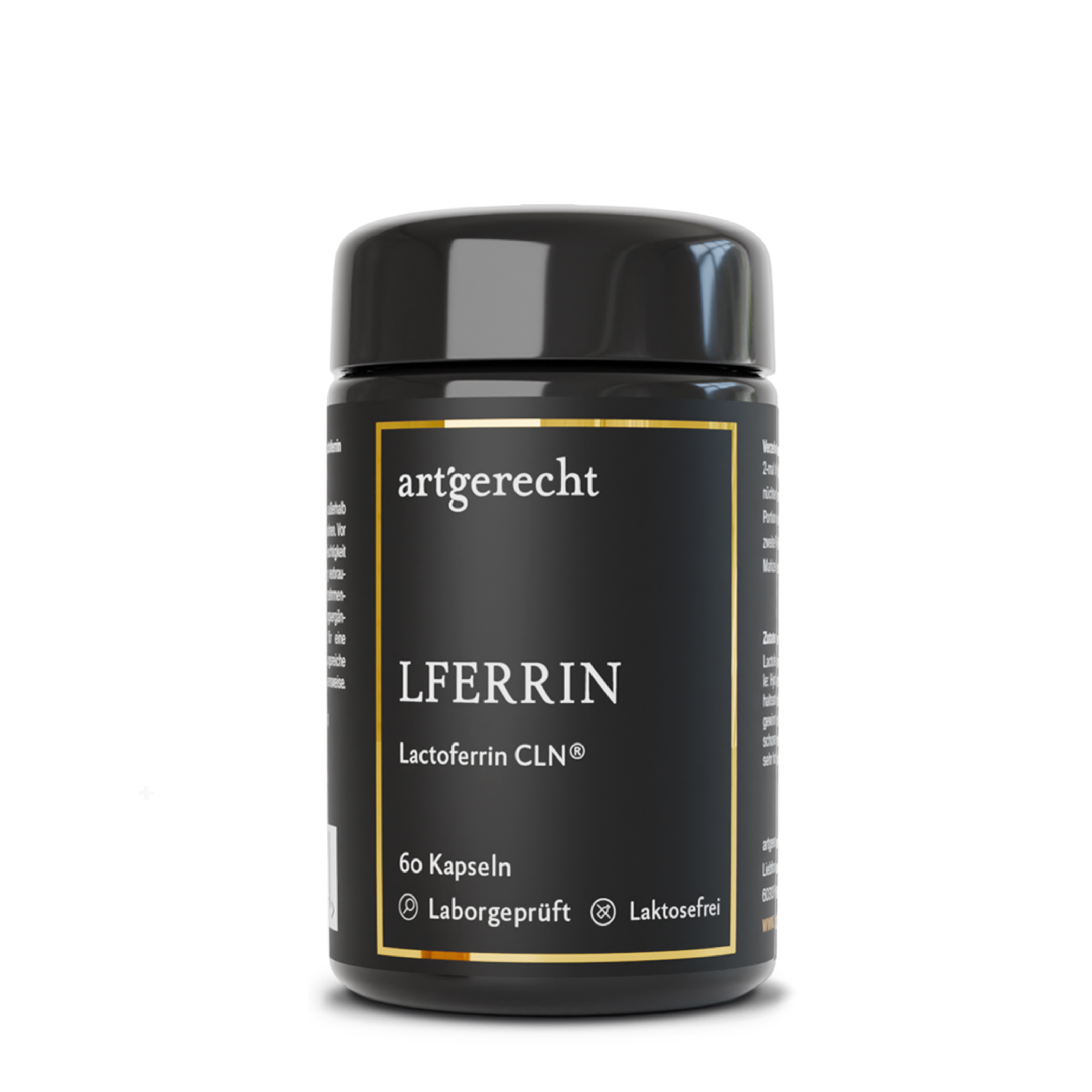
For your universal protection
As one of the most valuable proteins in the body, lactoferrin is a natural component of the immune system.
For your iron balance
Specially formulated for your iron balance with plant-based curry leaf iron, Lactoferrin CLN®, and natural Vitamin C from rose hips.