


Endodontics – Root Canal Treatment Explained
Endodontics is a branch of dentistry focused on diagnosing and treating diseases of the inner tooth. Root canal treatment is the most common endodontic procedure.
Things worth knowing about "Endodontics"
Endodontics is a branch of dentistry focused on diagnosing and treating diseases of the inner tooth. Root canal treatment is the most common endodontic procedure.
What is Endodontics?
Endodontics (also called endodontology) is a specialized field of dentistry that deals with the diagnosis and treatment of diseases affecting the inner structures of the tooth. The central focus is the dental pulp – the soft tissue inside the tooth that contains nerves, blood vessels, and connective tissue. The primary goal of endodontic treatment is to preserve natural teeth rather than extracting them.
The term derives from the Greek words endon (inside) and odous (tooth). In everyday language, endodontic treatment is most commonly known as a root canal treatment.
Tooth Anatomy
A basic understanding of tooth anatomy helps clarify the scope of endodontics:
- Enamel: The hard outer layer that protects the crown of the tooth.
- Dentin: The layer beneath the enamel, making up the bulk of the tooth structure.
- Pulp: The living core of the tooth, containing nerves and blood vessels, located within the pulp chamber and root canal system.
- Root canal system: A network of fine canals running through the tooth roots, ending at the root tip (apex).
Causes and Indications
Endodontic treatment becomes necessary when the dental pulp becomes inflamed or dies (necrosis). Common causes include:
- Deep cavities (caries): Bacteria penetrate through the enamel and dentin to reach the pulp.
- Dental trauma: Impacts or fractures can damage the pulp, sometimes without visible external injury.
- Cracked teeth: Cracks can allow bacteria to access the pulp.
- Failed previous treatment: Teeth that have already been treated can become re-infected.
- Severe tooth wear: Chronic teeth grinding (bruxism) can irritate and damage the pulp over time.
Symptoms
Diseases of the pulp can manifest in a variety of ways:
- Severe, persistent toothache, including spontaneous or nighttime pain
- Prolonged sensitivity to heat or cold
- Pain when biting or touching the affected tooth
- Swelling or abscess in the gum area
- Discoloration of the tooth (darkening or graying)
- Sometimes no pain at all when the pulp is already completely dead
Diagnosis
Diagnosis in endodontics involves several steps:
- Medical history: Detailed questioning about pain and symptoms.
- Clinical tests: Cold and heat tests, as well as percussion (tapping the tooth), to assess pulp vitality.
- X-rays: Periapical radiographs reveal changes near the root tip that indicate infection or inflammation.
- 3D imaging (CBCT): Cone beam computed tomography provides detailed three-dimensional views of the root canal system, especially in complex cases.
Treatment
Root Canal Treatment (Endodontic Therapy)
Root canal treatment is the most commonly performed endodontic procedure. It involves the following steps:
- Local anesthesia: The area is numbed so the treatment is pain-free.
- Rubber dam placement: A small rubber sheet isolates the tooth and protects the mouth from bacteria and chemicals.
- Access opening: An opening is made through the crown of the tooth to reach the pulp chamber.
- Pulp removal: Inflamed or necrotic tissue is removed using specialized files and instruments.
- Canal shaping: The root canals are mechanically and chemically cleaned and shaped.
- Irrigation: Disinfecting solutions (e.g., sodium hypochlorite) are used to eliminate remaining bacteria.
- Filling: The cleaned canals are permanently sealed with a biocompatible material, usually gutta-percha.
- Crown restoration: The tooth is then restored with a filling or crown to protect it and restore full function.
Endodontic Retreatment
If an initial root canal treatment was unsuccessful or the tooth has become re-infected, a retreatment may be required. The old root canal filling is removed, the canals are re-cleaned, and a new filling is placed.
Apicoectomy (Root-End Surgery)
An apicoectomy involves the surgical removal of the root tip. This procedure is used when conventional root canal treatment alone cannot eliminate a chronic infection. It is performed under local anesthesia through a small incision in the gum tissue.
Modern Technologies in Endodontics
Endodontics has benefited greatly from technological advances:
- Dental operating microscope: Magnifies the treatment area for greater precision.
- Nickel-titanium (NiTi) rotary files: Flexible rotating instruments that simplify the shaping of complex canal anatomies.
- Electronic apex locators: Allow precise measurement of canal length without additional X-ray exposure.
- Ultrasonic devices: Used to improve canal cleaning and assist in surgical procedures.
- 3D imaging (CBCT): Enables accurate treatment planning in complex cases.
Prognosis and Follow-Up
When performed correctly, root canal treatment has a high success rate of over 85 to 95 percent. Treated teeth can often be retained for many years or even a lifetime. Regular dental check-ups and good oral hygiene are essential for long-term success. Follow-up X-rays help detect any recurrence at an early stage.
References
- European Society of Endodontology (ESE): Quality guidelines for endodontic treatment. International Endodontic Journal, 2006.
- Torabinejad M., Walton R.E.: Endodontics: Principles and Practice. 5th edition, Saunders Elsevier, 2015.
- Ng Y.L. et al.: Outcome of primary root canal treatment: systematic review of the literature. International Endodontic Journal, 2007.

Building Blocks for a Healthy Life
As an integrated manufacturer, we develop & produce evidence-based, patented, and non-patented formulations. We work exclusively with plant and natural extracts according to the strictest purity & quality standards.
The combination of science & modern technology with the laws of nature creates solutions consistently tailored to humans – for the highest good: health.
Verwandte Produkte

For Healthy Oral Flora & Dental Care
Formulated lozenges with Dentalac®, lactic acid bacteria, and Lactoferrin CLN®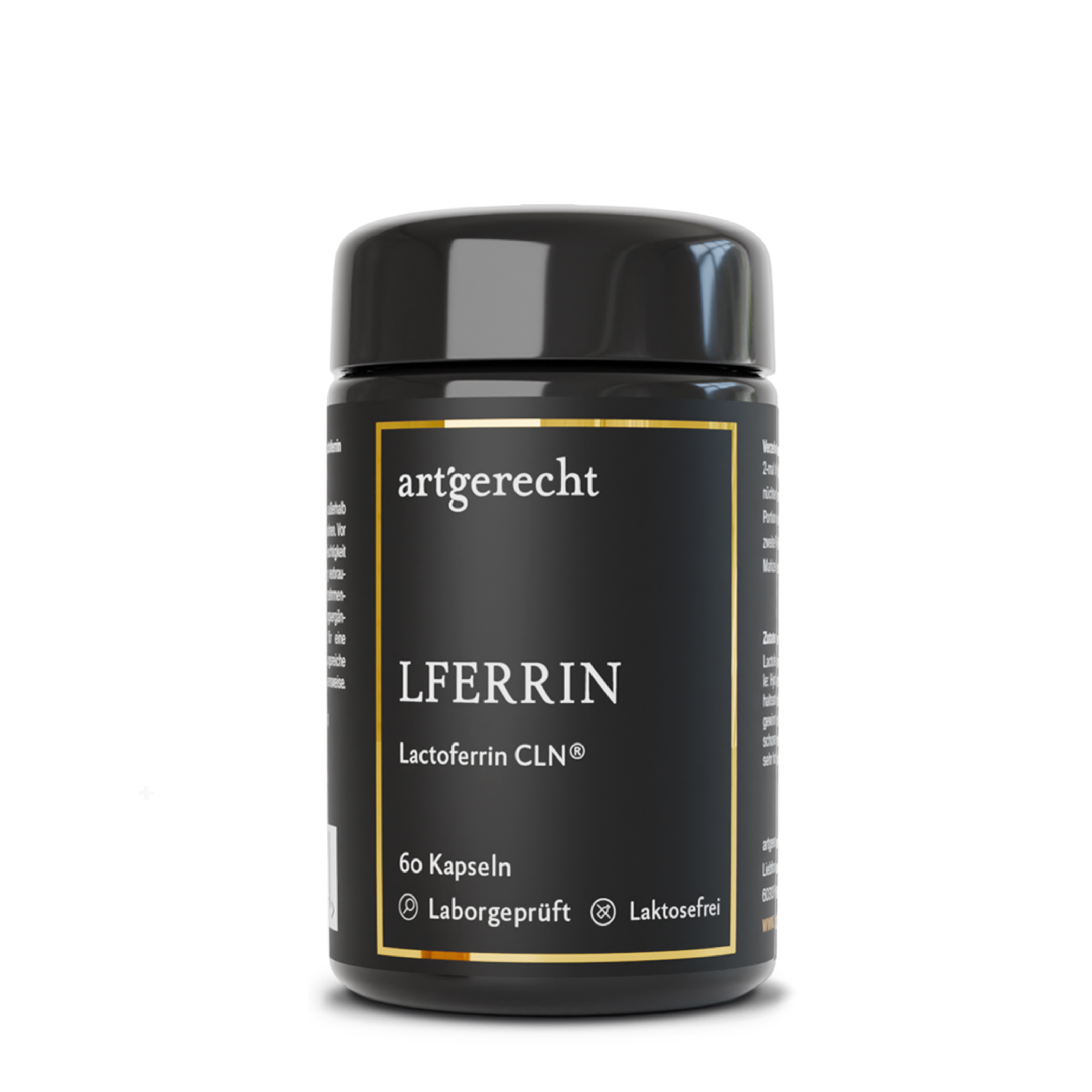
For your universal protection
As one of the most valuable proteins in the body, lactoferrin is a natural component of the immune system.
For your iron balance
Specially formulated for your iron balance with plant-based curry leaf iron, Lactoferrin CLN®, and natural Vitamin C from rose hips.