
-
 DE
DE



Epicanthus: Causes, Types and Treatment
Epicanthus is a skin fold covering the inner corner of the eye. It can be a normal anatomical variant or a sign of an underlying genetic condition.
Things worth knowing about "Epicanthus"
Epicanthus is a skin fold covering the inner corner of the eye. It can be a normal anatomical variant or a sign of an underlying genetic condition.
What is Epicanthus?
Epicanthus (also known as an epicanthal fold) is a skin fold of the upper eyelid that covers the inner corner of the eye, known as the medial canthus. It is a common and normal anatomical feature in many East Asian, Central Asian, and indigenous populations. In other groups, however, it may be associated with genetic syndromes or developmental conditions.
Types of Epicanthus
Physicians classify epicanthus into several subtypes based on the origin and direction of the fold:
- Epicanthus supraciliaris: The fold runs from the eyebrow down to the lower eyelid.
- Epicanthus palpebralis: The fold starts in the upper lid and continues to the lower lid. This is the most common form.
- Epicanthus tarsalis: The fold originates in the upper eyelid and fades toward the inner corner. Typical in people of East Asian descent.
- Epicanthus inversus: A rare form where the fold arises from the lower lid and runs upward, often associated with blepharophimosis syndrome.
Causes and Associated Conditions
Epicanthus can arise from various causes:
- Ethnic anatomical variant: In many East and Central Asian populations, epicanthal folds are a completely normal feature with no medical significance.
- Physiological in newborns: Many infants have a flat nasal bridge and underdeveloped facial bone structure, which temporarily creates an epicanthal fold that usually resolves as the face grows.
- Genetic syndromes: Epicanthus can be a feature of several genetic conditions, including Down syndrome (Trisomy 21), Turner syndrome, Noonan syndrome, and Blepharophimosis-Ptosis-Epicanthus inversus Syndrome (BPES).
- Isolated occurrence: Occasionally, epicanthus occurs as a standalone finding with no further clinical significance.
Symptoms and Effects
In most cases, epicanthus does not cause any discomfort. Possible effects include:
- A visual appearance that can mimic the look of crossed eyes (strabismus), even when no true squint is present -- a condition called pseudostrabismus.
- In pronounced cases, the fold may slightly affect the visual field.
- When epicanthus is part of a syndrome, the symptoms of the underlying condition are of primary concern.
Diagnosis
Epicanthus is typically diagnosed through a straightforward clinical examination by an ophthalmologist or pediatrician. It is important to distinguish it from true strabismus. If additional abnormalities are present, further investigations such as genetic testing or comprehensive eye function assessments may be indicated.
Treatment
In most cases, no treatment is necessary. Available options include:
- Watchful waiting in infants and toddlers: Since the fold often resolves naturally as the nasal bridge develops, a wait-and-see approach is typically recommended in young children.
- Surgical correction: If the fold is cosmetically or functionally problematic, plastic-surgical procedures such as a Y-V-plasty or Z-plasty can be performed. Surgery is usually deferred until school age or adulthood.
- Treatment of the underlying condition: When epicanthus is part of a genetic syndrome, management focuses primarily on the underlying disorder.
References
- Grehn, F. (2019). Augenheilkunde. 32nd Edition. Springer Medizin Verlag, Berlin.
- Jones, K. L., Jones, M. C., Del Campo, M. (2022). Smith's Recognizable Patterns of Human Malformation. 8th Edition. Elsevier.
- World Health Organization (WHO) – International Classification of Diseases (ICD-11): Epicanthus. Available at: https://www.who.int

Building Blocks for a Healthy Life
As an integrated manufacturer, we develop & produce evidence-based, patented, and non-patented formulations. We work exclusively with plant and natural extracts according to the strictest purity & quality standards.
The combination of science & modern technology with the laws of nature creates solutions consistently tailored to humans – for the highest good: health.
Verwandte Produkte
Subscription available

Floral
For Healthy Oral Flora & Dental Care
Formulated lozenges with Dentalac®, lactic acid bacteria, and Lactoferrin CLN®30 lozenges
Regular price:
€22.90
Subscription available
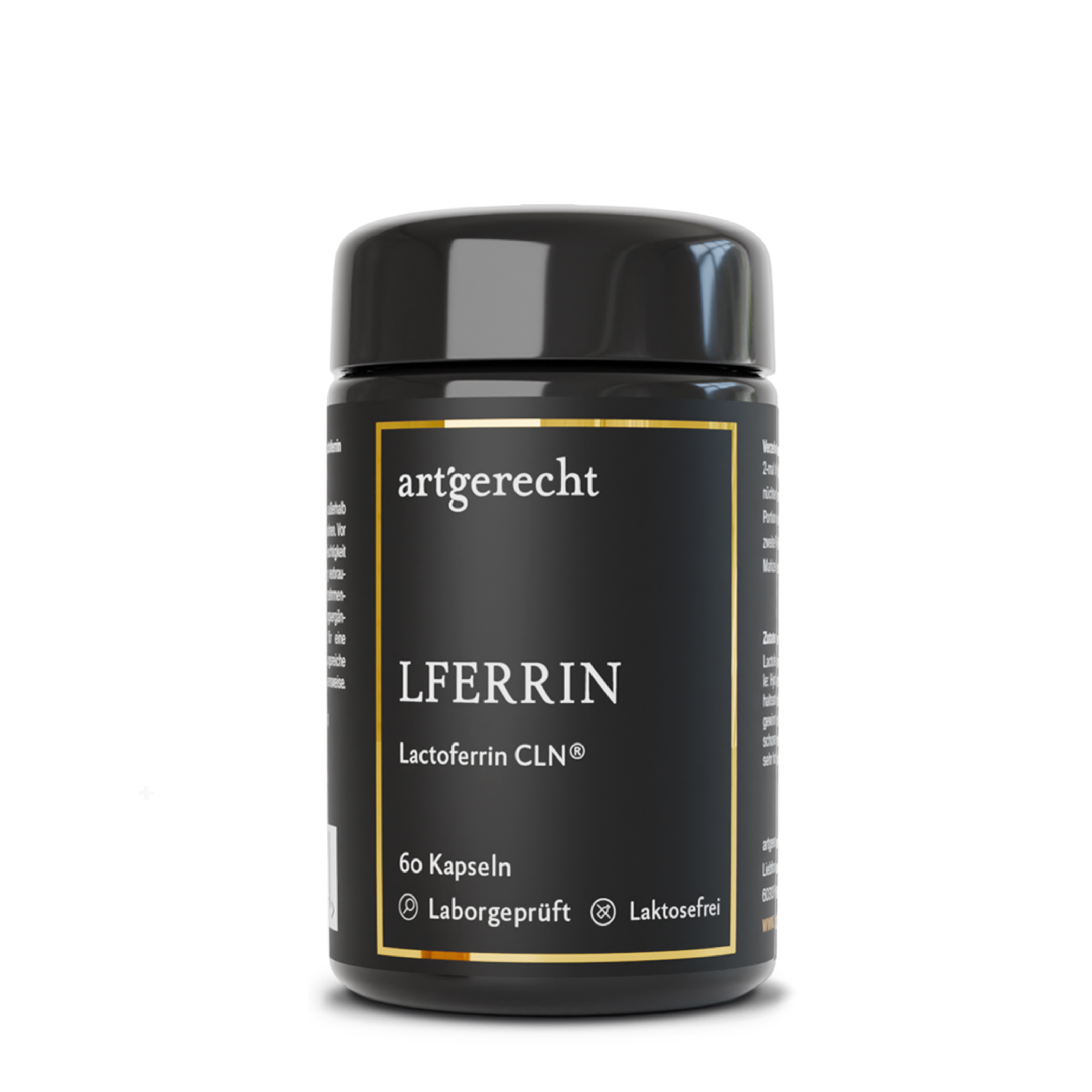
Lactoferrin
For your universal protection
As one of the most valuable proteins in the body, lactoferrin is a natural component of the immune system.[siehe Varianten]
Regular price:
€59.90
Subscription available

Natural Iron

For your iron balance
Specially formulated for your iron balance with plant-based curry leaf iron, Lactoferrin CLN®, and natural Vitamin C from rose hips.
30 Capsules
Regular price:
€35.90
Most read entries
3 Posts in this encyclopedia categoryMagnesiumcarbonat
Magnesiumcarbonat ist eine anorganische Magnesiumverbindung mit säure-neutralisierender (antazidischer) Wirkung. Erfahre mehr über Vorteile, Einsatzgebiete und Unterschiede zu besser resorbierbaren Magnesiumformen.
Calorie content
The choice of food influences our energy intake. The calorie content varies greatly - some provide little energy, others a lot.
Cologne list
The Cologne List ® is an important initiative in competitive sports that offers athletes guidance in the selection of nutritional supplements.