


Estrogen Metabolism Analysis Explained
Estrogen metabolism analysis examines how the body breaks down and converts estrogens. It provides key insights into hormonal imbalances and health risks associated with estrogen dominance.
Things worth knowing about "Estrogen metabolism analysis"
Estrogen metabolism analysis examines how the body breaks down and converts estrogens. It provides key insights into hormonal imbalances and health risks associated with estrogen dominance.
What is Estrogen Metabolism Analysis?
Estrogen metabolism analysis is a diagnostic procedure that evaluates the biochemical pathways through which the body breaks down estrogens into various metabolic byproducts, known as metabolites. Estrogens are primarily female sex hormones, though they are also present in small amounts in the male body. Their metabolism takes place mainly in the liver and plays a critical role in hormonal balance and the risk of certain diseases.
The analysis typically measures the most relevant estrogen metabolites, including 2-hydroxyestrone (2-OHE1), 16α-hydroxyestrone (16α-OHE1), and 4-hydroxyestrone (4-OHE1). The ratio of these metabolites provides important information about whether estrogen metabolism is following a more protective or potentially harmful pathway.
Mechanism of Action and Metabolic Pathways
Estradiol (E2) and estrone (E1) are hydroxylated in the liver via two main pathways:
- 2-Hydroxylation: Produces 2-hydroxyestrone and 2-hydroxyestradiol. These metabolites are generally considered to be weakly estrogenic and potentially protective, as they bind only weakly to estrogen receptors.
- 16α-Hydroxylation: Generates 16α-hydroxyestrone, which is strongly estrogenic and can bind permanently to estrogen receptors. An increased proportion of this pathway is associated with a higher risk of estrogen-dependent conditions.
- 4-Hydroxylation: Produces 4-hydroxyestrone, considered potentially genotoxic, as it can form reactive quinones capable of causing DNA damage.
The ratio of 2-OHE1 to 16α-OHE1 -- known as the 2:16 ratio -- is regarded as a key marker. A higher ratio is associated with a lower risk of estrogen-dependent diseases.
When is the Analysis Performed?
Estrogen metabolism analysis may be clinically valuable in a variety of situations:
- When there is an elevated family history of breast cancer or other estrogen-dependent cancers (e.g., endometrial carcinoma)
- For unexplained hormonal complaints such as PMS (premenstrual syndrome), menstrual irregularities, or menopausal symptoms
- To evaluate the effectiveness of hormone replacement therapy or hormone optimization programs
- When symptoms of estrogen dominance are present, such as fluid retention, breast tenderness, mood swings, or unexplained weight gain
- As part of preventive medicine to assess an individual hormonal profile
Procedure and Sample Collection
The analysis can be performed using different sample materials:
- Urine (24-hour urine collection or first-morning void): Commonly used, as estrogen metabolites are concentrated in urine. The DUTCH method (Dried Urine Test for Comprehensive Hormones) is a modern variant using dried urine on filter paper.
- Blood serum or plasma: Suitable for measuring certain metabolites, though less comprehensive than urine-based analysis.
- Saliva: Used in specific contexts, particularly for measuring free, bioavailable hormone fractions.
Laboratory analysis is performed using mass spectrometry or ELISA (enzyme-linked immunosorbent assay), enabling high precision in measuring individual metabolites.
Interpretation of Results
Results should always be interpreted by an experienced physician or endocrinologist, as they must be evaluated within the full clinical context. Key considerations include:
- Cycle phase in premenopausal women (which significantly influences hormone levels)
- Use of medications, especially hormones that may affect metabolism
- Diet and lifestyle (e.g., cruciferous vegetables such as broccoli can promote 2-hydroxylation)
- Liver and gut health (since the enterohepatic circulation influences estrogen metabolism)
Factors Influencing Estrogen Metabolism
Several factors can influence which metabolic pathway estrogen takes:
- Diet: Indole-3-carbinol and diindolylmethane (DIM) from cruciferous vegetables promote 2-hydroxylation
- Body weight: Excess body weight tends to promote 16α-hydroxylation
- Alcohol: Impairs hepatic estrogen clearance
- Micronutrients: Magnesium, B vitamins (particularly B6, B12, folate), and zinc support methylation and detoxification of estrogen metabolites
- Gut microbiome: The so-called estrobolome (estrogen-metabolizing gut bacteria) influences the reabsorption of estrogens from the intestine
- Genetics: Polymorphisms in enzymes such as COMT (catechol-O-methyltransferase) affect the breakdown of catechol estrogens
Clinical Relevance and Limitations
Estrogen metabolism analysis is a valuable tool in preventive and functional medicine. It enables an individualized assessment of hormonal status and can inform targeted prevention or therapeutic strategies. However, it is important to note that clinical evidence for certain applications is still evolving, and the analysis alone does not constitute a diagnosis. It should always be considered as part of a comprehensive diagnostic and medical evaluation.
References
- Ziegler RG et al. - Estrogen metabolism and risk of breast cancer: a prospective study of urinary estrogen metabolites. In: American Journal of Epidemiology, 2010.
- Samavat H, Kurzer MS - Estrogen metabolism and breast cancer. In: Cancer Letters, 2015; 356(2): 231-243.
- Rogan EG, Cavalieri EL - Estrogen metabolites, prostate cancer, and oxidative stress. In: Annals of the New York Academy of Sciences, 2004.

Building Blocks for a Healthy Life
As an integrated manufacturer, we develop & produce evidence-based, patented, and non-patented formulations. We work exclusively with plant and natural extracts according to the strictest purity & quality standards.
The combination of science & modern technology with the laws of nature creates solutions consistently tailored to humans – for the highest good: health.
Verwandte Produkte

For Healthy Oral Flora & Dental Care
Formulated lozenges with Dentalac®, lactic acid bacteria, and Lactoferrin CLN®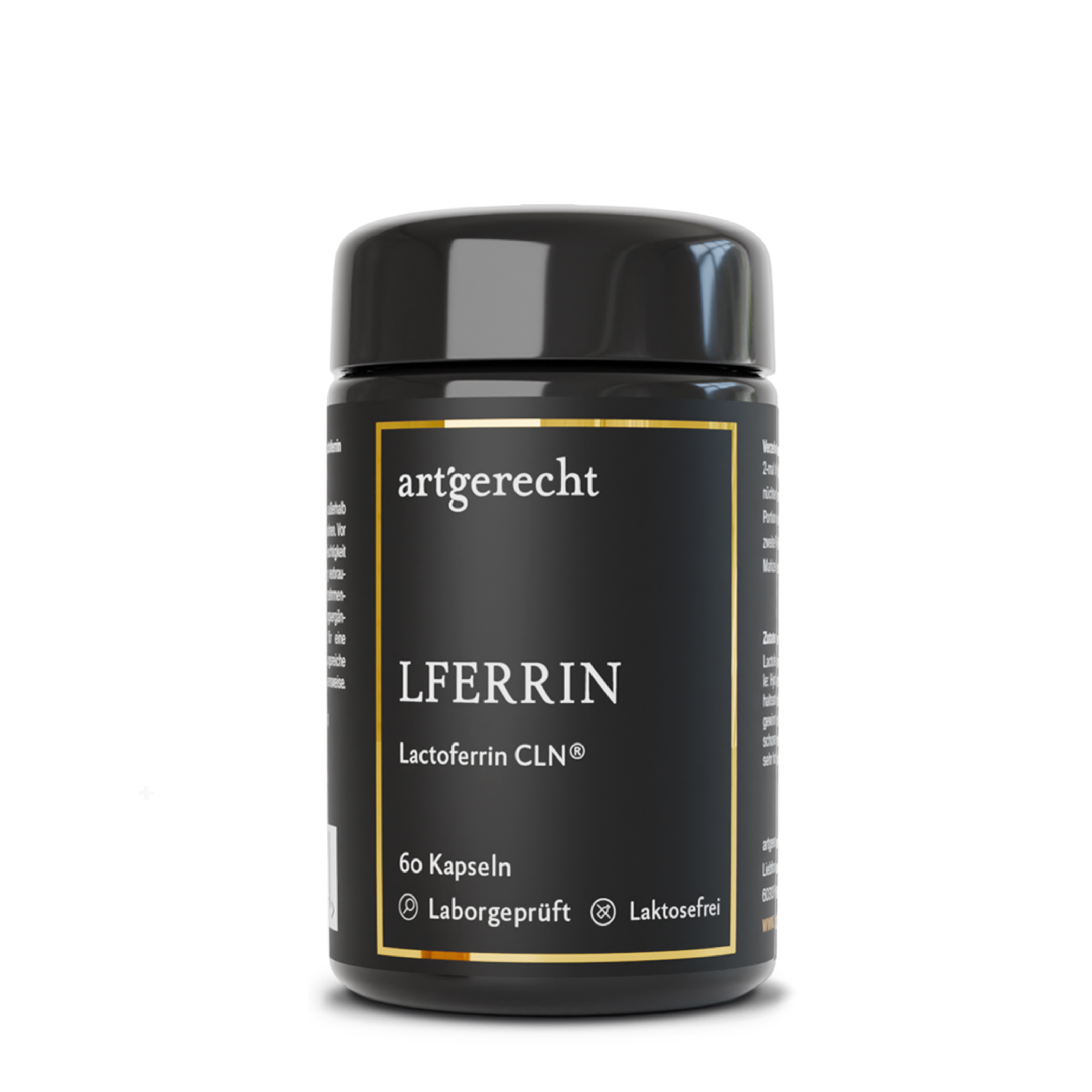
For your universal protection
As one of the most valuable proteins in the body, lactoferrin is a natural component of the immune system.
For your iron balance
Specially formulated for your iron balance with plant-based curry leaf iron, Lactoferrin CLN®, and natural Vitamin C from rose hips.