


Fehling Reagent: Composition, Reaction and Uses
Fehling reagent is a chemical test solution used in analytical chemistry to detect reducing sugars and aldehydes. It consists of two separate solutions that are mixed together before use.
Things worth knowing about "Fehling Reagent"
Fehling reagent is a chemical test solution used in analytical chemistry to detect reducing sugars and aldehydes. It consists of two separate solutions that are mixed together before use.
What is Fehling Reagent?
Fehling reagent (also known as Fehling solution) is a classical chemical reagent used to identify reducing sugars (e.g., glucose, fructose, maltose) and aldehydes. It was developed in the 19th century by the German chemist Hermann von Fehling and remains an important tool in food chemistry, clinical diagnostics, and laboratory education.
Composition
Fehling reagent consists of two separate solutions that are only mixed immediately before use:
- Fehling Solution A: A blue, alkaline solution of copper(II) sulfate (CuSO₄) in water.
- Fehling Solution B: An alkaline solution of potassium sodium tartrate (Rochelle salt) in sodium hydroxide. The tartrate acts as a complexing agent, keeping the copper ions in solution and preventing premature precipitation.
The combined mixed solution is deep blue and contains copper(II) ions in an alkaline tartrate complex.
Mechanism of Action and Chemical Reaction
When heated with a sample containing reducing sugars or aldehydes, the Cu²⁺ ions (copper(II)) are reduced by the aldehyde group of the test substance to Cu⁺ ions (copper(I)). This produces a characteristic brick-red precipitate of copper(I) oxide (Cu₂O). The aldehyde group is simultaneously oxidized to the corresponding carboxylic acid.
The simplified reaction can be described as follows:
- Aldehyde (R-CHO) + 2 Cu²⁺ + 2 OH⁻ → Carboxylic acid (R-COOH) + Cu₂O (brick-red) + H₂O
A positive Fehling test is indicated by a color change from blue through green and yellow to the characteristic brick-red precipitate. A negative test leaves the solution blue.
Fields of Application
Food Chemistry and Analytics
In food analysis, the Fehling test is classically used to determine the content of reducing sugars in foods such as fruit juices, honey, and syrups. It is also applied in the analysis of starch hydrolysis products.
Clinical and Medical Diagnostics
Historically, the Fehling test was used to examine urine for glucose as a means of detecting diabetes mellitus. Today, it has been replaced by more specific enzymatic test methods (e.g., glucose oxidase tests), as the Fehling test does not have exclusive specificity for glucose.
School Chemistry and Teaching Experiments
The Fehling test is a classic school experiment used to illustrate redox reactions and the detection of organic functional groups. It is widely used in science education around the world.
Comparison with Other Detection Reagents
Compared to the Tollens reagent (silver mirror test), which also detects aldehydes, Fehling reagent uses copper ions instead of silver ions. Both methods are based on the principle of reduction of metal ions by aldehydes. However, Fehling reagent is more practical to handle and is preferred in food analytics and educational settings.
Important Notes and Limitations
- Fehling reagent does not react with simple ketones (fructose is sometimes discussed as an exception due to isomerization under certain conditions).
- It is not specific to individual sugars but detects all reducing sugars and aldehydes.
- The copper(II) sulfate solution is harmful to health and must not be ingested. Safety regulations for handling chemicals must be observed at all times.
References
- Stryer, L., Berg, J. M. & Tymoczko, J. L. (2019). Biochemistry. 9th Edition. W. H. Freeman and Company, New York.
- McMurry, J. (2016). Organic Chemistry. 9th Edition. Cengage Learning, Boston.
- Römpp Chemistry Encyclopedia (2023). Fehling Test. Georg Thieme Verlag, Stuttgart. Online Edition.

Building Blocks for a Healthy Life
As an integrated manufacturer, we develop & produce evidence-based, patented, and non-patented formulations. We work exclusively with plant and natural extracts according to the strictest purity & quality standards.
The combination of science & modern technology with the laws of nature creates solutions consistently tailored to humans – for the highest good: health.
Verwandte Produkte

For Healthy Oral Flora & Dental Care
Formulated lozenges with Dentalac®, lactic acid bacteria, and Lactoferrin CLN®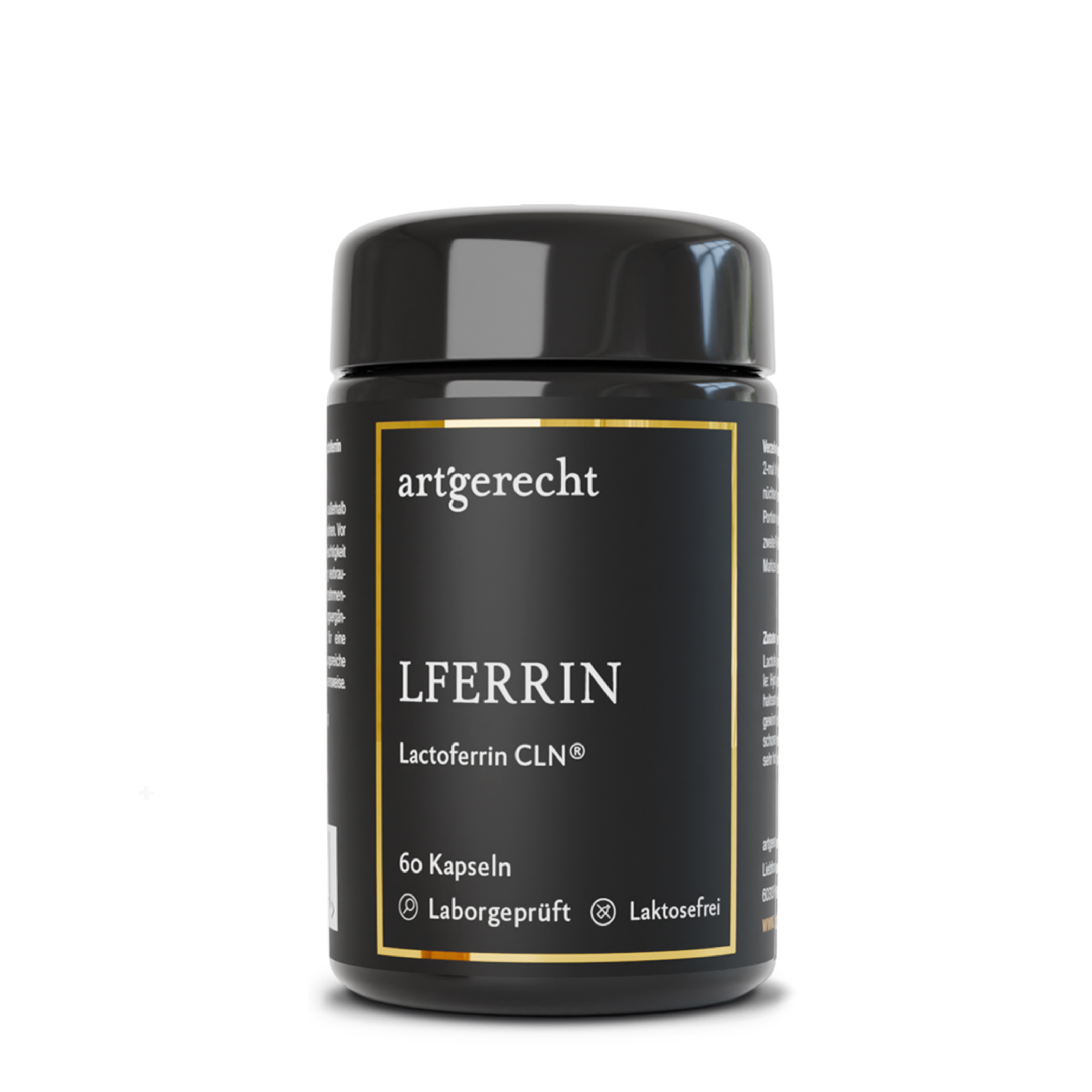
For your universal protection
As one of the most valuable proteins in the body, lactoferrin is a natural component of the immune system.
For your iron balance
Specially formulated for your iron balance with plant-based curry leaf iron, Lactoferrin CLN®, and natural Vitamin C from rose hips.