
-
 DE
DE



Intestinal Motility – Function, Disorders & Treatment
Intestinal motility refers to the ability of the gut to move food and stool through the digestive tract via coordinated muscle contractions. Disorders can lead to constipation, diarrhea, or other digestive complaints.
Things worth knowing about "Intestinal Motility"
Intestinal motility refers to the ability of the gut to move food and stool through the digestive tract via coordinated muscle contractions. Disorders can lead to constipation, diarrhea, or other digestive complaints.
What Is Intestinal Motility?
Intestinal motility describes the capacity of the gut to propel its contents through the digestive tract by means of coordinated muscle contractions. These movements are essential for transporting food, fluids, and stool from the stomach to the rectum. Motility is regulated by a complex interplay of the enteric nervous system, the autonomic nervous system, and various hormones and neurotransmitters.
Types of Intestinal Movements
The intestine performs several distinct types of movements, each serving a specific function:
- Peristalsis: Wave-like contractions that propel intestinal contents forward toward the rectum. This is the most well-known form of intestinal motility.
- Segmentation contractions: Local contractions that mix intestinal contents to improve nutrient absorption without moving them forward.
- Mass movements: Powerful propulsive contractions that move large amounts of content at once, typically triggered after eating (gastrocolic reflex).
- Haustral contractions: Characteristic movements of the large intestine that shuttle contents between the haustra (pouches of the colon).
Regulation of Intestinal Motility
The regulation of intestinal motility is a highly complex process. Central to this is the enteric nervous system – an autonomous network of millions of nerve cells embedded in the gut wall, often called the second brain. It operates largely independently but is also influenced by the brain and spinal cord. Other key regulators include:
- Gut neurotransmitters such as serotonin (approximately 90% of the body total serotonin is found in the gut)
- Hormones such as motilin, gastrin, and cholecystokinin
- Psychological stress via the gut-brain axis
- Diet and fiber intake
- Medications (e.g., opioids, laxatives)
Disorders of Intestinal Motility
When intestinal motility becomes dysregulated, motility disorders can develop. These are broadly categorized as either too slow or too fast gut movement:
Slowed Intestinal Motility (Hypomotility)
When motility is too slow, intestinal contents remain in the gut too long. This can lead to:
- Constipation
- Bloating and a feeling of fullness
- Ileus (bowel obstruction) in severe cases
- Slow-transit constipation
Accelerated Intestinal Motility (Hypermotility)
When motility is too fast, the gut does not have sufficient time to absorb water and nutrients, potentially resulting in:
- Diarrhea
- Cramping and abdominal pain
- Nutritional deficiencies in chronic cases
Conditions Associated with Motility Disorders
A range of conditions can involve impaired intestinal motility, including:
- Irritable Bowel Syndrome (IBS) – one of the most common functional bowel disorders
- Crohn disease and ulcerative colitis (inflammatory bowel diseases)
- Gastroparesis – delayed gastric emptying, often seen in people with diabetes
- Hirschsprung disease – a congenital absence of nerve cells in the bowel
- Intestinal pseudo-obstruction – bowel paralysis without a mechanical cause
- Neurological conditions such as Parkinson disease or multiple sclerosis
Diagnosis of Motility Disorders
Several diagnostic methods are used to evaluate intestinal motility disorders:
- Colonic transit time measurement: Radiopaque markers are used to measure how quickly content passes through the large intestine.
- Manometry: Pressure measurements within the bowel reveal information about muscle activity.
- Scintigraphy: A nuclear medicine technique used to assess gastric emptying and intestinal passage.
- Endoscopy and imaging: To rule out structural causes.
- Stool tests and blood work: To help identify underlying causes.
Treatment and Therapy
Treatment of intestinal motility disorders is tailored to the underlying cause and the severity of symptoms. Common therapeutic approaches include:
Diet and Lifestyle
- Adequate fluid intake (at least 1.5 to 2 liters per day)
- A high-fiber diet to stimulate peristalsis
- Regular physical activity
- Stress management techniques such as yoga or meditation
Pharmacological Therapy
- Prokinetic agents (e.g., metoclopramide, domperidone): Promote gut movement
- Laxatives: For the treatment of constipation
- Antidiarrheal agents (e.g., loperamide): To slow gut transit in diarrhea
- Antispasmodics: To relieve intestinal cramping
- Serotonin modulators: For certain IBS symptoms
Additional Therapeutic Approaches
- Biofeedback therapy for pelvic floor dysfunction
- Psychotherapy for stress-related symptoms
- Surgical intervention in severe refractory cases
References
- Rao S. S. C., Rattanakovit K., Patcharatrakul T. – Diagnosis and management of chronic constipation in adults. Nature Reviews Gastroenterology and Hepatology, 2016.
- Camilleri M. – Gastrointestinal motility disorders in neurologic disease. Journal of Clinical Investigation, 2021.
- World Health Organization (WHO) – Global guidelines on gut health and functional gastrointestinal disorders, 2019.

Building Blocks for a Healthy Life
As an integrated manufacturer, we develop & produce evidence-based, patented, and non-patented formulations. We work exclusively with plant and natural extracts according to the strictest purity & quality standards.
The combination of science & modern technology with the laws of nature creates solutions consistently tailored to humans – for the highest good: health.
Verwandte Produkte
Subscription available

Floral
For Healthy Oral Flora & Dental Care
Formulated lozenges with Dentalac®, lactic acid bacteria, and Lactoferrin CLN®30 lozenges
Regular price:
€22.90
Subscription available
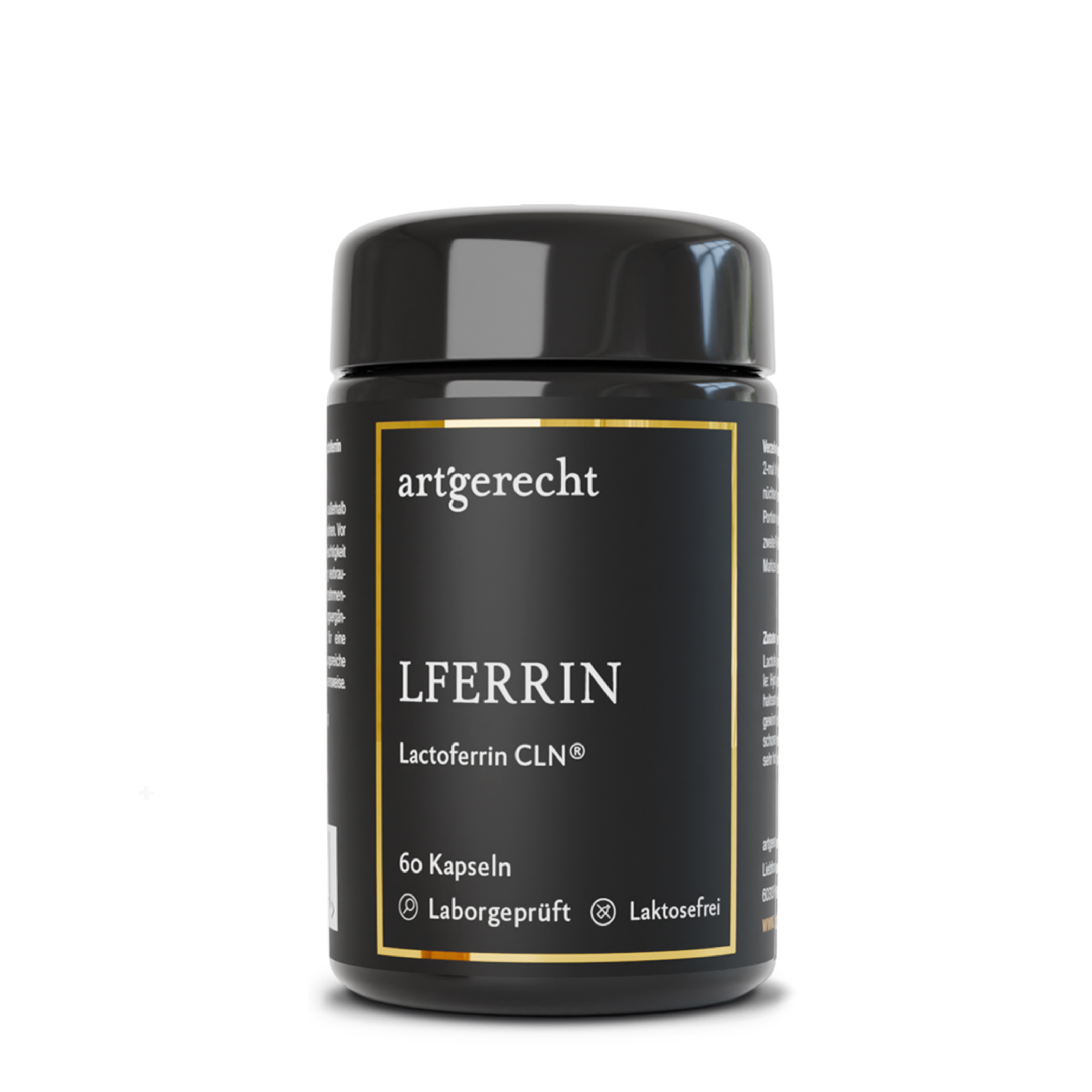
Lactoferrin
For your universal protection
As one of the most valuable proteins in the body, lactoferrin is a natural component of the immune system.[siehe Varianten]
Regular price:
€59.90
Subscription available

Natural Iron

For your iron balance
Specially formulated for your iron balance with plant-based curry leaf iron, Lactoferrin CLN®, and natural Vitamin C from rose hips.
30 Capsules
Regular price:
€35.90
Most read entries
3 Posts in this encyclopedia categoryMagnesiumcarbonat
Magnesiumcarbonat ist eine anorganische Magnesiumverbindung mit säure-neutralisierender (antazidischer) Wirkung. Erfahre mehr über Vorteile, Einsatzgebiete und Unterschiede zu besser resorbierbaren Magnesiumformen.
Calorie content
The choice of food influences our energy intake. The calorie content varies greatly - some provide little energy, others a lot.
Cologne list
The Cologne List ® is an important initiative in competitive sports that offers athletes guidance in the selection of nutritional supplements.