


Iridocorneal Angle: Function, Anatomy & Glaucoma
The iridocorneal angle is an anatomical structure in the eye that regulates the drainage of aqueous humor. Narrowing or blockage of this angle can lead to glaucoma.
Things worth knowing about "Iridocorneal angle"
The iridocorneal angle is an anatomical structure in the eye that regulates the drainage of aqueous humor. Narrowing or blockage of this angle can lead to glaucoma.
What Is the Iridocorneal Angle?
The iridocorneal angle (also called the anterior chamber angle or drainage angle) is a ring-shaped structure located in the front part of the eye. It is found at the junction where the iris meets the cornea. This region contains the trabecular meshwork, a sponge-like tissue that acts as the primary drainage pathway for aqueous humor – the clear fluid that fills the front chamber of the eye.
Aqueous humor is continuously produced by the ciliary body and supplies the lens and cornea with nutrients and oxygen. A healthy iridocorneal angle ensures proper drainage of this fluid, maintaining normal intraocular pressure (IOP).
Anatomy and Structure
The main anatomical components of the iridocorneal angle include:
- Trabecular meshwork: The porous drainage tissue through which aqueous humor passes into the Schlemm canal.
- Schlemm canal: A circular channel that collects filtered aqueous humor and directs it into the venous system.
- Schwalbe line: The anterior boundary of the trabecular meshwork, visible during angle examination.
- Ciliary body: A part of the uvea visible in the posterior portion of the angle.
Clinical Importance
The iridocorneal angle plays a crucial role in the development of glaucoma, one of the leading causes of blindness worldwide. Depending on the condition of the angle, two main forms of glaucoma are distinguished:
Open-Angle Glaucoma
This is the most common form. The angle remains open, but the trabecular meshwork is damaged or scarred, causing reduced drainage. Intraocular pressure rises gradually and painlessly, leading to progressive damage to the optic nerve.
Angle-Closure Glaucoma
In this form, the iris mechanically blocks or closes the drainage angle. This can occur suddenly as an acute glaucoma attack, presenting with severe eye pain, headache, nausea, and blurred vision. This is a medical emergency requiring immediate treatment.
Diagnosis: Gonioscopy
The iridocorneal angle is examined directly using a technique called gonioscopy. The ophthalmologist places a specialized contact lens (gonioscope) on the anesthetized eye and uses a slit lamp to illuminate and assess the angle. This allows evaluation of:
- the width of the angle (open, narrow, or closed),
- pigmentation, deposits, or scar tissue within the angle,
- neovascularization or tumor tissue in the drainage region.
Gonioscopy is typically combined with tonometry (intraocular pressure measurement), visual field testing, and examination of the optic nerve head.
Treatment of Angle-Related Conditions
Treatment depends on the underlying diagnosis and its severity:
- Medications: Eye drops (e.g., beta-blockers, prostaglandin analogues) lower intraocular pressure by reducing aqueous production or improving drainage.
- Laser treatment: Laser trabeculoplasty improves the filtering function of the trabecular meshwork. In eyes at risk of angle closure, laser iridotomy (creating a small opening in the iris) can prevent pressure spikes.
- Surgery: In advanced cases, trabeculectomy or implantation of a drainage device creates a new drainage pathway for aqueous humor.
References
- European Glaucoma Society (EGS): Terminology and Guidelines for Glaucoma, 5th Edition, 2020. Available at: https://www.eugs.org
- Weinreb, R.N. et al.: The pathophysiology and treatment of glaucoma. JAMA, 311(18):1901–1911, 2014. DOI: 10.1001/jama.2014.3192
- Kanski, J.J. & Bowling, B.: Clinical Ophthalmology: A Systematic Approach. 8th Edition, Elsevier, 2015.

Building Blocks for a Healthy Life
As an integrated manufacturer, we develop & produce evidence-based, patented, and non-patented formulations. We work exclusively with plant and natural extracts according to the strictest purity & quality standards.
The combination of science & modern technology with the laws of nature creates solutions consistently tailored to humans – for the highest good: health.
Verwandte Produkte

For Healthy Oral Flora & Dental Care
Formulated lozenges with Dentalac®, lactic acid bacteria, and Lactoferrin CLN®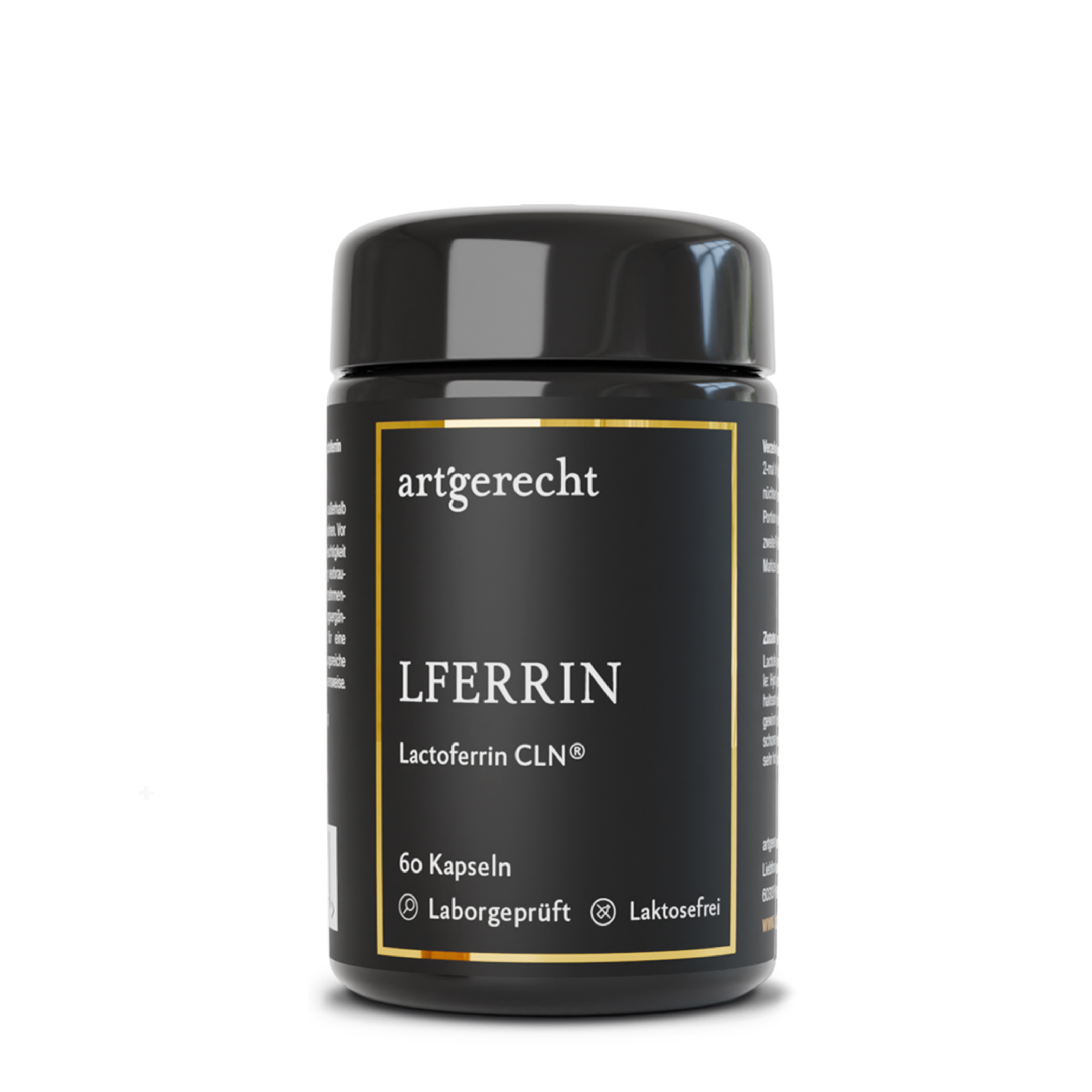
For your universal protection
As one of the most valuable proteins in the body, lactoferrin is a natural component of the immune system.
For your iron balance
Specially formulated for your iron balance with plant-based curry leaf iron, Lactoferrin CLN®, and natural Vitamin C from rose hips.