


Joint Space Narrowing - Causes and Treatment
Joint space narrowing describes the reduction of the visible gap between two joint surfaces on X-ray and is a key radiological sign of cartilage loss in conditions such as osteoarthritis.
Things worth knowing about "Joint space narrowing"
Joint space narrowing describes the reduction of the visible gap between two joint surfaces on X-ray and is a key radiological sign of cartilage loss in conditions such as osteoarthritis.
What is joint space narrowing?
Joint space narrowing refers to the measurable reduction of the visible gap between two cartilage-covered joint surfaces as seen on X-ray images. This gap, known as the joint space, indirectly reflects the thickness of the articular cartilage. As cartilage wears down, the joint space becomes progressively smaller. Joint space narrowing is therefore an important radiological indicator of cartilage loss and joint degeneration.
Causes
Joint space narrowing can result from various conditions that lead to articular cartilage breakdown:
- Osteoarthritis: The most common cause, involving gradual cartilage wear due to aging, mechanical overload, or obesity.
- Rheumatoid arthritis: A chronic autoimmune disease causing inflammation that destroys cartilage and bone.
- Psoriatic arthritis: Joint inflammation associated with psoriasis.
- Gout and pseudogout: Deposition of uric acid or calcium pyrophosphate crystals can damage joint cartilage.
- Post-traumatic arthritis: Cartilage damage following joint injuries or surgery.
- Septic arthritis: Bacterial joint infection that can rapidly destroy cartilage.
Commonly affected joints
Joint space narrowing can occur in any joint. The most frequently affected include:
- Knee joint (gonarthrosis): often on the medial (inner) side
- Hip joint (coxarthrosis): superior or concentric narrowing
- Hands and finger joints: typical in rheumatoid arthritis
- Spinal facet joints: in degenerative disc and vertebral disease
- Shoulder and ankle joints
Diagnosis
The diagnosis of joint space narrowing is primarily made through imaging:
- X-ray (radiography): The standard method for assessing joint space width, measured in millimeters and compared to reference values. Severity is often graded using systems such as the Kellgren-Lawrence scale.
- Magnetic resonance imaging (MRI): Allows direct visualization of cartilage, menisci, ligaments, and other soft tissue structures.
- Ultrasound: Useful for assessing soft tissue changes and joint effusions.
- Laboratory tests: In inflammatory conditions, markers such as CRP, ESR, rheumatoid factor, and anti-CCP antibodies are measured.
A thorough clinical examination assessing range of motion, pain, and joint stability complements imaging findings.
Classification and grading
In osteoarthritis, joint space narrowing is commonly graded using the Kellgren-Lawrence scale (grades 0 to 4):
- Grade 0: No abnormality
- Grade 1: Doubtful narrowing, possible osteophytes
- Grade 2: Definite osteophytes, possible narrowing
- Grade 3: Multiple osteophytes, definite narrowing, subchondral sclerosis
- Grade 4: Large osteophytes, marked narrowing, severe sclerosis, possible bony deformity
Symptoms
Joint space narrowing itself is a radiological finding and does not directly cause symptoms. However, the underlying conditions typically produce the following:
- Joint pain, especially during activity or weight-bearing
- Morning stiffness or start-up pain
- Reduced range of motion
- Swelling and warmth of the joint (in inflammatory disease)
- Crepitus (a crackling or grinding sensation during movement)
- Joint instability and deformity in advanced stages
Treatment
Treatment is tailored to the underlying condition, the severity of narrowing, and the patient's symptoms. The goals are to relieve pain, preserve joint function, and slow disease progression.
Conservative treatment
- Physiotherapy and exercise: Muscle strengthening and range-of-motion training
- Weight management: Reducing load on affected joints in overweight patients
- Pain medication (analgesics, NSAIDs): For example, ibuprofen or diclofenac to reduce pain and inflammation
- Intra-articular injections: Corticosteroids or hyaluronic acid to relieve symptoms
- Orthopedic aids: Insoles, braces, or orthoses to offload the joint
Disease-modifying therapy for inflammatory causes
- DMARDs such as methotrexate for rheumatoid arthritis
- Biologics (e.g., TNF inhibitors) for severe inflammatory disease
Surgical treatment
- Arthroscopy: Minimally invasive procedure for joint inspection and cartilage treatment
- Osteotomy: Realignment surgery to redistribute load on the joint
- Joint replacement (endoprosthesis): Total or partial joint replacement as a last resort in advanced cases
References
- Kellgren JH, Lawrence JS. Radiological assessment of osteo-arthrosis. Ann Rheum Dis. 1957;16(4):494-502.
- Braunwald E et al. Harrison's Principles of Internal Medicine, 21st edition, McGraw-Hill Education, 2022.
- Bijlsma JWJ, Berenbaum F, Lafeber FPJG. Osteoarthritis: an update with relevance for clinical practice. Lancet. 2011;377(9783):2115-2126.

Building Blocks for a Healthy Life
As an integrated manufacturer, we develop & produce evidence-based, patented, and non-patented formulations. We work exclusively with plant and natural extracts according to the strictest purity & quality standards.
The combination of science & modern technology with the laws of nature creates solutions consistently tailored to humans – for the highest good: health.
Verwandte Produkte

For Healthy Oral Flora & Dental Care
Formulated lozenges with Dentalac®, lactic acid bacteria, and Lactoferrin CLN®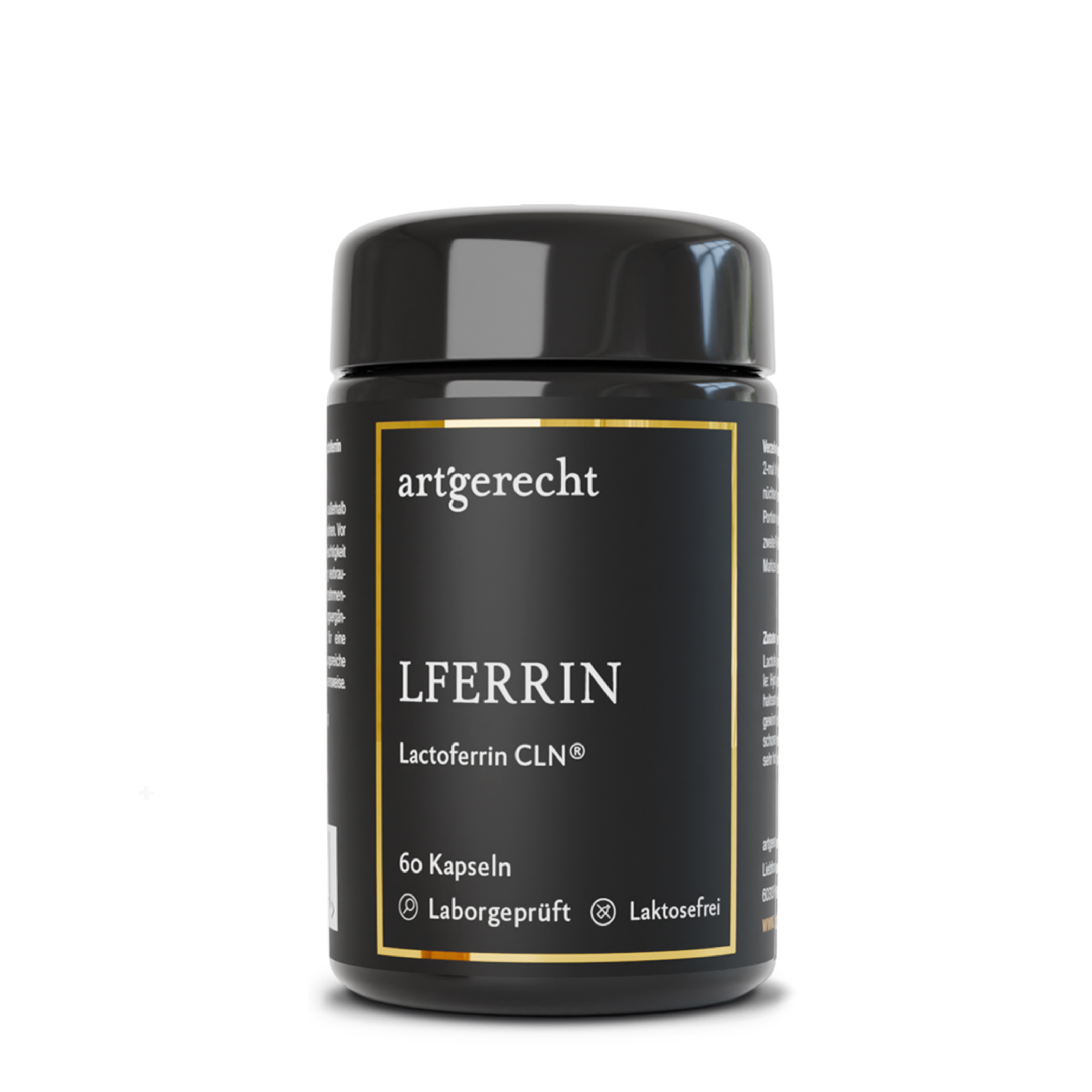
For your universal protection
As one of the most valuable proteins in the body, lactoferrin is a natural component of the immune system.
For your iron balance
Specially formulated for your iron balance with plant-based curry leaf iron, Lactoferrin CLN®, and natural Vitamin C from rose hips.