


Keratosis: Causes, Symptoms and Treatment
Keratosis refers to a disorder of skin keratinization in which excess keratin builds up, causing thickened or scaly skin. Several forms exist, ranging from harmless to potentially malignant.
Things worth knowing about "Keratosis"
Keratosis refers to a disorder of skin keratinization in which excess keratin builds up, causing thickened or scaly skin. Several forms exist, ranging from harmless to potentially malignant.
What Is Keratosis?
Keratosis (plural: keratoses) is a term used to describe a group of skin conditions characterized by an abnormal or excessive buildup of keratin, the tough protein that forms the outermost layer of the skin. This leads to thickened, rough, scaly, or warty patches on the skin. Keratoses can be entirely benign (harmless) or, in some cases, represent pre-cancerous or cancerous changes that require medical attention.
Types of Keratosis
There are several distinct forms of keratosis, each with different causes, appearances, and clinical significance:
- Seborrheic Keratosis (age wart): A very common, benign skin growth that typically appears in older adults as a waxy, brownish, or black raised lesion. It is harmless and does not require treatment unless desired for cosmetic reasons.
- Actinic Keratosis (solar keratosis): Caused by long-term exposure to ultraviolet (UV) radiation, this form is considered a pre-cancerous lesion and a precursor to squamous cell carcinoma (a type of skin cancer). It appears as a rough, scaly patch, most commonly on the face, scalp, or hands.
- Follicular Keratosis (Keratosis follicularis / Darier disease): A rare, genetically inherited condition in which keratin plugs form within hair follicles.
- Keratosis Pilaris: An extremely common, harmless condition in which keratin clogs hair follicles, producing a rough, goosebump-like texture, typically on the upper arms and thighs.
- Palmoplantar Keratoses: Inherited or acquired thickening of the skin on the palms of the hands and soles of the feet.
Causes
The causes of keratosis depend on the specific type:
- UV radiation: Prolonged sun exposure is the primary cause of actinic keratosis.
- Genetic factors: Many forms of keratosis are hereditary (e.g., keratosis pilaris, palmoplantar keratoses).
- Aging: Seborrheic keratosis typically develops from the age of 40 onwards as a natural aging process of the skin.
- Chemical exposure: Contact with certain chemicals or arsenic-containing substances can trigger keratotic changes.
- Chronic irritation: Persistent pressure or friction on the skin can cause localized keratoses such as calluses.
Symptoms
Common symptoms associated with keratosis include:
- Rough, scaly, or thickened patches of skin
- Brown, gray, or reddish discoloration of the skin
- Warty or raised skin growths
- Occasional itching or burning sensation (especially in actinic keratosis)
- A goosebump-like texture on the skin (characteristic of keratosis pilaris)
Diagnosis
Keratosis is typically diagnosed by a dermatologist. The following methods are commonly used:
- Clinical examination: Visual inspection of the skin, sometimes with a magnifying lens.
- Dermatoscopy: A non-invasive technique using a special light microscope to examine skin lesions in greater detail.
- Skin biopsy: Removal of a small tissue sample for histological analysis, particularly when malignant change is suspected (e.g., in actinic keratosis).
Treatment
Treatment depends on the type and severity of the keratosis:
- Seborrheic keratosis: Usually requires no treatment. If desired, lesions can be removed by cryotherapy (freezing), laser treatment, or curettage.
- Actinic keratosis: Must be treated due to its potential to develop into skin cancer. Options include cryotherapy, topical creams (e.g., 5-fluorouracil or imiquimod), photodynamic therapy, or surgical removal.
- Keratosis pilaris: Managed with moisturizing and keratolytic skin care products (e.g., containing urea or lactic acid). A complete cure is often not achievable, but symptoms can be significantly improved.
- Palmoplantar keratoses: Treated with keratolytic ointments, retinoid preparations, and regular skin care.
Prevention
While not all forms of keratosis can be prevented, the risk can be reduced through:
- Consistent sun protection (high SPF sunscreen, protective clothing, avoiding peak sun hours) to prevent actinic keratoses
- Regular moisturizing skin care routines
- Prompt consultation with a dermatologist when new or changing skin lesions are noticed
References
- German Dermatological Society (DDG) - Guidelines on Actinic Keratosis and Squamous Cell Carcinoma of the Skin (2023).
- Bolognia J., Schaffer J., Cerroni L. - Dermatology. 4th Edition, Elsevier, 2018.
- World Health Organization (WHO) - Ultraviolet radiation and skin cancer. WHO Technical Report, Geneva.

Building Blocks for a Healthy Life
As an integrated manufacturer, we develop & produce evidence-based, patented, and non-patented formulations. We work exclusively with plant and natural extracts according to the strictest purity & quality standards.
The combination of science & modern technology with the laws of nature creates solutions consistently tailored to humans – for the highest good: health.
Verwandte Produkte

For Healthy Oral Flora & Dental Care
Formulated lozenges with Dentalac®, lactic acid bacteria, and Lactoferrin CLN®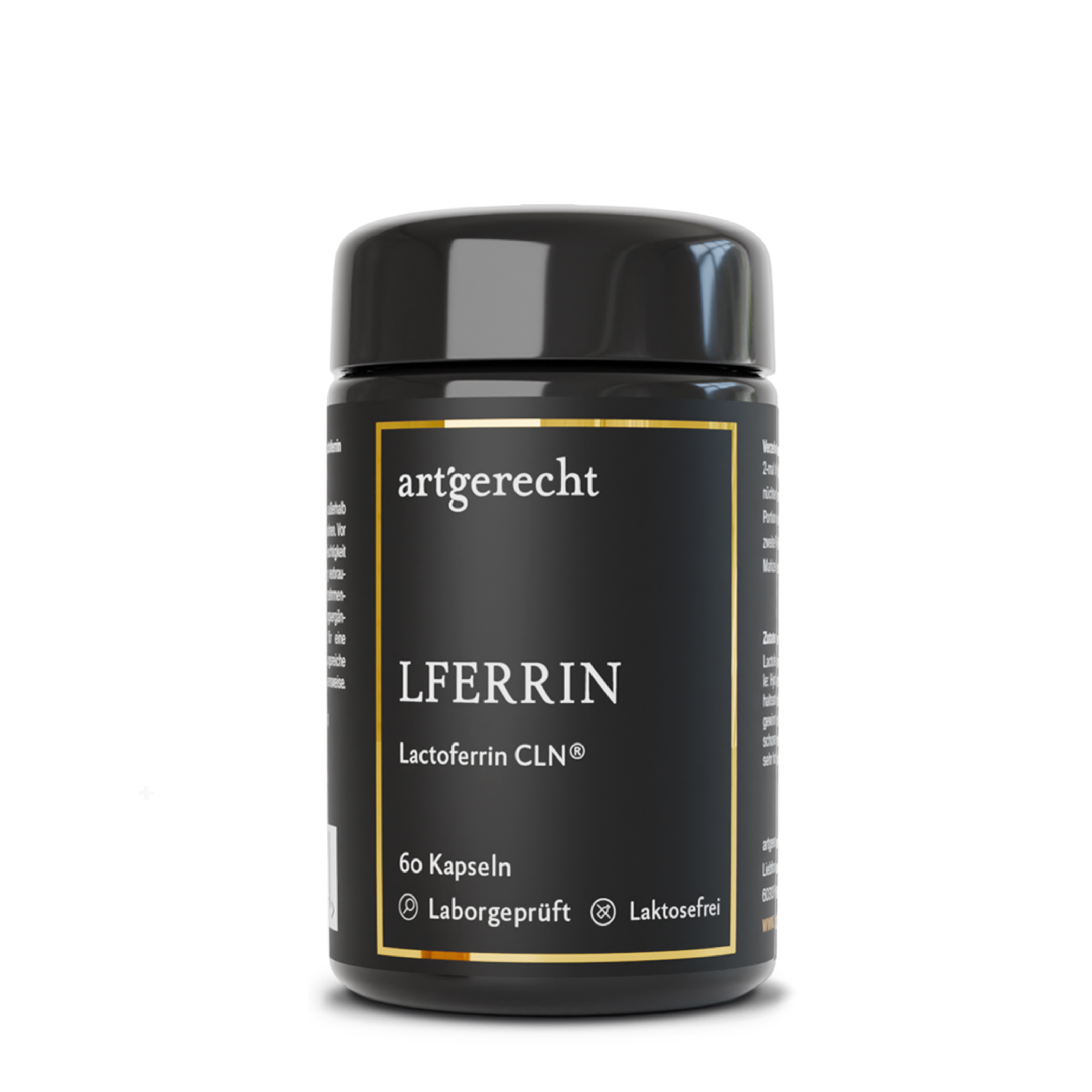
For your universal protection
As one of the most valuable proteins in the body, lactoferrin is a natural component of the immune system.
For your iron balance
Specially formulated for your iron balance with plant-based curry leaf iron, Lactoferrin CLN®, and natural Vitamin C from rose hips.