


Nerve Root Inflammation – Causes, Symptoms & Treatment
Nerve root inflammation, known as radiculitis, occurs when a spinal nerve root becomes inflamed, causing pain, numbness, and muscle weakness along the affected nerve pathway.
Things worth knowing about "Nerve Root Inflammation"
Nerve root inflammation, known as radiculitis, occurs when a spinal nerve root becomes inflamed, causing pain, numbness, and muscle weakness along the affected nerve pathway.
What Is Nerve Root Inflammation?
Nerve root inflammation, medically termed radiculitis, refers to inflammation of one or more nerve roots as they exit the spinal cord. These nerve roots pass through small openings between the vertebrae and transmit signals to muscles and skin areas throughout the body. When a nerve root becomes inflamed or irritated, characteristic symptoms appear along the nerve supply area it controls.
The condition can affect different regions of the spine: the cervical spine (neck), the thoracic spine (mid-back), or the lumbar and sacral spine (lower back). The lumbar and cervical regions are most commonly affected.
Causes
Nerve root inflammation can be triggered by a variety of factors:
- Herniated disc: The most common cause. When disc material protrudes and presses on a nerve root, it triggers an inflammatory response and pain.
- Spinal stenosis: Narrowing of the spinal canal that compresses nerve roots.
- Viral infections: The varicella-zoster virus (which causes shingles) can directly inflame nerve roots.
- Bacterial infections: Conditions such as Lyme disease or tuberculosis can affect nerve roots.
- Degenerative changes: Spinal wear and tear, bone spurs (osteophytes), or facet joint arthritis can narrow the spaces through which nerve roots pass.
- Tumors or metastases: Benign or malignant growths near the spine can compress nerve roots.
- Autoimmune conditions: In diseases like Guillain-Barre syndrome, the immune system may attack nerve roots.
Symptoms
Symptoms depend on which nerve root is affected and the severity of the inflammation. Typical signs include:
- Radiating pain along the course of the affected nerve (e.g., from the lower back down the leg – sciatica – or from the neck into the arm)
- Tingling and numbness in the area supplied by the affected nerve
- Muscle weakness in muscles controlled by the affected nerve
- Reduced or absent reflexes
- Burning or stabbing pain that may worsen with movement, coughing, or sneezing
- In cases of shingles: a characteristic blistering skin rash along a dermatome (herpes zoster)
Diagnosis
Diagnosis is based on a combination of clinical evaluation and imaging studies:
- Medical history and physical examination: Neurological tests such as the straight leg raise test provide initial clues.
- MRI (Magnetic Resonance Imaging): The primary imaging method for visualizing discs, nerve roots, and inflammatory changes.
- CT (Computed Tomography): Used as a complement to assess bony structures.
- Electrophysiological studies: Electromyography (EMG) and nerve conduction studies help assess nerve function.
- Blood tests: To rule out infectious or inflammatory causes (e.g., Borrelia antibodies, inflammatory markers).
- Lumbar puncture (spinal tap): May be needed if an infectious or autoimmune cause is suspected.
Treatment
Treatment depends on the underlying cause and severity of the condition:
Conservative Treatment
- Pain medication: Nonsteroidal anti-inflammatory drugs (NSAIDs) such as ibuprofen or diclofenac reduce pain and inflammation.
- Corticosteroids: Anti-inflammatory medications given orally or as targeted injections (periradicular therapy).
- Muscle relaxants: For accompanying muscle tension.
- Physical therapy: Targeted exercises to relieve spinal pressure and strengthen core muscles.
- Antiviral medications: For viral causes such as shingles (e.g., acyclovir).
- Antibiotics: For bacterial infections such as Lyme disease.
Interventional and Surgical Treatment
- Periradicular therapy (PRT): Targeted injection of corticosteroids and local anesthetics directly around the affected nerve root under imaging guidance.
- Surgical intervention: In cases of persistent severe symptoms, neurological deficits, or a large disc herniation, surgery (e.g., microdiscectomy) may be required.
Outlook and Prognosis
In many cases, nerve root inflammation resolves with conservative treatment within weeks to months. When treated promptly, the prognosis is generally favorable. However, chronic courses can occur, particularly if the underlying cause is not fully addressed. Permanent neurological damage is rare but can occur in severe or prolonged cases.
References
- Mumenthaler M., Mattle H. - Neurology. 13th edition. Georg Thieme Verlag, Stuttgart 2013.
- Deutsche Gesellschaft fur Neurologie (DGN) - Guidelines for Diagnosis and Therapy in Neurology, 2023. Available at: https://www.dgn.org/leitlinien
- Bogduk N. - On the definitions and physiology of back pain, referred pain, and radicular pain. Pain. 2009;147(1-3):17-19.

Building Blocks for a Healthy Life
As an integrated manufacturer, we develop & produce evidence-based, patented, and non-patented formulations. We work exclusively with plant and natural extracts according to the strictest purity & quality standards.
The combination of science & modern technology with the laws of nature creates solutions consistently tailored to humans – for the highest good: health.
Verwandte Produkte

For Healthy Oral Flora & Dental Care
Formulated lozenges with Dentalac®, lactic acid bacteria, and Lactoferrin CLN®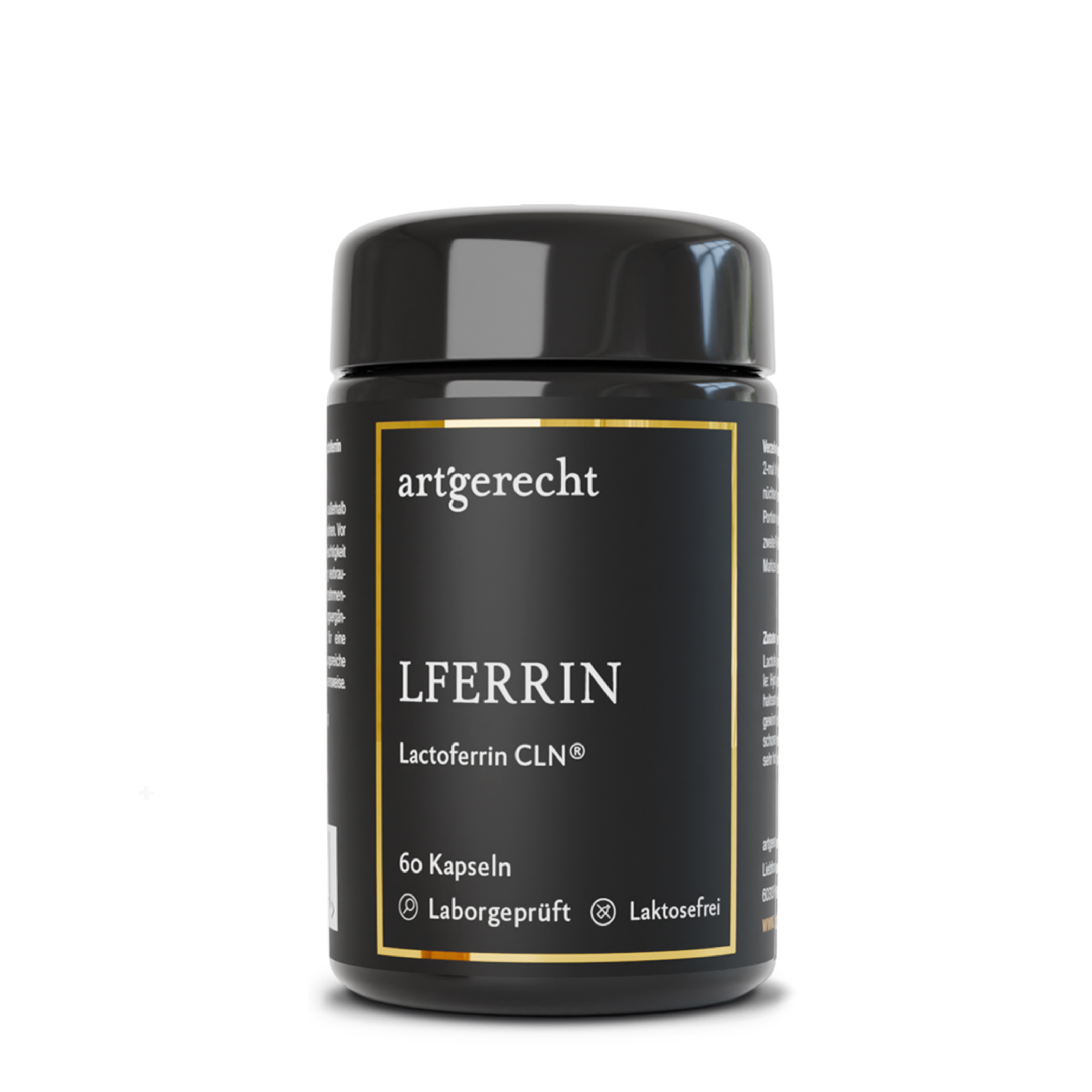
For your universal protection
As one of the most valuable proteins in the body, lactoferrin is a natural component of the immune system.
For your iron balance
Specially formulated for your iron balance with plant-based curry leaf iron, Lactoferrin CLN®, and natural Vitamin C from rose hips.