


Perception - Definition, Types and Disorders
Perception is the brain's ability to receive, process, and interpret sensory information from the environment and the body. It forms the basis of consciousness, cognition, and behavior.
Things worth knowing about "Perception"
Perception is the brain's ability to receive, process, and interpret sensory information from the environment and the body. It forms the basis of consciousness, cognition, and behavior.
What is Perception?
Perception is the psychophysiological process by which the brain receives, filters, integrates, and interprets information from the external environment and from within the body. It is the foundation of conscious experience, thinking, behavior, and interpersonal communication. Perception is not a passive process but an active and constructive one, strongly shaped by prior experiences, expectations, emotions, and neurological structures.
Types of Perception
Several forms of perception can be distinguished:
- Visual perception: Processing of light stimuli through the eyes and the visual cortex.
- Auditory perception: Processing of sound waves via the ears and auditory cortex.
- Tactile perception: Sensing touch, pressure, vibration, and temperature through the skin.
- Proprioception: The sense of the position and movement of the body in space.
- Gustatory perception: The sense of taste via the taste buds on the tongue.
- Olfactory perception: The sense of smell via the olfactory epithelium.
- Interoception: Awareness of internal body states such as heartbeat, hunger, or pain.
Neurological Foundations
Perception is based on the activity of specific sensory cells (receptors) that convert stimuli into electrical signals. These signals are transmitted via nerve pathways to the cerebral cortex, where they are processed in specialized cortical regions. The thalamus acts as a relay station, filtering incoming information. Higher cognitive areas, such as the prefrontal cortex, add context, meaning, and memory to raw sensory input.
Perceptual Disorders
When perceptual processing is impaired, the result is referred to as a perceptual disorder. These can have many causes and affect different sensory modalities:
- Hallucinations: Perceptions without an external stimulus (e.g., in schizophrenia, dementia, or substance use).
- Illusions: Misinterpretations of actual stimuli.
- Agnosia: Inability to recognize objects despite intact sensory organs, often following brain lesions.
- Sensory processing disorders: Particularly relevant in autism spectrum disorders or ADHD.
- Neglect: Failure to attend to one side of the body or space, often following a stroke.
Perception and Mental Health
Alterations in perception play a central role in many mental health conditions. In depression, emotional perception may be distorted; in anxiety disorders, neutral stimuli can be perceived as threatening. Traumatic experiences can also lead to lasting changes in perceptual processing, as seen in Post-Traumatic Stress Disorder (PTSD).
Diagnosis and Treatment
The assessment of perceptual disorders typically involves:
- Clinical neurological examinations
- Neuropsychological testing
- Imaging techniques such as MRI or PET scans
- Electrophysiological methods (e.g., EEG)
Treatment depends on the underlying cause and may include occupational therapy, sensory integration therapy, psychotherapy, or pharmacological approaches.
References
- Kandel E. R., Schwartz J. H., Jessell T. M. et al. - Principles of Neural Science, 5th edition, McGraw-Hill (2013).
- Kolb B., Whishaw I. Q. - An Introduction to Brain and Behavior, Worth Publishers (2014).
- World Health Organization (WHO) - International Classification of Functioning, Disability and Health (ICF), WHO Press (2001). Available at: https://www.who.int/classifications/icf

Building Blocks for a Healthy Life
As an integrated manufacturer, we develop & produce evidence-based, patented, and non-patented formulations. We work exclusively with plant and natural extracts according to the strictest purity & quality standards.
The combination of science & modern technology with the laws of nature creates solutions consistently tailored to humans – for the highest good: health.
Verwandte Produkte

For Healthy Oral Flora & Dental Care
Formulated lozenges with Dentalac®, lactic acid bacteria, and Lactoferrin CLN®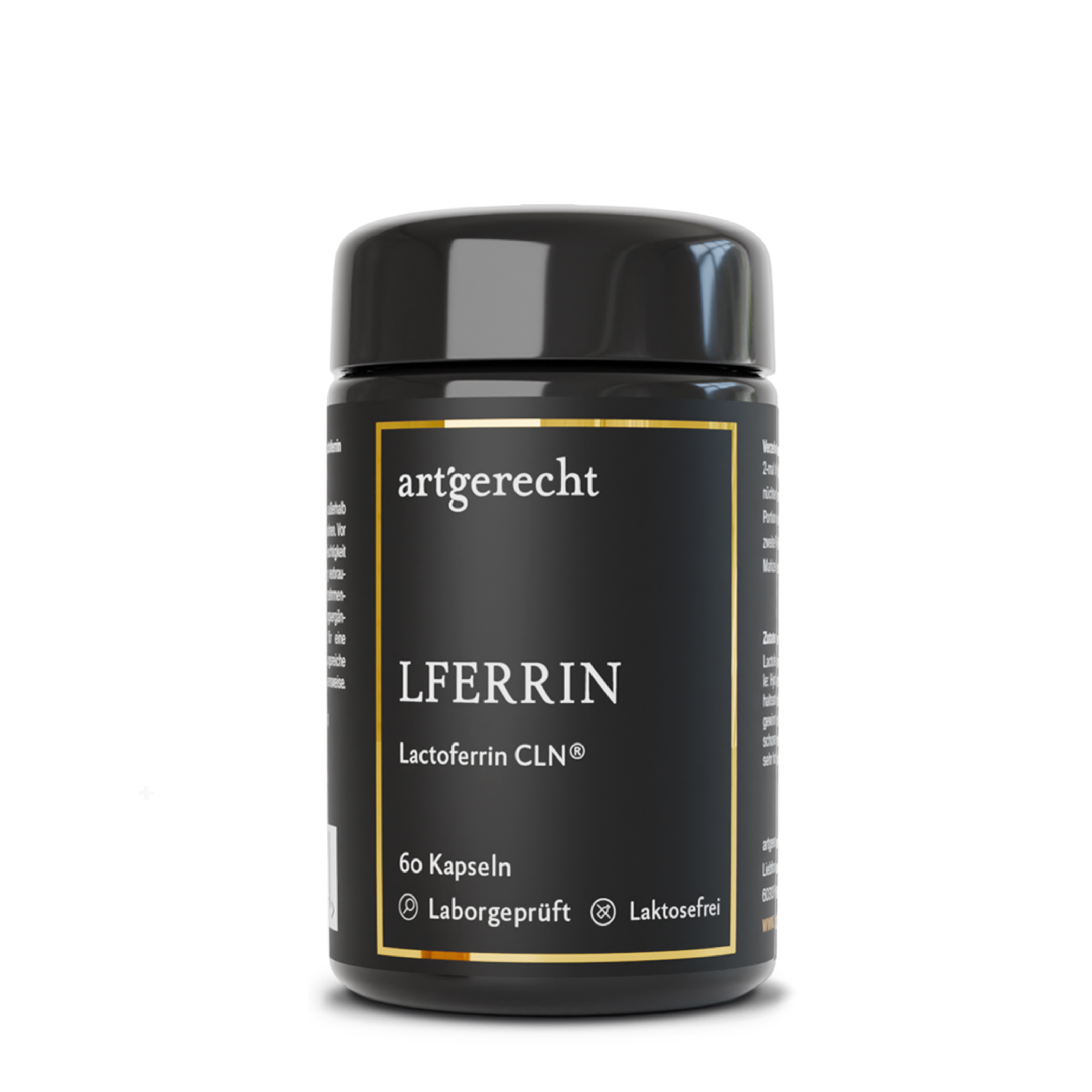
For your universal protection
As one of the most valuable proteins in the body, lactoferrin is a natural component of the immune system.
For your iron balance
Specially formulated for your iron balance with plant-based curry leaf iron, Lactoferrin CLN®, and natural Vitamin C from rose hips.