


Salivary Glands – Function, Structure and Diseases
Salivary glands are glands located in and around the mouth that produce saliva, supporting digestion, oral hygiene, and speech.
Things worth knowing about "Salivary Glands"
Salivary glands are glands located in and around the mouth that produce saliva, supporting digestion, oral hygiene, and speech.
What Are Salivary Glands?
Salivary glands (Latin: Glandulae salivariae) are exocrine glands that produce and secrete saliva into the oral cavity. Saliva is composed mainly of water and also contains enzymes, proteins, electrolytes, and antibodies. It plays a central role in digestion, oral hygiene, and speech.
Structure and Types of Salivary Glands
In humans, there are three pairs of major salivary glands, as well as hundreds of minor salivary glands distributed throughout the oral mucosa:
- Parotid gland (Glandula parotidea): The largest salivary gland, located in front of and below the ear. It produces predominantly serous (watery) saliva, which is delivered into the mouth through the parotid duct (also called Stensen duct).
- Submandibular gland (Glandula submandibularis): Located beneath the lower jaw, it produces a mixed serous and mucous saliva. Its secretion reaches the mouth via the Wharton duct.
- Sublingual gland (Glandula sublingualis): The smallest of the three major glands, situated beneath the tongue. It produces primarily mucous saliva.
- Minor salivary glands: Hundreds of small glands distributed throughout the lining of the mouth that continuously secrete small amounts of saliva.
Functions of the Salivary Glands
The salivary glands serve several important functions in the human body:
- Digestion: Saliva contains the enzyme amylase, which begins the breakdown of starches in the mouth before food reaches the stomach.
- Oral hygiene: Saliva washes away bacteria and food particles and contains antimicrobial substances such as lysozyme and immunoglobulin A.
- Tooth protection: Saliva neutralizes acids in the mouth and helps remineralize tooth enamel, reducing the risk of cavities.
- Lubrication and swallowing: Saliva moistens food, helps form a bolus, and makes swallowing easier.
- Speech: The moisture provided by saliva is essential for clear articulation and speaking.
Diseases of the Salivary Glands
The salivary glands can be affected by a variety of conditions:
Inflammation (Sialadenitis)
Sialadenitis is an inflammation of the salivary glands, which can be caused by bacteria or viruses. A well-known example is mumps, a viral infection affecting the parotid glands.
Salivary Stones (Sialolithiasis)
Sialolithiasis refers to the formation of calcified deposits (stones) within the salivary ducts. This can cause pain and swelling, particularly when eating, due to the blockage of saliva flow.
Dry Mouth (Xerostomia)
Xerostomia is a condition characterized by reduced saliva production. It can result from certain medications, autoimmune diseases such as Sjogren syndrome, or radiation therapy to the head and neck region.
Salivary Gland Tumors
Tumors of the salivary glands may be benign or malignant. The most common benign tumor is the pleomorphic adenoma. Malignant tumors, such as mucoepidermoid carcinoma, require specialist medical treatment.
Diagnosis of Salivary Gland Disorders
Several diagnostic procedures are available for evaluating the salivary glands:
- Ultrasound (sonography): The first-line imaging method for assessing the size, structure, and blood flow of the glands.
- CT and MRI: Used when tumors or complicated inflammatory processes are suspected.
- Sialography: An X-ray procedure involving contrast medium to visualize the salivary ducts.
- Biopsy: Tissue sampling for histological analysis when a tumor is suspected.
Treatment of Salivary Gland Disorders
Treatment depends on the underlying cause:
- Bacterial sialadenitis is treated with antibiotics; viral infections are managed with supportive care.
- Salivary stones can be treated with massage, shock wave therapy (lithotripsy), or surgical removal.
- Xerostomia is managed through adequate hydration, saliva substitutes, and treatment of the underlying condition.
- Tumors are typically removed surgically, sometimes followed by radiation therapy.
References
- Standring, S. (Ed.) (2020). Gray's Anatomy: The Anatomical Basis of Clinical Practice. 42nd edition. Elsevier.
- Neville, B.W. et al. (2015). Oral and Maxillofacial Pathology. 4th edition. Elsevier Saunders.
- World Health Organization (WHO): Oral Health. Available at: https://www.who.int/health-topics/oral-health

Building Blocks for a Healthy Life
As an integrated manufacturer, we develop & produce evidence-based, patented, and non-patented formulations. We work exclusively with plant and natural extracts according to the strictest purity & quality standards.
The combination of science & modern technology with the laws of nature creates solutions consistently tailored to humans – for the highest good: health.
Verwandte Produkte

For Healthy Oral Flora & Dental Care
Formulated lozenges with Dentalac®, lactic acid bacteria, and Lactoferrin CLN®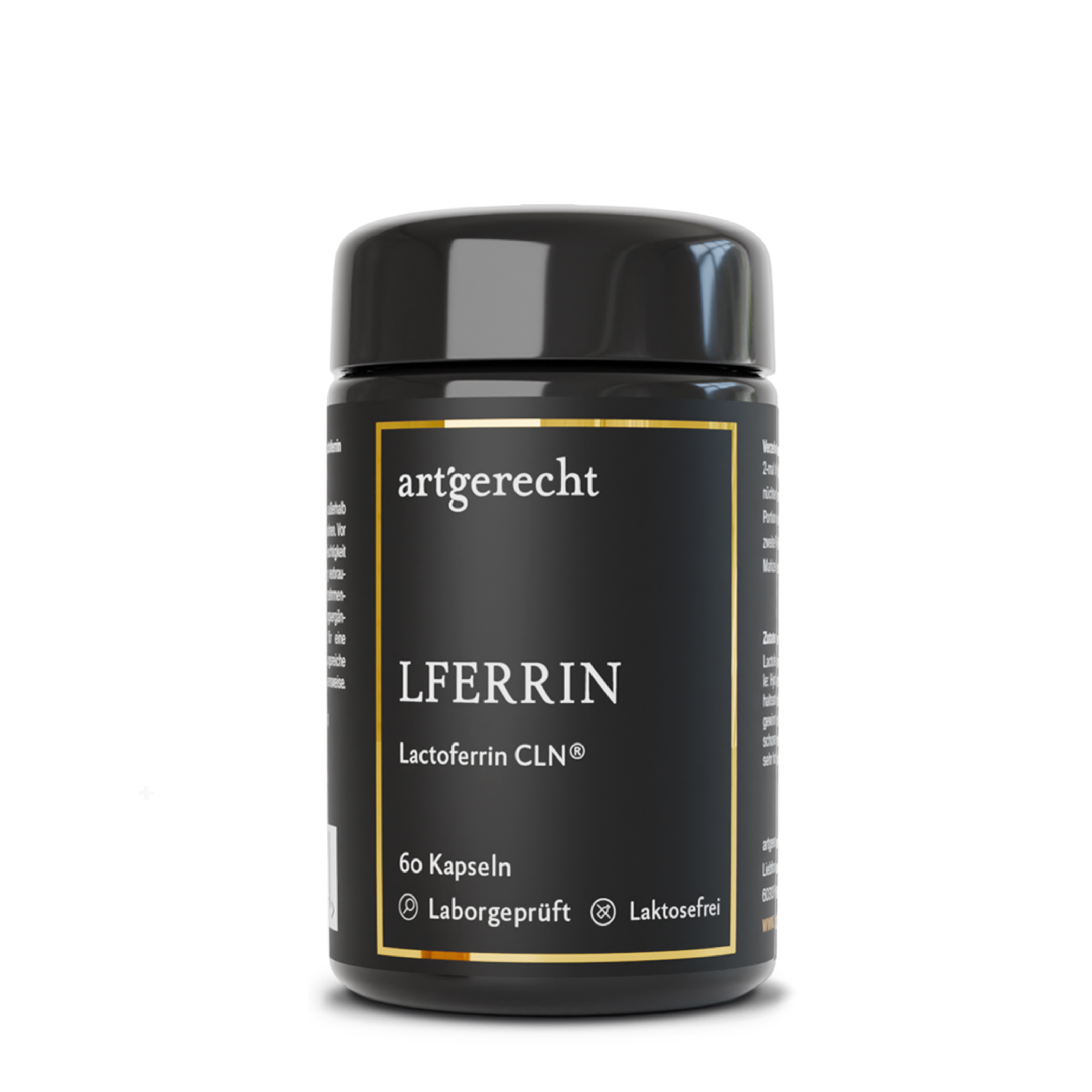
For your universal protection
As one of the most valuable proteins in the body, lactoferrin is a natural component of the immune system.
For your iron balance
Specially formulated for your iron balance with plant-based curry leaf iron, Lactoferrin CLN®, and natural Vitamin C from rose hips.