


Tooth Transplantation – Procedure, Benefits & Risks
Tooth transplantation is a surgical procedure in which a natural tooth is moved from one position in the mouth to another. It serves as a biological alternative to dental implants.
Things worth knowing about "Tooth transplantation"
Tooth transplantation is a surgical procedure in which a natural tooth is moved from one position in the mouth to another. It serves as a biological alternative to dental implants.
What is Tooth Transplantation?
Tooth transplantation (also known as dental autotransplantation) is a surgical dental procedure in which a natural tooth – most commonly a wisdom tooth or an unerupted tooth – is removed from its original location and replanted into a different site in the jaw. The goal is to replace a missing or non-restorable tooth with a real, biologically compatible tooth, avoiding the use of artificial materials.
Tooth transplantation is an established, though less commonly performed, treatment option in oral and maxillofacial surgery and specialized dentistry.
Indications
Tooth transplantation may be considered in a variety of clinical situations:
- Loss of a tooth due to decay, trauma, or extraction, particularly in younger patients
- Congenital absence of teeth (hypodontia or tooth aplasia)
- Impacted (unerupted) teeth that need to be repositioned for functional reasons
- Replacement of severely damaged molars using wisdom teeth
Requirements and Suitability
For a tooth transplantation to be successful, certain conditions must be met:
- The donor tooth must be suitable – ideally a wisdom tooth with an incompletely formed root
- Sufficient bone volume at the recipient site
- Good general health and oral hygiene of the patient
- Patient age: adolescents and young adults are especially suitable, as the periodontium (tooth-supporting structures) still has a high regenerative capacity
Surgical Procedure
The procedure is typically performed under local anesthesia, and in some cases under general anesthesia. The key steps include:
- Extraction of the donor tooth with maximum preservation of the periodontal ligament
- Preparation of the recipient socket in the jawbone
- Placement and stabilization of the donor tooth, often using a splint or sutures
- Root canal treatment (endodontics), if the tooth root is fully formed
Healing Process and Aftercare
After transplantation, careful follow-up care is essential for long-term success. In the first weeks, a process called revascularization takes place, during which new blood vessels grow into the dental pulp – this is especially possible in teeth with open root canals. Regular check-ups, X-rays, and consistent oral hygiene are mandatory.
Benefits and Risks
Advantages
- Preservation of a natural tooth with its own periodontal ligament
- Good integration into the bone, similar to a natural tooth
- No foreign material in the body
- Preservation of bone at the recipient site
- Especially suitable for young patients in whom implants are not yet recommended
Risks and Possible Complications
- Ankylosis: Bony fusion of the tooth with the jawbone
- Root resorption: Breakdown of the tooth root by the body
- Infection or inflammation at the wound site
- Rejection or failure of the donor tooth to integrate
- Nerve damage in cases of complex anatomy
Success Rates
The chances of success for tooth transplantation depend strongly on the experience of the clinician, the age of the patient, and the developmental stage of the tooth root. Studies report survival rates of up to 80–95% after 5 years under optimal conditions. Results are especially promising in adolescent patients with still-developing tooth roots.
Tooth Transplantation vs. Dental Implant
Compared to a dental implant, tooth transplantation offers the advantage of placing a biological tooth with a natural support structure. Implants, on the other hand, are made of titanium and integrate into the bone through a process called osseointegration. The choice of method depends on age, bone quality, availability of a suitable donor tooth, and individual medical factors.
References
- Andreasen JO, Paulsen HU, Yu Z, Ahlquist R, Bayer T, Schwartz O. A long-term study of 370 autotransplanted premolars. Part I: Surgical procedures and standardized techniques. European Journal of Orthodontics, 1990.
- Czochrowska EM, Stenvik A, Bjercke B, Zachrisson BU. Outcome of tooth transplantation: survival and success rates 17–41 years posttreatment. American Journal of Orthodontics and Dentofacial Orthopedics, 2002.
- Tsukiboshi M. Autotransplantation of teeth: requirements for predictable success. Dental Traumatology, 2002; 18(4): 157–180.

Building Blocks for a Healthy Life
As an integrated manufacturer, we develop & produce evidence-based, patented, and non-patented formulations. We work exclusively with plant and natural extracts according to the strictest purity & quality standards.
The combination of science & modern technology with the laws of nature creates solutions consistently tailored to humans – for the highest good: health.
Verwandte Produkte

For Healthy Oral Flora & Dental Care
Formulated lozenges with Dentalac®, lactic acid bacteria, and Lactoferrin CLN®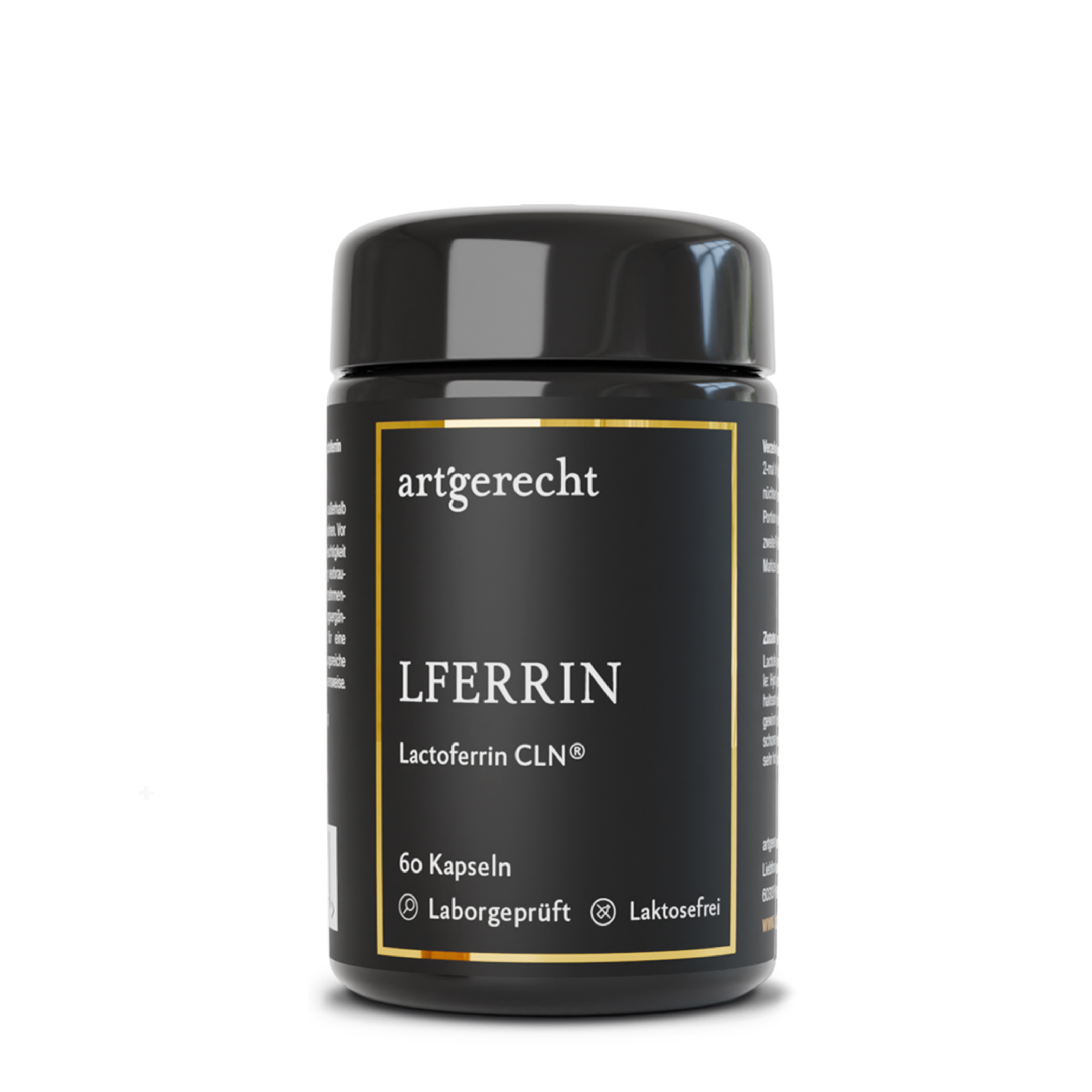
For your universal protection
As one of the most valuable proteins in the body, lactoferrin is a natural component of the immune system.
For your iron balance
Specially formulated for your iron balance with plant-based curry leaf iron, Lactoferrin CLN®, and natural Vitamin C from rose hips.