


Ulnar Deviation – Causes, Symptoms & Treatment
Ulnar deviation describes the lateral displacement of the fingers or hand toward the ulna (the inner forearm bone). It is a hallmark deformity of rheumatoid arthritis.
Things worth knowing about "Ulnar deviation"
Ulnar deviation describes the lateral displacement of the fingers or hand toward the ulna (the inner forearm bone). It is a hallmark deformity of rheumatoid arthritis.
What is Ulnar Deviation?
Ulnar deviation (also known as ulnar drift) refers to a lateral displacement of the fingers or the entire hand toward the ulna – the inner bone of the forearm on the little-finger side. Under normal conditions, the fingers and hand are aligned in a straight axis with the forearm. In ulnar deviation, the fingers visibly drift toward the little finger, creating a characteristic angular deformity.
This condition is one of the most recognizable joint deformities associated with rheumatoid arthritis (RA), but it can also result from other inflammatory, traumatic, or degenerative joint conditions.
Causes
Ulnar deviation develops through a combination of joint inflammation, ligament and capsule damage, and muscular imbalances. The most common causes include:
- Rheumatoid arthritis: Inflammation of the joint lining (synovitis) leads to stretching of the joint capsule and damage to the ligaments of the metacarpophalangeal (MCP) joints, allowing the extensor tendons to slip and causing the characteristic ulnar drift of the fingers.
- Psoriatic arthritis: Another inflammatory joint disease that can cause similar structural changes.
- Systemic lupus erythematosus (SLE): This autoimmune condition can also cause joint inflammation leading to ulnar deviation.
- Trauma and injuries: Ligament ruptures or fractures around the wrist and finger joints can cause malalignment.
- Osteoarthritis: Long-term wear of joint surfaces may result in gradual axial deformity.
Symptoms
Ulnar deviation is typically visible and accompanied by additional complaints:
- Visible sideward displacement of the fingers toward the little finger
- Pain in the affected joints, especially during movement and under load
- Swelling and warmth of the finger joints in inflammatory conditions
- Reduced grip strength and impaired hand function
- Morning stiffness of the hands (characteristic of rheumatoid arthritis)
- In advanced stages: significant limitations in daily activities
Diagnosis
The diagnosis of ulnar deviation is primarily clinical, based on physical examination. Additional diagnostic tools include:
- X-ray of the hands: To assess the degree of deformity, joint space narrowing, erosions, and bony changes.
- MRI (Magnetic Resonance Imaging): For detailed visualization of ligaments, tendons, and soft tissues.
- Laboratory tests: Rheumatoid factor (RF), anti-CCP antibodies, and inflammatory markers (CRP, ESR) to identify an underlying rheumatic disease.
- Ultrasound: For detection of synovitis and tendon pathologies.
Treatment
Treatment of ulnar deviation depends on the underlying cause and the severity of the deformity. The main goals are to relieve pain, preserve joint function, and prevent further deterioration.
Conservative Treatment
- Medication: In inflammatory conditions, disease-modifying antirheumatic drugs (DMARDs) such as methotrexate and biological agents (e.g., TNF inhibitors) are used to control the underlying disease.
- Physiotherapy and occupational therapy: Targeted exercises to strengthen hand muscles, training of adaptive movement strategies, and provision of assistive devices.
- Splints and orthoses: Custom-made hand splints can correct or stabilize the deformity and relieve symptoms.
- Physical therapy: Heat or cold applications for pain relief and reduction of inflammation.
Surgical Treatment
- In cases of severe deformity or significant functional impairment, surgical correction may be necessary. Procedures include tendon transfer surgery, synovectomy (removal of inflamed joint lining), or joint replacement (arthroplasty).
References
- Smolen, J.S. et al. – Rheumatoid arthritis. Nature Reviews Disease Primers. 2018;4:18001. doi:10.1038/nrdp.2018.1
- Firestein, G.S. et al. – Kelley and Firestein's Textbook of Rheumatology. 10th edition. Elsevier, 2017.
- National Institute for Health and Care Excellence (NICE) – Rheumatoid arthritis in adults: management. NICE guideline NG100. 2018. Available at: www.nice.org.uk

Building Blocks for a Healthy Life
As an integrated manufacturer, we develop & produce evidence-based, patented, and non-patented formulations. We work exclusively with plant and natural extracts according to the strictest purity & quality standards.
The combination of science & modern technology with the laws of nature creates solutions consistently tailored to humans – for the highest good: health.
Verwandte Produkte

For Healthy Oral Flora & Dental Care
Formulated lozenges with Dentalac®, lactic acid bacteria, and Lactoferrin CLN®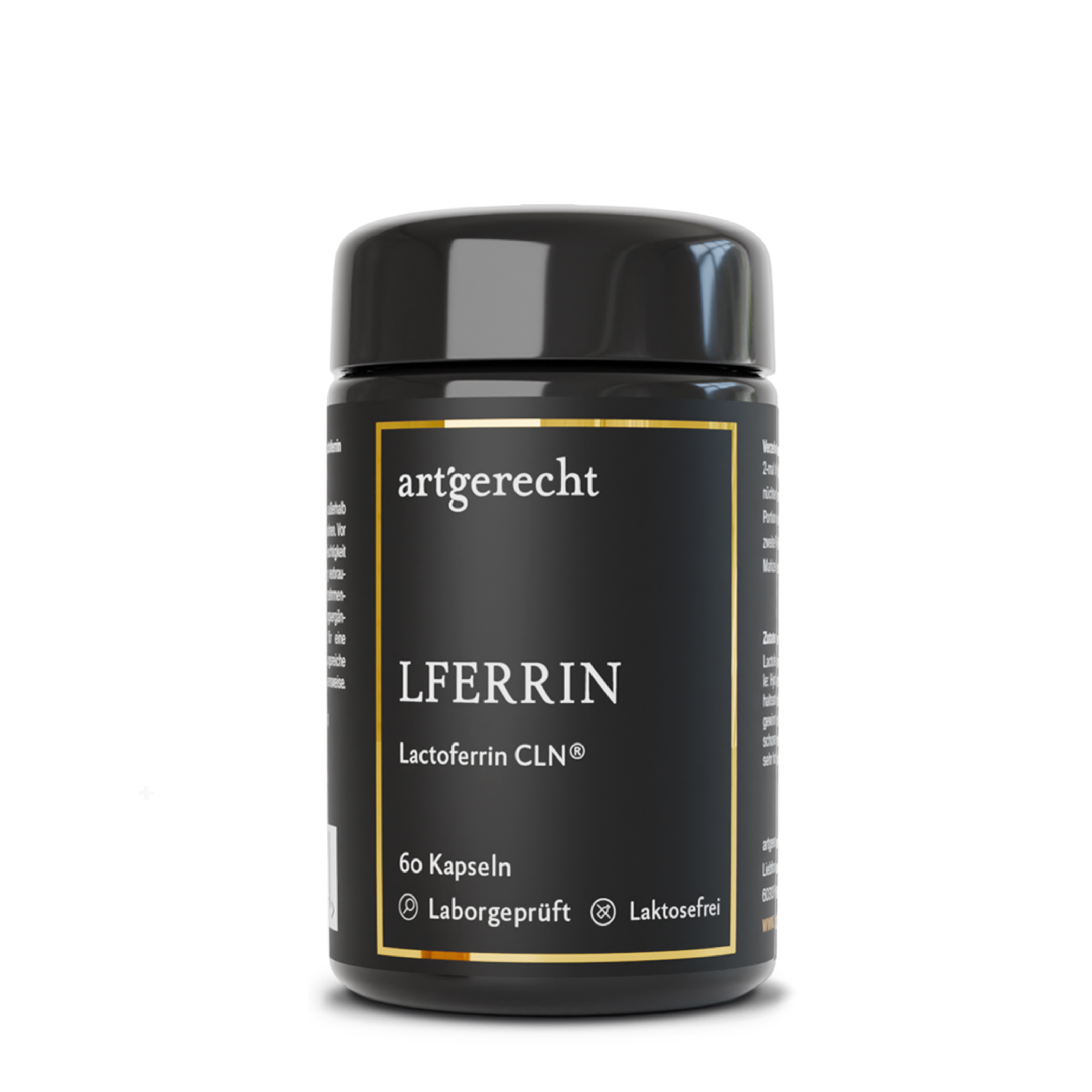
For your universal protection
As one of the most valuable proteins in the body, lactoferrin is a natural component of the immune system.
For your iron balance
Specially formulated for your iron balance with plant-based curry leaf iron, Lactoferrin CLN®, and natural Vitamin C from rose hips.