


Claudin 18.2 – Tumor Marker and Therapeutic Target
Claudin 18.2 is a cell surface protein overexpressed in gastric and pancreatic cancer, serving as a key therapeutic target for precision oncology treatments.
Things worth knowing about "Claudin 18.2"
Claudin 18.2 is a cell surface protein overexpressed in gastric and pancreatic cancer, serving as a key therapeutic target for precision oncology treatments.
What is Claudin 18.2?
Claudin 18.2 (also written as CLDN18.2) is an isoform of the Claudin-18 protein, belonging to the family of tight junction proteins. Tight junctions are specialized adhesion structures between epithelial cells that regulate barrier function in tissues. Under normal physiological conditions, Claudin 18.2 is expressed almost exclusively in the gastric glandular cells of the stomach lining and is virtually undetectable in healthy tissue of other organs. However, in several cancer types – particularly gastric cancer and pancreatic carcinoma – this protein is abundantly expressed on the surface of tumor cells, making it a significant biomarker and therapeutic target.
Biological Function
Claudin 18.2 is a transmembrane protein embedded in the cell membrane, where it participates in the formation of tight junctions. These junctions control paracellular transport (the movement of substances between neighboring cells) and help maintain tissue integrity. In healthy gastric tissue, Claudin 18.2 is located deep within the gastric glands and is largely inaccessible to molecules such as antibodies. During malignant transformation, cell polarity changes, causing Claudin 18.2 to become exposed on the luminal and lateral cell surface, where it becomes accessible to therapeutic agents.
Clinical Significance as a Tumor Marker
Claudin 18.2 has gained increasing importance in oncology as a tumor-associated antigen. It is overexpressed in the following cancers:
- Gastric cancer and gastroesophageal junction (GEJ) carcinoma: Strongly positive in up to 40–50% of cases.
- Pancreatic carcinoma: Detectable in a relevant proportion of cases.
- Other carcinomas: Occasionally found in lung, ovarian, and colon cancers.
The Claudin 18.2 status is determined by immunohistochemical (IHC) staining of tumor tissue obtained by biopsy or surgical resection. Results determine whether patients are eligible for Claudin 18.2-directed therapies.
Claudin 18.2 as a Therapeutic Target
Due to its selective expression on tumor cells and its accessibility at the cell surface, Claudin 18.2 is an attractive target for several oncological therapeutic concepts:
Monoclonal Antibodies
Zolbetuximab (formerly IMAB362) is a monoclonal antibody that specifically binds to Claudin 18.2 on tumor cells. It has been investigated in clinical trials (SPOTLIGHT, GLOW) in patients with advanced, Claudin-18.2-positive gastric cancer in combination with chemotherapy, demonstrating a significant improvement in progression-free survival. Zolbetuximab is receiving regulatory approval for this indication in multiple regions.
Bispecific Antibodies
Bispecific antibodies can simultaneously bind Claudin 18.2 on tumor cells and activating structures on T cells (e.g., CD3), triggering a targeted immune response against the tumor.
CAR-T Cell Therapies
Chimeric antigen receptor T cells (CAR-T cells) directed against Claudin 18.2 are in clinical development and have shown promising early results in gastric cancer.
Antibody-Drug Conjugates (ADCs)
Antibody-drug conjugates (ADCs), in which a Claudin 18.2-specific antibody is linked to a cytotoxic agent, are also being evaluated in clinical trials. These constructs deliver the cytotoxic payload directly into tumor cells.
Diagnosis and Testing
Testing for Claudin 18.2 positivity is a prerequisite for the use of targeted therapies. The process includes:
- Collection of tumor tissue (biopsy or resection)
- Preparation and immunohistochemical (IHC) staining with a validated Claudin 18.2 antibody
- Pathologist evaluation: a tumor is generally considered positive if at least 75% of tumor cells show moderate to strong membranous staining (criteria may vary by protocol)
Relevance to Precision Oncology
Claudin 18.2 is a prime example of modern precision oncology: by characterizing tumors at the molecular level, therapies can be tailored to the individual patient. For patients with advanced gastric cancer in whom other targeted therapies (e.g., HER2-directed treatments) are not applicable, Claudin 18.2 opens a new treatment pathway. Ongoing research into CLDN18.2 may in the future become relevant for additional tumor entities as well.
References
- Sahin, U. et al. (2008): Claudin-18 splice variant 2 is a pan-cancer target suitable for therapeutic antibody development. Clinical Cancer Research, 14(23), 7624–7634.
- Shah, M. A. et al. (2023): Zolbetuximab plus mFOLFOX6 in patients with CLDN18.2-positive, HER2-negative, untreated, locally advanced unresectable or metastatic gastric or gastro-oesophageal junction adenocarcinoma (SPOTLIGHT): a multicentre, randomised, double-blind, phase 3 trial. The Lancet, 401(10389), 1655–1668.
- National Cancer Institute (NCI): Claudin 18.2 as a therapeutic target in oncology. Available at: https://www.cancer.gov

Building Blocks for a Healthy Life
As an integrated manufacturer, we develop & produce evidence-based, patented, and non-patented formulations. We work exclusively with plant and natural extracts according to the strictest purity & quality standards.
The combination of science & modern technology with the laws of nature creates solutions consistently tailored to humans – for the highest good: health.
Verwandte Produkte

For Healthy Oral Flora & Dental Care
Formulated lozenges with Dentalac®, lactic acid bacteria, and Lactoferrin CLN®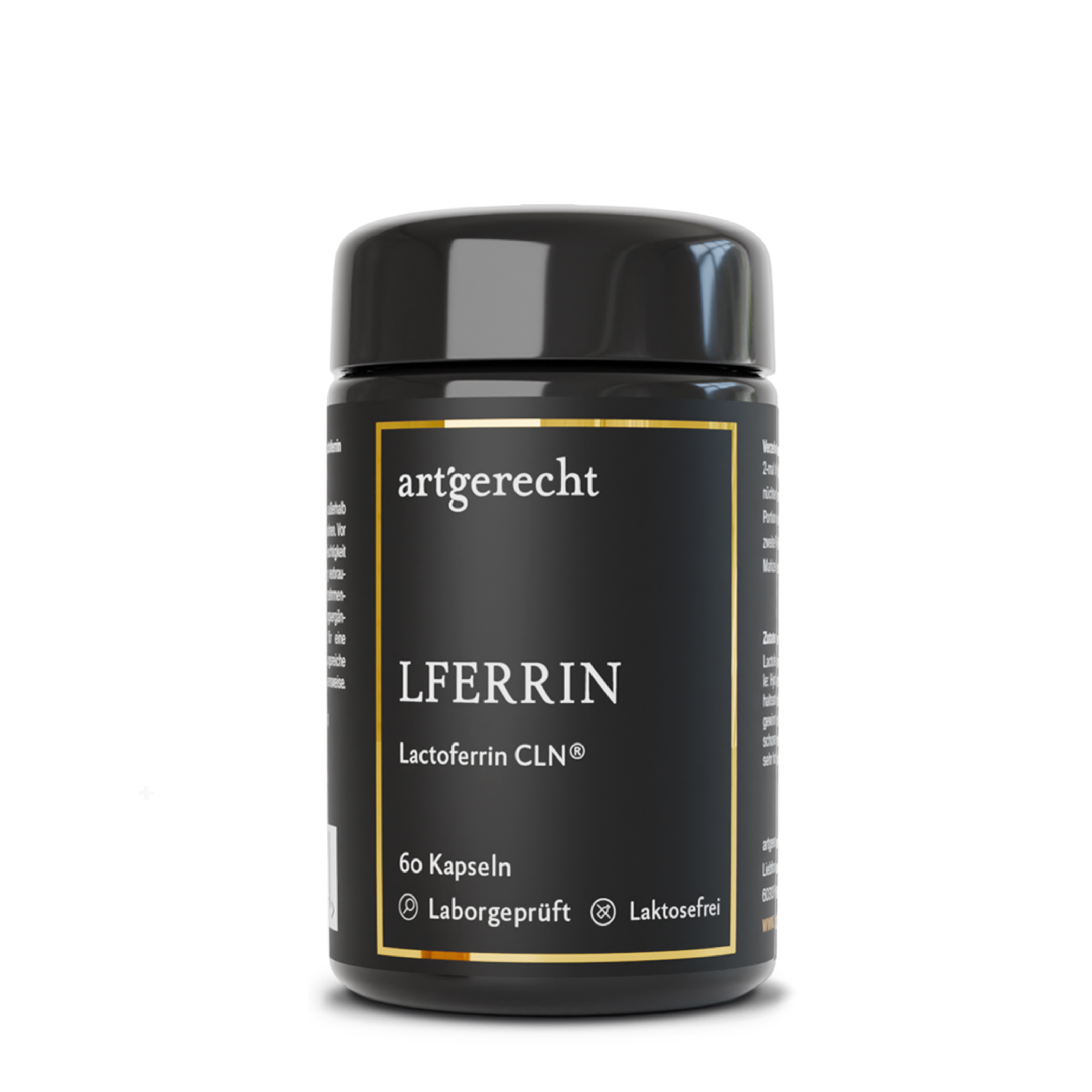
For your universal protection
As one of the most valuable proteins in the body, lactoferrin is a natural component of the immune system.
For your iron balance
Specially formulated for your iron balance with plant-based curry leaf iron, Lactoferrin CLN®, and natural Vitamin C from rose hips.